

Step into a time machine and zoom back to the 1950s, where living rooms were the epicenter of family life and social gatherings. Picture vibrant colors, bold patterns, and furniture that looked like it belonged in a sci-fi movie. This was an era when the television became a household staple, and families gathered around to watch their favorite shows while sipping on a fizzy soda.
Overview of 1950s Living Rooms
1950s living rooms served as the heart of family bonding and social gatherings. Vibrant colors dominated the design landscape, with hues like turquoise, yellow, and pink appearing prominently. Bold patterns in upholstery and wallpaper complemented the furniture, contributing to an energetic atmosphere.
Furniture reflected both comfort and style. Couches featured streamlined designs with elegant curves, often draped in stylish fabrics. Armchairs and coffee tables rounded out seating arrangements, creating inviting spaces for relaxation and conversation.
The advent of television transformed living rooms into entertainment hubs. Families congregated around their TV sets, watching popular shows that shaped the cultural landscape. The introduction of the console television added a focal point in many living rooms, with households often decorated to highlight this new technology.
Accessories played a crucial role in defining the space. Decorative rugs, wall art, and lamps enhanced the room’s overall aesthetic. Mid-century modern designs emerged in decor items, with geometric shapes and organic forms capturing the era’s spirit.
Open layouts gained popularity, allowing for easy flow between the living room and dining areas. This design trend encouraged interaction, making socializing effortless. The integration of function and style became paramount as families strived to create inviting environments.
Distinctive elements from the 1950s often reflect a nostalgic charm. From the furniture to decorative touches, living rooms of this era symbolize a unique blend of innovation and functionality. Each feature contributed to an unforgettable atmosphere that continues to influence modern design today.
Common Design Elements
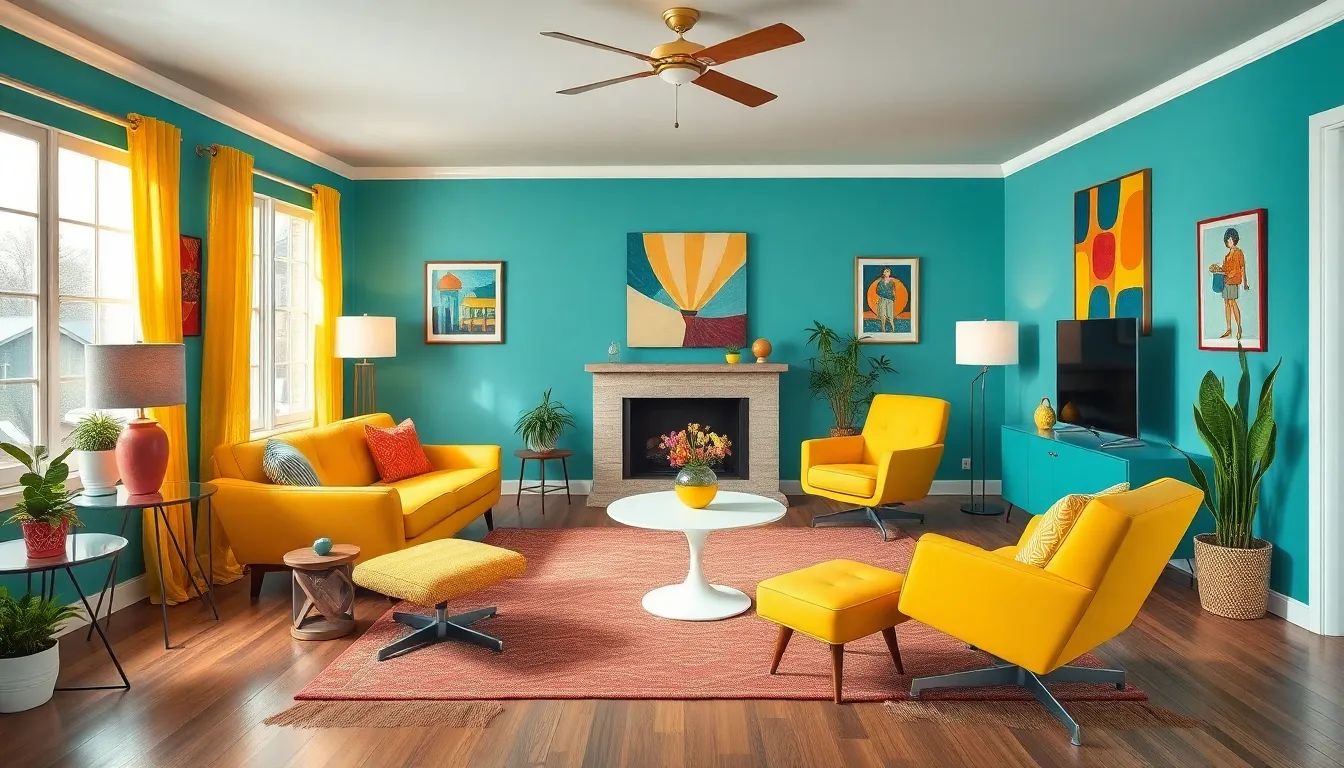
The design elements of 1950s living rooms reflect an era characterized by vibrant aesthetics and functional layouts.
Furniture Styles
Mid-century modern furniture defined living spaces. Sleek lines and organic shapes prevailed in the design of chairs and sofas. Iconic pieces included Eames lounge chairs and tulip tables, showcasing unique craftsmanship. Upholstery often featured bold patterns or solid colors, emphasizing style without sacrificing comfort. Furthermore, furniture arrangements encouraged conversation, fostering connection among family and guests.
Color Palettes
Color played a vital role in 1950s living rooms. Bright hues like turquoise, yellow, and pink dominated the scene, exuding energy. Neutral tones such as beige and white balanced these vibrant colors, creating a harmonious environment. Accent colors often appeared in accessories, allowing for customizability while maintaining thematic consistency. Understanding the subtleties of these color palettes reveals a commitment to optimism and modernity in home design.
Decorative Accents
Accessories enriched the overall aesthetic of 1950s living rooms. Decorative rugs added warmth and texture, while wall art often reflected contemporary themes. Lamps with unique designs served both functional and stylistic purposes, enhancing the room’s ambiance. Plants in vibrant pots brought elements of nature indoors, promoting a cheerful atmosphere. Selecting appropriate accents further emphasized the innovative spirit defining this era’s interiors.
Popular Trends in the 1950s
Living rooms in the 1950s showcased distinct trends that reflected the vibrant culture of the era. These spaces embodied a unique fusion of style and comfort, influencing generations to come.
Mid-Century Modern Influence
Mid-century modern designs defined the aesthetic of 1950s living rooms. This style featured clean lines, minimalist forms, and organic shapes. Iconic pieces like Eames lounge chairs and tulip tables became essential elements of the decor. Functionality combined with beauty, allowing for an inviting atmosphere. Bold colors paired with natural materials created striking contrasts, enhancing visual appeal. The furniture promoted relaxed gatherings, aligning perfectly with the social dynamics of the time. Sleek cabinetry and innovative lighting options completed the look, solidifying mid-century modern as a dominant trend in interior design.
Retro Fabrics and Textiles
Retro fabrics and textiles played a significant role in 1950s living rooms. Upholstery featured bold patterns, including geometric shapes and floral prints. Vibrant colors like turquoise, orange, and yellow energized the ambiance. Textiles such as velvet and cotton provided both softness and durability. Decorative pillows and throws added layers of comfort, making spaces inviting. Draperies often included both vibrant patterns and textures, enhancing overall decor. Area rugs contributed warmth, further enriching the environment. These elements combined to create a lively, cheerful atmosphere that characterized the era.
Functionality and Layout
1950s living rooms prioritized both comfort and style, reflecting the era’s emphasis on family interactions and social gatherings. Spaces were designed to facilitate easy conversations and collective activities, making them essential for daily life.
Family Spaces
Family spaces in 1950s living rooms often featured cozy seating arrangements. Sofas and armchairs allowed for comfortable family bonding. Large coffee tables served as central gathering spots for games and snacks. Colorful rugs defined separate areas, enhancing warmth and inviting playfulness. Families often focused on creating an atmosphere where everyone felt included, fostering connections through shared experiences. Decorative items like bookshelves and sculptures personalized the environment, showcasing family interests and hobbies.
Entertaining Areas
Entertaining areas became essential for hosting friends and neighbors. Console televisions played a pivotal role, drawing guests together for shows and movies. Furniture arrangements facilitated conversation, often featuring sectional sofas or strategically placed chairs. Stylish lighting, including floor and table lamps, created ambiance for gatherings. Accessories like bar carts or snack tables showcased refreshments, enhancing hospitality. Vibrant wall art and decorative accents showcased individuality while contributing to the lively atmosphere of 1950s entertaining.
The 1950s living room represents a pivotal moment in design history. Its vibrant colors and innovative furniture reflect a time when families embraced modernity while fostering connections. The introduction of the television not only transformed entertainment but also redefined social interaction within the home.
With mid-century modern aesthetics leading the way, these spaces prioritized comfort and style, creating inviting environments for both family bonding and entertaining guests. The legacy of 1950s living rooms continues to influence contemporary design, reminding us of the importance of creating spaces that bring people together.


