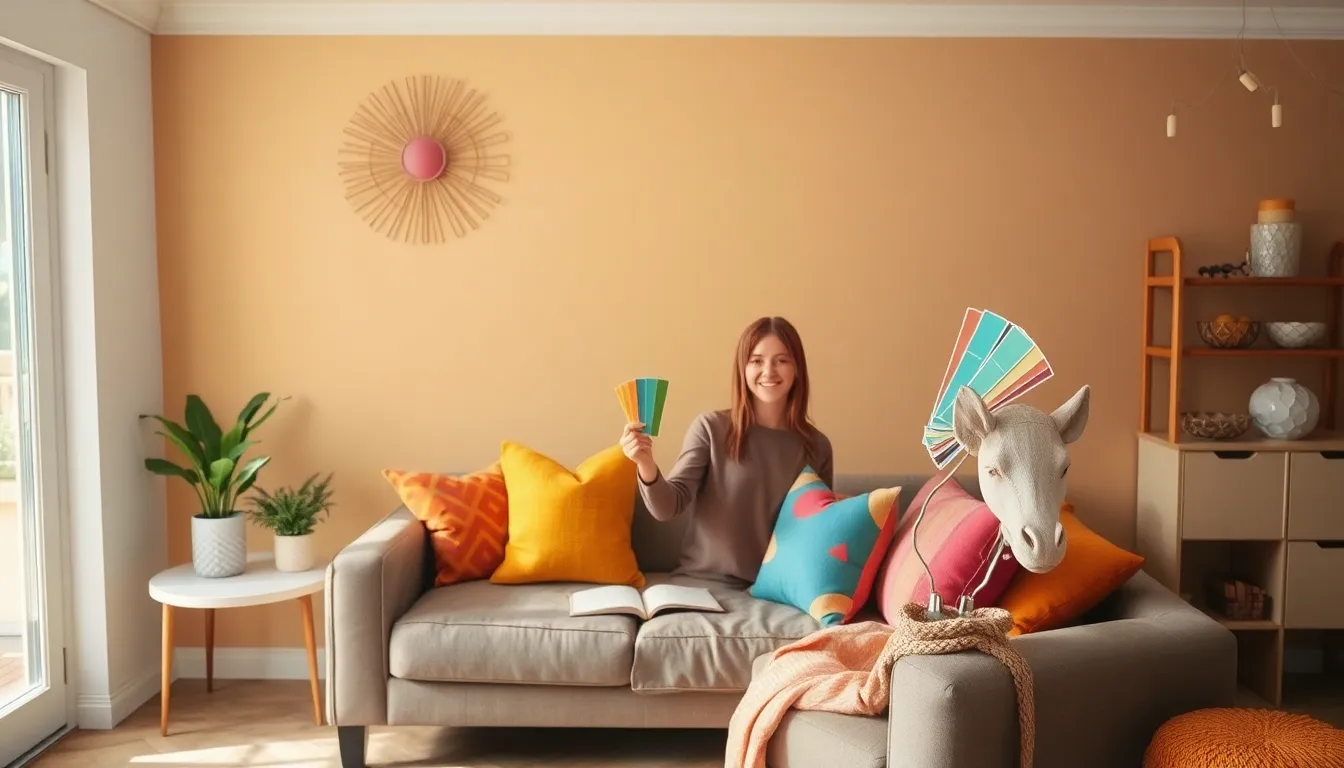
Choosing the right paint color for a living room can feel like deciding what to wear on a first date—it’s all about making the right impression. The living room is where friends gather, family bonds, and Netflix marathons happen. So why settle for a dull beige when you can transform your space into a vibrant oasis or a cozy retreat?
Table of Contents
TogglePopular Paint Colors for Living Rooms
Choosing the right paint color enhances a living room’s ambiance. Several popular options cater to various styles and preferences.
Neutral Tones
Neutral tones remain a favorite choice for many homeowners. Shades like soft gray and warm beige provide a calming backdrop. These colors easily blend with different furniture styles and decor elements. Using neutral tones can create a spacious feel, making small living rooms more inviting. Accents in brighter colors can add personality without overwhelming the space.
Bold Colors
Bold colors create striking statements in living rooms. Deep blues and vibrant reds add energy and warmth. These shades work well as accent walls, drawing attention to specific areas. Incorporating bold colors engages visitors, encouraging conversation and excitement. Pairing them with neutral furniture allows bold hues to shine without becoming overpowering.
Pastel Shades
Pastel shades introduce a soft and serene vibe. Light pink and pale blue bring a subtle elegance to the living room. They create an airy atmosphere that feels inviting and fresh. Pastels work beautifully in both modern and traditional spaces, adding a playful touch. Complementing these shades with white or light wood furniture enhances their charm and warmth.
Factors to Consider When Choosing Paint Colors
Choosing paint colors for a living room involves multiple considerations. Several factors influence the final decision, ensuring harmony in the space.
Room Size
Room size significantly impacts color selection. Smaller rooms benefit from light colors like soft gray or cream, creating an illusion of space. Larger rooms can accommodate darker shades, which add depth and warmth. Paint colors should reflect how users interact with the space. Bright or bold accents also work effectively in expansive areas, making them feel cozier. Ultimately, the chosen color must enhance the room’s proportions and shape.
Lighting Conditions
Lighting conditions play a crucial role in color perception. Natural light enhances the vibrancy of colors, whereas artificial light can change their appearance. South-facing rooms gain abundant sunlight, allowing for rich and vivid tones. In contrast, north-facing rooms often require warmer colors to combat cooler shadows. Consider testing colors at different times of day to see how they react to varying light sources. Properly evaluating lighting will prevent surprises when the paint sets.
Furniture and Decor
Furniture and decor need to harmonize with wall colors. Analyzing existing furniture allows for a cohesive look. Complementary colors enhance the overall aesthetic. For instance, neutral furniture pairs well with bold wall colors. Conversely, vivid decorations can create striking contrasts against muted tones. It’s essential to consider the entire room as an ecosystem, ensuring that color choices reflect the intended atmosphere and style. Coordinating paint colors with furnishings heightens the visual appeal and unity of the space.
Color Combinations and Schemes
Selecting the right color combination enhances a living room’s aesthetic. Various schemes offer versatility and style.
Monochromatic Schemes
Monochromatic schemes involve one color in varying shades and tones. This approach creates a harmonious look, promoting a tranquil atmosphere. Soft blues or greens, for instance, work well to evoke calmness while maintaining visual interest. By layering different shades, designers achieve depth and texture without overwhelming the space. Utilizing accent pieces like cushions or artwork in darker or lighter versions of the primary color can further enhance the effect.
Complementary Colors
Complementary colors involve pairing colors opposite each other on the color wheel. This technique creates a vibrant, eye-catching effect while maintaining balance. For example, combining a warm orange with a cool blue provides energy and excitement. These contrasting hues work well for accent walls or decor items, stimulating visual engagement. When applied thoughtfully, complementary colors can highlight architectural features and create focal points within the room.
Tips for Testing Paint Colors
Testing paint colors ensures an accurate representation of how shades affect living spaces. Utilizing effective methods enhances informed decisions about color choices.
Sample Swatches
Sampling paint swatches allows for a visual comparison of colors. Obtaining small sample pots provides flexibility to test multiple shades. Applying swatches on walls at different heights shows how lighting affects perception. Observing swatches throughout the day reveals the color’s true character as natural light shifts. Swatches help visualize various paint options alongside existing decor, ensuring harmony in the space.
Lighting Tests
Lighting tests play a crucial role in selecting paint colors. Natural light illuminates colors in distinct ways, providing insight into how they interact with furnishings. Experimenting with artificial light sources helps identify how colors appear under different conditions. After applying sample swatches, observe them in both daylight and evening settings to gauge their transformability. This practice assists in ensuring the final color choice complements the living room’s lighting, enhancing overall aesthetics.
Choosing the right paint color for a living room can transform the space into a welcoming haven. By considering factors like room size and lighting, individuals can create an atmosphere that reflects their personal style and enhances comfort. Whether opting for neutral tones for a calming effect or bold colors for a striking statement, the possibilities are endless.
Testing colors in various lighting conditions ensures the chosen shade will look its best throughout the day. With thoughtful selection and planning, the living room can become a vibrant focal point in any home, inviting warmth and creativity for family and friends alike.