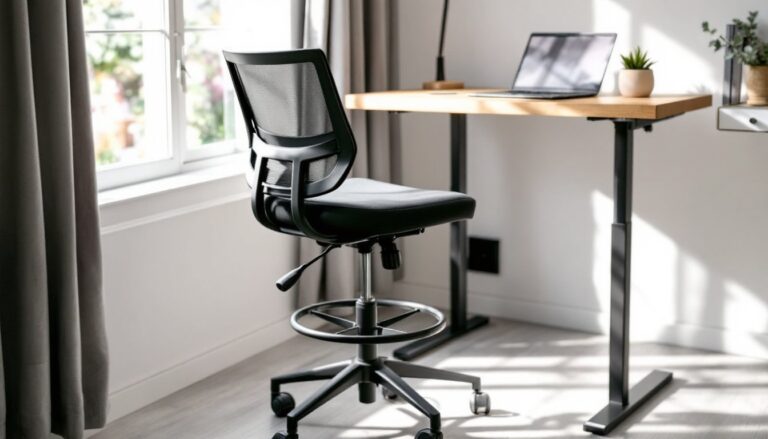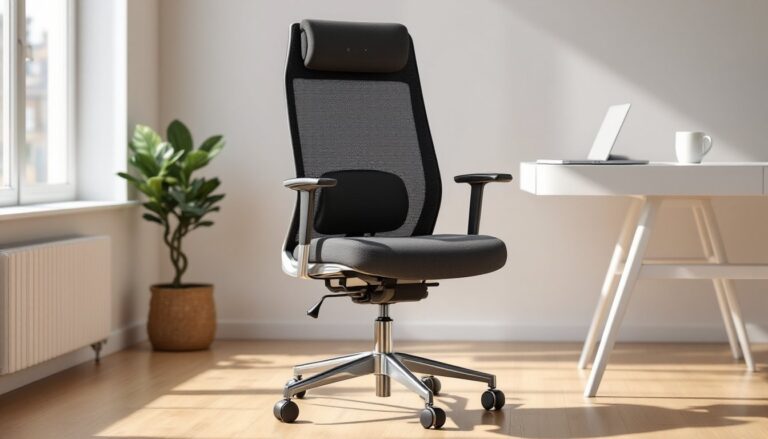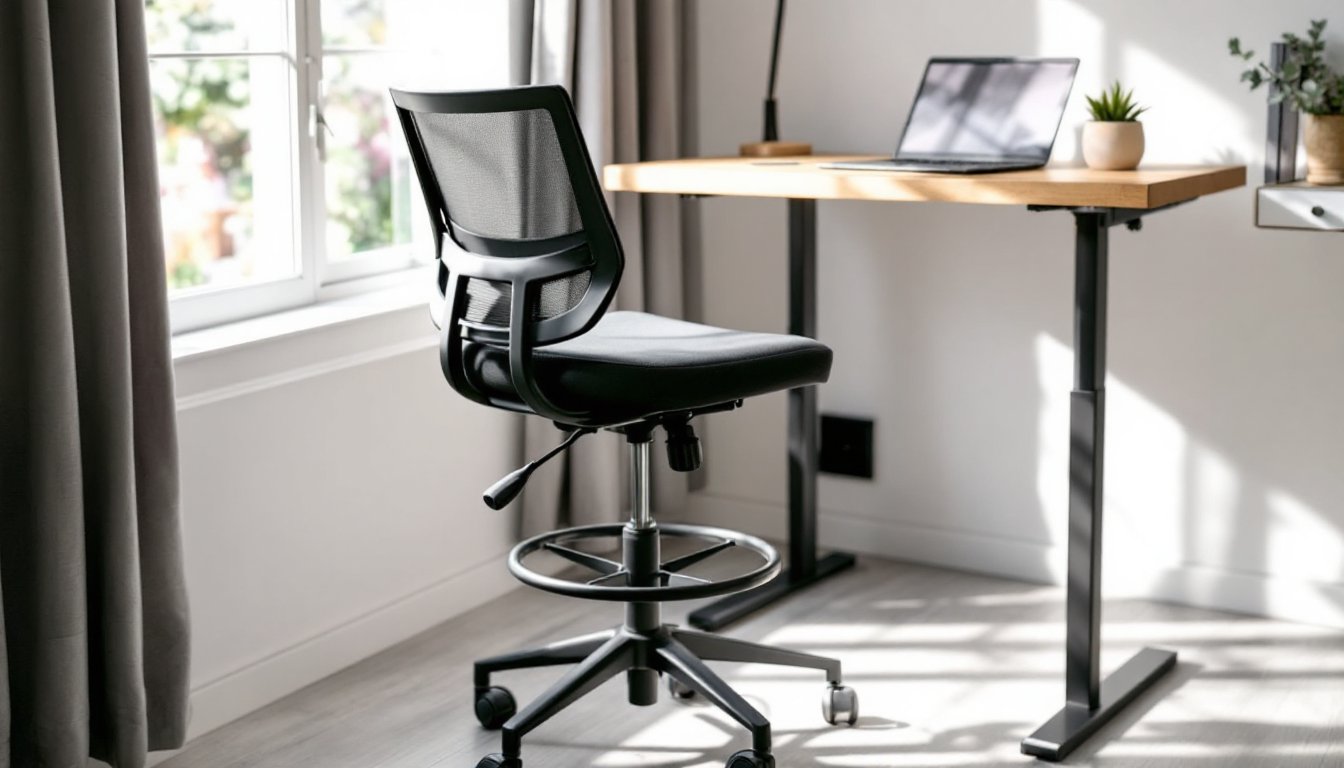
Standing desks have become a staple in home offices, but most people overlook a critical companion: the bar height office chair. These taller-than-standard seats bridge the gap between traditional office chairs and full standing, letting users alternate positions without dropping desk height. Whether someone’s using a fixed standing desk, an adjustable workstation locked at counter height, or a drafting table setup, a bar height chair provides the perching support needed for long work sessions. This guide covers what sets these chairs apart, how to choose the right one, and how to avoid the most common purchasing mistakes.
Table of Contents
ToggleKey Takeaways
- A bar height office chair typically ranges from 24–34 inches in seat height and includes ergonomic features like lumbar support and footrings, making it essential for anyone working at standing desks between 38–48 inches.
- Proper ergonomics require the chair seat to sit 10–12 inches below your desk surface, so measuring your elevated desk height first is critical to avoiding costly purchasing mistakes.
- Invest in pneumatic height adjustment, 360-degree swivel bases with appropriate casters, adjustable armrests, and breathable mesh or high-density foam to ensure all-day comfort during eight-hour workdays.
- Alternating between sitting, perching, and standing positions throughout the day reduces lower back discomfort, improves circulation, and maintains workflow continuity without disrupting monitor angles or cable management.
- A bar height chair should have a weight capacity rated at least 50 pounds above your body weight, as undersized gas lift cylinders sag within months and lose height adjustment range.
- Avoid common mistakes like choosing fashion over function, ignoring footring design, and purchasing without a clear return policy—test the chair fully before assembly to ensure it matches your specific workspace needs.
What Is a Bar Height Office Chair and Who Needs One?
A bar height office chair typically features a seat height ranging from 24 to 34 inches, compared to standard office chairs that max out around 20-21 inches. These chairs include a footring or footrest mounted on the base, since feet won’t reach the floor at this elevation.
Anyone using a standing desk set between 38 and 48 inches needs one of these chairs. Standard office chairs simply don’t raise high enough to provide proper seated ergonomics at standing desk height. The same goes for people working at kitchen islands, workshop benches, or drafting tables, anywhere the work surface sits above typical desk height.
Professionals who benefit most include:
- Remote workers with height-adjustable or fixed standing desks
- Architects and designers using drafting tables
- Lab technicians at raised workbenches
- Hobbyists with workshop stations
- Anyone seeking an active sitting position that engages core muscles
Bar height chairs aren’t just tall stools with wheels. They incorporate office chair ergonomics, lumbar support, adjustable armrests, and swivel bases, into a taller frame. That distinction matters for all-day comfort.
Key Features to Look for in a Bar Height Office Chair
Not all bar height chairs deliver the support needed for eight-hour workdays. Here’s what separates workspace-grade chairs from basic bar stools.
Pneumatic height adjustment is essential. Look for a gas lift cylinder rated for the extended range, typically 24 to 34 inches at seat level. Cheaper models lock at fixed heights, which won’t accommodate different users or desk configurations.
A 360-degree swivel base with smooth-rolling casters rated for the floor type matters. Hard casters for carpet, soft casters for hardwood or tile. The base diameter should be at least 24 inches for stability at height.
The footring diameter should measure 16 to 20 inches and sit roughly 8 to 10 inches below the seat. This positions feet naturally without hip strain. Adjustable footrings accommodate different leg lengths.
Seat depth between 17 and 20 inches works for most adults. Seats that are too deep force users to choose between back support and leg circulation. Better chairs include depth adjustment via a sliding seat pan.
Ergonomic Support and Adjustability
Proper lumbar support becomes even more critical in bar height positions. The lumbar curve should hit the small of the back at roughly L3-L5 vertebrae. Adjustable lumbar mechanisms let users dial in that support.
Armrests should adjust in height, width, and angle. At bar height, fixed armrests often sit too low or too high relative to the desk surface, forcing awkward shoulder positions. Four-way adjustable arms prevent that.
Look for seat tilt mechanisms with tension adjustment. A slight forward tilt (1-3 degrees) encourages active sitting and reduces pressure on the tailbone during perching positions.
Breathable materials matter for all-day use. Mesh backs provide better airflow than solid foam, though high-density foam with perforations works well too. The seat itself should use at least 2-inch thick, high-density foam (minimum 1.8 lb/ft³ density) to prevent bottoming out.
Top Benefits of Using a Bar Height Chair in Your Home Office
The primary advantage is position variety. Research shows that alternating between sitting, perching, and standing throughout the day reduces lower back discomfort and improves circulation. A bar height chair makes those transitions seamless, no need to lower the desk each time.
Core engagement increases in the elevated perching position. Users maintain better posture naturally since the feet-on-footring position engages stabilizer muscles. It’s not as passive as traditional sitting but less demanding than full standing.
Desk height consistency matters for multi-monitor setups and carefully arranged cable management. An office chair at standard height forces users to lower their standing desk by 16-18 inches, disrupting monitor angles and keyboard positions. Bar height chairs eliminate that hassle.
The workflow continuity benefit shouldn’t be overlooked. When fatigue sets in during standing periods, users can perch immediately without interrupting their task. That’s especially valuable during video calls or focused work where stopping to adjust furniture breaks concentration.
For home workshops, bar height chairs bring office comfort to project tables. Woodworkers, crafters, and hobbyists working on detailed tasks at raised benches get the back support and mobility that shop stools don’t provide.
How to Choose the Right Bar Height Office Chair for Your Space
Start by measuring the actual desk height in its elevated position. Proper ergonomics put keyboard height at elbow level when shoulders are relaxed. For most adults, that means the chair seat should sit 10 to 12 inches below desk surface.
If the desk sits at 42 inches, the seat needs to adjust to approximately 30-32 inches. Add 2 inches of seated compression to account for body weight on the cushion. That math determines the required height range.
Weight capacity varies significantly. Budget models rate to 225 pounds, while heavy-duty options handle 400+ pounds. Check the BIFMA certification (Business and Institutional Furniture Manufacturers Association) if available, it indicates the chair passed standardized durability testing.
Consider the chair footprint relative to the workspace. The base diameter plus armrest width determines the total width. Measure clearance between desk legs, file cabinets, and walls. Allow at least 6 inches of clearance on all sides for comfortable movement.
Assembly requirements range from fully assembled to 30-minute builds. Most bar height chairs ship partially assembled, the base, gas lift, and seat arrive separate. Basic tools needed typically include an Allen wrench (usually provided) and occasionally a Phillips screwdriver.
For specific builds and modifications, DIY enthusiasts might explore resources like woodworking project plans if considering custom-built seating for specialized workshop applications.
Material choice depends on use case:
- Mesh: Best airflow, less cushioning, modern aesthetic
- Leather/faux leather: Easy to clean, professional look, can get hot
- Fabric: Most breathable, hardest to clean, widest color options
- Vinyl: Waterproof for labs or workshops, less breathable
Installation and Setup Tips for Maximum Comfort
Unbox and let foam cushioning rest for 24 hours before final adjustments. Compressed foam needs time to expand to full thickness, affecting final seated height by up to half an inch.
Assembly sequence matters for stability:
- Insert the gas lift cylinder into the base, no tools needed, just push firmly until it clicks
- Slide the protective cover over the cylinder
- Flip the seat mechanism upside down and attach the seat cushion (usually 4 bolts)
- Carefully lower the seat assembly onto the gas lift, align center and press down with body weight
- Attach armrests and any accessories per manufacturer instructions
- Install the footring at the appropriate height
Initial height adjustment: Sit naturally with feet on the footring. Elbows should bend at 90 degrees with hands on the keyboard. If shoulders hike up, lower the chair. If wrists bend upward, raise it.
Footring positioning: Thighs should angle slightly downward from hips to knees (about 5-10 degrees). This is called a “hip-open” position and reduces pressure on the lower back. Adjust the footring height until this angle feels natural.
Lumbar depth: Slide the lumbar support forward or backward until it fills the curve of the lower back without pushing the upper back forward. The support should feel present but not intrusive.
Armrest height: With shoulders relaxed, forearms should rest lightly on armrests at a 90-degree elbow angle. Armrests set too high force shoulder shrugging: too low pulls shoulders forward.
For builders interested in custom height solutions, checking out resources like DIY furniture building guides can provide alternative approaches, though factory-made ergonomic chairs typically outperform custom builds for all-day office use.
Break-in period: Expect 3-5 days of adjustment. The body adapts to new sitting positions gradually. Minor discomfort during this period is normal: sharp pain indicates incorrect setup.
Common Mistakes to Avoid When Buying a Bar Height Office Chair
The biggest error is assuming all tall chairs are ergonomic. Bar stools with backs aren’t office chairs. They lack adjustment mechanisms, proper lumbar curves, and task-appropriate features. Don’t sacrifice eight hours of comfort to save $100.
Ignoring weight ratings leads to premature failure. Gas lift cylinders rated below user weight sag within months, losing height adjustment range. Always choose chairs rated at least 50 pounds above body weight for longevity.
Overlooking footring design causes leg fatigue. Thin metal rings or plastic footrests don’t distribute pressure well across the foot. Look for footrings at least 1 inch in diameter with textured surfaces. Some users add aftermarket footring cushions for extended comfort.
Buying without measuring the desk height first wastes money. A chair that doesn’t reach the needed height or extends too far beyond it won’t work. Verify the adjustment range matches the actual workspace requirements before purchasing.
Skipping caster selection damages floors. Standard hard plastic casters scratch hardwood and vinyl. Soft rollerblade-style casters protect hard flooring. Using a chair mat works too, though it adds $30-60 to the total cost.
Choosing fashion over function frustrates daily users. Sleek minimalist chairs often lack the adjustment points needed for proper ergonomics. An extra tall bar stool measuring 33 inches might look great in a modern kitchen but won’t provide the adjustability needed for all-day office work.
Neglecting return policies before assembly is risky. Most retailers won’t accept returns on assembled chairs. Test the chair fully before removing tags or disposing of packaging. Confirm the return window (typically 30 days) and any restocking fees.
Forgetting future adjustability limits the chair’s usefulness. If multiple people will use the workspace or the desk height might change, prioritize chairs with wide adjustment ranges and easy-to-use controls. Pneumatic levers beat screw-based adjustments for frequent changes.
Proper selection and setup of a bar height office chair transforms a standing desk from an occasionally-used novelty into a truly flexible workspace. Taking the time to match chair features to actual workspace requirements and body dimensions pays off in daily comfort and long-term durability.