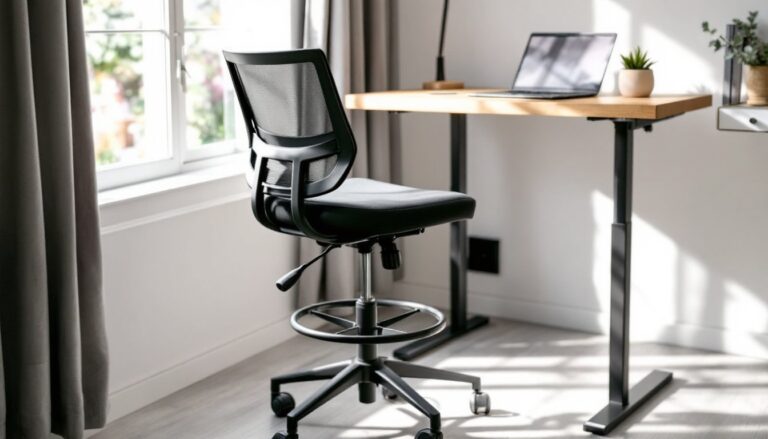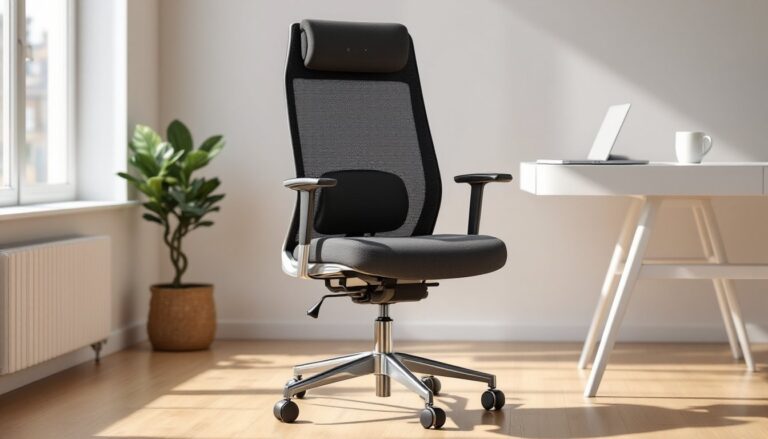
If you’re under 5’4″ and your feet dangle while you work, you already know the problem: most office chairs are built for average-height users, leaving shorter people perched uncomfortably with poor lumbar support and circulation issues. The right chair isn’t just about comfort, it’s about preventing back pain, reducing leg fatigue, and actually being able to reach your desk without slouching. This guide walks through what makes a chair work for shorter frames, which features matter most, and how to avoid the common pitfalls that lead to buying the wrong chair twice.
Table of Contents
ToggleKey Takeaways
- An office chair for short person must have a seat height range starting at 14–15.5 inches to ensure feet rest flat on the floor and prevent circulation and back pain issues.
- Seat depth adjustment (2–4 inches of travel) and proper lumbar support are critical features that standard chairs lack, forcing shorter users to choose between comfort and support.
- Proper chair adjustment—including seat height, depth, lumbar alignment, and armrest positioning—transforms a suitable chair into genuine all-day comfort rather than relying on the chair model alone.
- Common mistakes like ignoring desk height relationships, skipping in-person testing, and misunderstanding marketing terms like “petite” or “small” often lead to buying the wrong office chair twice.
- A quality footrest is a legitimate solution when a chair doesn’t descend quite low enough, and combined with proper adjustments, it eliminates the need to compromise on ergonomics.
Why Standard Office Chairs Don’t Work for Shorter Users
Standard office chairs are typically designed for users between 5’7″ and 6’2″, with seat heights that bottom out around 16 to 17 inches from the floor. For someone who’s 5’3″ or shorter, that minimum height still leaves feet dangling, which cuts off circulation to the legs and forces the pelvis into a posterior tilt.
When your feet can’t rest flat on the floor, your body compensates. You might scoot forward to reach the ground, which pulls you away from the backrest and eliminates lumbar support. Or you perch on the edge, putting all your weight on your thighs and creating pressure points. Over time, this leads to lower back pain, hip discomfort, and even issues with the sciatic nerve.
Seat depth is the other major issue. Standard chairs have seat pans that measure 17 to 20 inches deep. If you have shorter legs, the front edge of the seat digs into the back of your knees while you’re still inches away from the backrest. You’re forced to choose between lumbar support and leg comfort, never both.
Armrests on standard chairs are also positioned too far apart and too high for narrower shoulders, which forces shorter users to hunch forward or splay their elbows out awkwardly. This creates tension in the neck and shoulders that builds throughout the workday.
The takeaway: a chair designed for the average user will never fit a body that’s below average height. You need a chair with a wider range of adjustability, not just a standard model pushed to its lowest settings.
Essential Features to Look for in a Short Person’s Office Chair
Not all “ergonomic” chairs are created equal. When you’re shopping for a chair that fits a shorter frame, these features are non-negotiable.
Seat Height Adjustment Range
Look for chairs with a seat height range that starts at 14 to 15.5 inches from the floor. This is measured from the floor to the top of the seat cushion when the gas cylinder is fully compressed. Most petite-specific or “small” office chairs will advertise this range explicitly.
To check if a seat height will work for you, measure from the back of your knee to the floor while wearing the shoes you typically work in. Subtract about an inch to account for cushion compression. That’s your target seat height. If the chair’s lowest setting is higher than that number, your feet won’t rest flat without a footrest.
Gas cylinders come in different stroke lengths. A class 2 cylinder (shorter stroke) is common in petite chairs, while standard chairs use class 3 or 4 cylinders. If you’re modifying an existing chair, swapping the cylinder is possible but requires removing the base and seat, doable with a rubber mallet and some patience, but not a quick fix.
Seat Depth and Pan Slider Mechanisms
Seat depth adjustment is critical. Look for chairs with a seat pan slider that allows at least 2 to 4 inches of forward/backward travel. When properly adjusted, you should have about 2 to 3 fingers’ width of space between the front edge of the seat and the back of your knees.
Some chairs advertise “adjustable seat depth” but only tilt the seat pan angle, which doesn’t solve the length problem. True depth adjustment moves the entire seat cushion forward or backward relative to the backrest. Check product specs carefully, or better yet, test the chair in person.
Shallower seat pans (around 15 to 17 inches) are ideal for shorter users. Chairs marketed for petite builds, like those found on specialized office chair retailers, often feature these proportions.
Another option: some users modify deeper seats by adding a firm lumbar cushion that effectively shortens the seat depth. This isn’t ideal, it’s a workaround, but it can make a non-adjustable chair more tolerable if you already own it.
How to Properly Adjust Your Office Chair for Optimal Comfort
Buying the right chair is only half the job. Proper adjustment is what turns a good chair into one that actually supports your body through an eight-hour workday.
Start with seat height. Sit all the way back in the chair and adjust the height so your feet rest flat on the floor (or footrest) and your knees are bent at roughly 90 degrees. Your thighs should be parallel to the floor or angled slightly downward. If your thighs are angled up, the seat is too low: if your feet dangle, it’s too high.
Next, adjust seat depth. Slide the seat pan forward or backward until there’s about 2 to 3 inches (roughly two or three fingers’ width) of clearance between the front edge of the seat and the back of your knees. You should feel your backside and lower back fully supported by the backrest without pressure on your legs.
Set the lumbar support height so the curve of the backrest aligns with the natural curve of your lower back, typically just above your belt line. Many chairs let you adjust lumbar depth as well, push it forward until you feel gentle support without being forced into an exaggerated arch.
Adjust armrests so your elbows rest comfortably at your sides with your shoulders relaxed, not hunched up or stretched wide. Your forearms should be roughly parallel to the floor when typing. If the armrests are too wide or can’t adjust inward enough, it’s better to remove them than to let them force poor posture. Some DIYers have modified armrest width using IKEA furniture modifications for creative solutions, though this voids most warranties.
Finally, check your monitor height. The top of your screen should be at or slightly below eye level, about an arm’s length away. If you’ve lowered your chair to fit your height, your desk may now be too high. Consider a keyboard tray or a height-adjustable desk to maintain proper alignment.
Don’t set everything once and forget it. Reassess every few weeks, especially if you notice discomfort creeping in.
Common Mistakes Short People Make When Choosing Office Chairs
Even when shopping with the best intentions, shorter users often make predictable mistakes that lead to buyer’s remorse.
Mistake #1: Assuming “petite” and “small” chairs are all the same. Marketing terms like “petite,” “small,” or “compact” aren’t standardized. One brand’s “small” chair might have a minimum seat height of 17 inches, still too tall for many users under 5’3″. Always check the actual spec sheet for seat height range, seat depth, and weight capacity.
Mistake #2: Buying based on aesthetics instead of adjustability. That minimalist mesh chair might look great in a home office makeover, but if it doesn’t adjust low enough or lacks a seat pan slider, it’s going to hurt after an hour. Function has to come before style, especially when your body is outside the “average” range.
Mistake #3: Ignoring the footrest. If you find a chair you love but it doesn’t go quite low enough, a footrest isn’t a compromise, it’s a legitimate solution. Look for one that’s adjustable in height and angle, with a textured surface to prevent your feet from sliding. A static footrest that’s too high or too low creates the same circulation problems as a too-high chair.
Mistake #4: Not testing the chair for at least 30 minutes. Sitting in a showroom for two minutes won’t reveal pressure points, inadequate lumbar support, or armrest issues. If you’re buying online, make sure the return policy allows for a real-world trial period, at least 14 to 30 days.
Mistake #5: Overlooking the desk height relationship. A chair that fits your body perfectly can still cause problems if your desk is too high. Standard desks are 28 to 30 inches tall, which works fine for average-height users but can force shorter people to raise their chair (and their feet off the ground) or hunch their shoulders to reach the keyboard. If your chair is adjusted correctly but your arms aren’t at 90 degrees when typing, the desk is the problem, not the chair. Consider a height-adjustable desk or an under-desk keyboard tray.
Mistake #6: Buying a chair that’s too small in other dimensions. Just because you need a lower seat height doesn’t mean you need a narrow seat or flimsy construction. Check the seat width (typically 17 to 20 inches) and weight capacity to ensure the chair is built to last and fits your body comfortably in all dimensions, not just height.
Conclusion
Finding the right office chair when you’re shorter than average isn’t about settling for what’s available, it’s about identifying the specific adjustments your body needs and refusing to compromise on them. Prioritize seat height range, seat depth adjustment, and proper lumbar support. Test thoroughly, measure carefully, and don’t be afraid to return a chair that doesn’t fit. Your back will thank you.