A sparkling clean pool is the crown jewel of any backyard oasis, but keeping it pristine can feel like a never-ending chore. Between leaves, bugs, and the occasional rogue floatie, it’s easy to let pool cleaning slide down the to-do list. But fear not! With the right tips and tricks, maintaining that crystal-clear water can be as easy as cannonballing into the deep end.
Table of Contents
ToggleOverview of Pool Cleaning
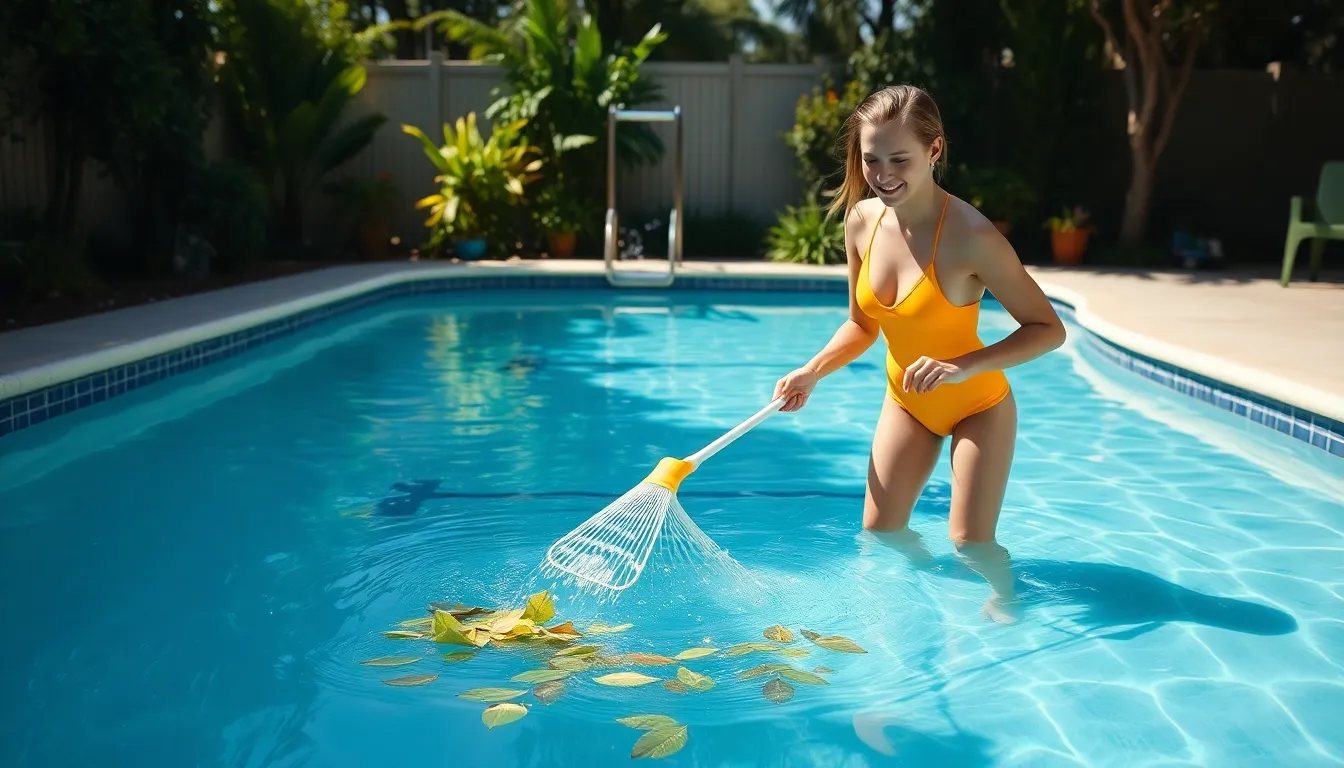
Pool cleaning involves several essential tasks to maintain water clarity and hygiene. Regular skimming of debris, such as leaves and insects, significantly reduces the overall cleaning effort. Cleaning the pool floor and walls removes algae buildup and keeps surfaces pleasant for swimmers.
Pool filtration is another critical component. Properly functioning filters capture small particles, helping to maintain water quality. Monthly filter cleaning ensures optimal operation. Chlorination plays a vital role in disinfecting water, preventing harmful bacteria and keeping it inviting.
Visual inspections should occur weekly. Checking for any malfunctions or leaks makes early detection possible and prevents costly repairs. Vacuuming, done regularly, ensures the removal of dirt that settles at the bottom.
Certain technological advancements also assist in pool cleaning. Automated pool cleaners, equipped with sensors, navigate the pool’s surfaces and efficiently collect debris. These machines can operate independently, saving time for pool owners.
Maintaining balanced water chemistry is crucial. Testing pH and chlorine levels, ideally bi-weekly, ensures a safe swimming environment. Adjusting these levels as necessary contributes to the overall health of the pool.
Assessing the pool’s filtration system quarterly offers insight into its effectiveness. Additionally, seasonal preparations, like winterizing, help protect the pool during colder months. Prioritizing these cleaning tasks leads to a consistently pristine swimming pool that enhances outdoor enjoyment.
Importance of Regular Pool Cleaning
Regular pool cleaning is essential for maintaining a safe and enjoyable swimming environment. It directly affects health and water quality.
Health Benefits
Clean pools promote better health for swimmers. Regular removal of debris prevents the growth of harmful bacteria and algae. This cleaning reduces the risk of skin irritations and infections caused by contaminated water. Keeping the pool clean also minimizes the likelihood of mosquito breeding, which can lead to diseases. Thus, frequent cleaning contributes to overall health and safety.
Maintaining Water Quality
Water quality remains a top priority for pool owners. Maintaining balanced pH and chlorine levels requires bi-weekly testing. These measures protect swimmers from chemical imbalances and ensure clear water. Regular skimming and vacuuming eliminate dirt and debris that compromise water clarity. Automated pool cleaners further enhance water quality by efficiently removing contaminants. Adhering to these practices results in a consistently inviting swimming experience.
Types of Pool Cleaning Methods
Pool cleaning methods vary in technique and efficiency. Understanding these types can help pool owners choose the right cleaning strategy for their needs.
Manual Cleaning
Manual cleaning involves using handheld tools for cleaning tasks. Skimmers remove surface debris like leaves and bugs directly from the pool. A vacuum attaches to the pool’s filtration system to eliminate dirt from the pool floor. Brushes scrub the walls and tiles to prevent algae growth. Regular manual cleaning can enhance water clarity, allowing users to enjoy a pristine swimming environment. Scheduling these tasks weekly maintains a fresh appearance while also ensuring the water remains safe.
Automated Cleaning Devices
Automated cleaning devices significantly reduce cleaning effort. Robotic pool cleaners operate independently, navigating the pool to collect debris and dirt. Suction-side cleaners attach to the pool’s skimmer, using the filtration system to remove particles. Pressure-side cleaners utilize water pressure to propel themselves while capturing debris in a bag. Investing in these devices offers convenience and efficiency, with many models equipped with programmable features for enhanced performance. Regular use of automated cleaners helps maintain balanced water chemistry while minimizing manual labor.
Essential Pool Cleaning Equipment
Effective pool cleaning relies heavily on the right equipment. Utilizing quality tools simplifies maintenance and ensures a healthy swimming environment.
Vacuums and Brushes
Vacuums and brushes remain fundamental for maintaining pool cleanliness. A manual vacuum provides control over cleaning techniques, allowing targeted removal of dirt and debris. Automatic vacuums, including robotic and suction-side models, ease the burden of cleaning by navigating the pool autonomously. Brushes, used on pool walls and floors, help eliminate algae and grime buildup more efficiently. Regular vacuuming and brushing maintain water clarity while ensuring a safe swimming experience.
Water Test Kits
Water test kits play a crucial role in pool maintenance. They assess key parameters such as pH, chlorine, and alkalinity levels. Accurate testing ensures water chemistry remains balanced, preventing potential health risks. Homeowners often use test strips or liquid kits for everyday readings. Regular monitoring aids in preventing imbalances that could lead to algae growth or skin irritations. By prioritizing water quality testing, pool owners can maintain a safe and enjoyable swimming environment.
Pool Cleaning Best Practices
Maintaining a clean pool requires consistent effort and attention. Following best practices ensures water quality and enhances the swimming experience.
Frequency of Cleaning
Daily skimming removes leaves and debris from the surface, preventing contamination. Weekly vacuuming targets settled dirt and algae on the pool floor, promoting cleanliness. It helps to brush the walls twice a month to eliminate any buildup. Monthly filter cleaning maintains optimal performance, supporting water clarity and hygiene. Regular visual checks of water levels and equipment for malfunctions play a crucial role in pool maintenance. Automated cleaners, used several times a week, conveniently assist with routine cleaning while saving time and effort. Keeping a consistent schedule makes a significant difference in achieving a pristine swimming area.
Seasonal Considerations
Seasonal changes affect pool cleaning routines. During spring, it’s essential to prepare for increased debris from blooming trees and flowers. Regular inspections of equipment and water chemistry help ensure efficiency. Summer swimming often leads to higher usage, which can increase the frequency of cleaning tasks. During autumn, falling leaves demand more attention, so removing them frequently is vital. Winterizing the pool protects it from freezing temperatures and prevents damage. Shifting cleaning practices according to seasonal conditions keeps the pool clean and ready for whenever it’s needed.
Maintaining a clean swimming pool doesn’t have to be a daunting task. By implementing a consistent cleaning routine and utilizing the right tools, pool owners can enjoy a sparkling oasis throughout the year. Regular skimming vacuuming and water testing are key practices that significantly enhance water quality and safety.
Investing in automated cleaning devices can also streamline the process making maintenance more efficient. With a proactive approach and attention to detail, anyone can achieve a healthy and inviting swimming environment. Ultimately a well-maintained pool not only serves as a beautiful retreat but also promotes better health and enjoyment for all who dive in.