Picture this: it’s a scorching summer day, and the only thing standing between you and a refreshing dip in your pool is a murky mess that looks like it belongs in a horror movie. Cleaning a pool might not be the most glamorous task, but it’s essential for keeping your oasis sparkling and inviting. After all, nobody wants to swim in a swamp, right?
Table of Contents
ToggleUnderstanding Pool Cleaning
Cleaning a pool involves multiple steps to maintain water clarity and hygiene. Regular maintenance ensures the pool remains inviting for swimmers. Understanding the essential aspects of pool cleaning can simplify the process.
Chemical Balance
Balancing pool chemicals prevents algae growth and harmful bacteria. Check pH levels regularly, aiming for a range between 7.2 and 7.8. Monitor chlorine levels with ideal values between 1 and 3 parts per million for effective sanitation.
Physical Cleaning
Physical cleaning includes skimming, brushing, and vacuuming. Skimming removes floating debris, such as leaves and bugs, while brushing addresses dirt and algae attached to surfaces. Vacuuming ensures thorough cleaning of the pool floor and walls.
Filtration System
The filtration system plays a crucial role in maintaining water quality. It circulates water, removing particles and contaminants. Operating the filter for 8 to 12 hours daily keeps the water clear.
Routine Inspection
Routine inspection identifies potential issues early. Check the pool’s pump, filter, and skimmer regularly for clogs or damage. Addressing equipment problems promptly prevents larger complications later.
Seasonal Preparation
Seasonal preparation is essential before opening or closing a pool. Clean thoroughly, balance chemical levels, and cover the pool securely during the offseason. Proper preparation extends the life of the pool.
Understanding these components in pool cleaning promotes a safer, more enjoyable swimming experience. Neglecting any aspect can lead to problems, underlining the importance of a consistent cleaning routine.
Essential Tools for Pool Cleaning
Cleaning a pool effectively requires specific tools that streamline the process. Having the right equipment ensures a sparkling and inviting swimming environment.
Skimmers and Nets
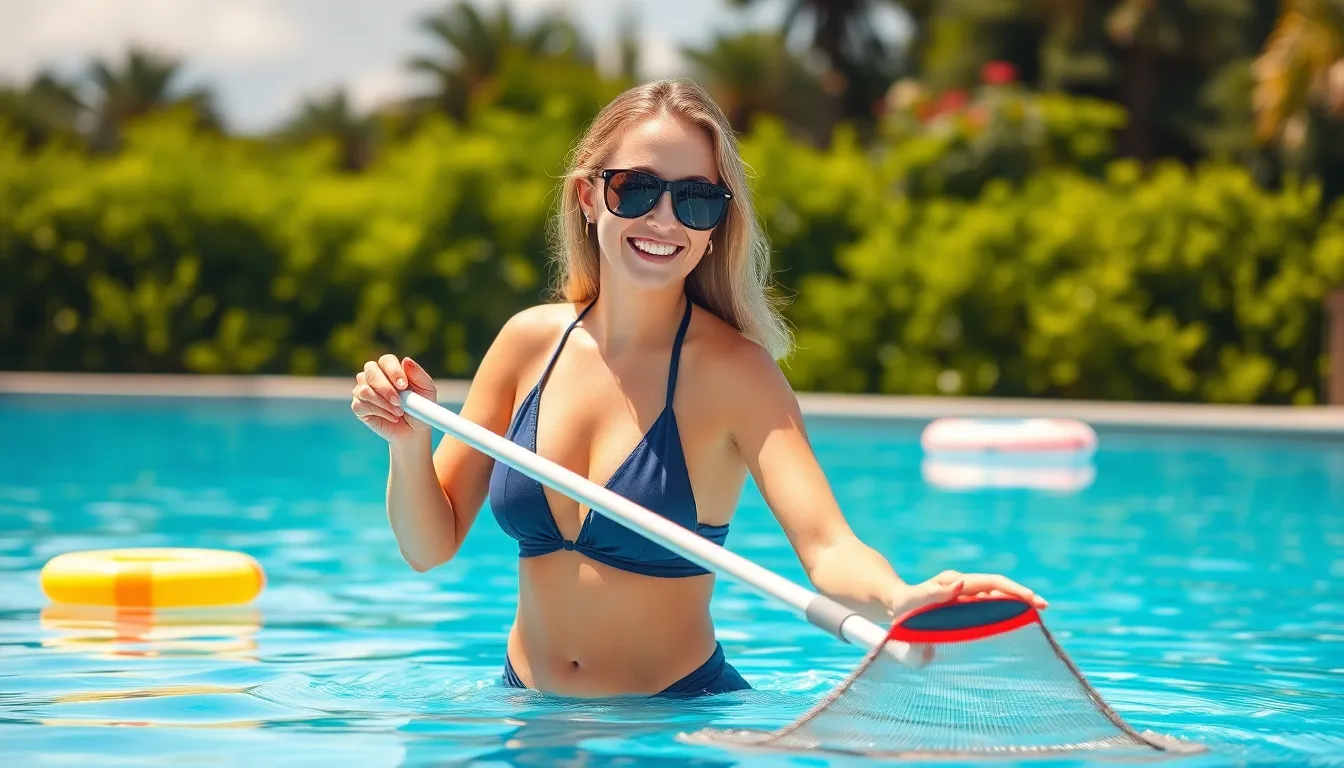
Skimmers play a vital role in pool maintenance. They quickly remove leaves, twigs, and other floating debris from the water’s surface. Nets complement skimmers, providing an efficient means to collect small particles or insects that the skimmers might miss. Regular use of these tools prevents clogged filters and promotes clear visibility in the water. Choose a skimmer with a sturdy pole for easy reach and a fine mesh to capture smaller items effectively.
Brushes and Vacuums
Brushing is essential for keeping pool walls and tiles clean. Brushes dislodge algae and dirt that accumulate over time. Different brush types target specific surfaces, ensuring comprehensive cleaning. Vacuums further enhance cleanliness by removing sediment and debris settled on the pool floor. Automatic vacuums or manual models cater to various preferences, allowing for flexibility in pool maintenance routines. Combining brushing with vacuuming provides a thorough cleaning solution, maintaining water quality and hygiene throughout the swimming season.
Step-by-Step Guide on How to Clean a Pool
Cleaning a pool involves several important steps to ensure a clear, inviting swimming environment. Each component of the cleaning process contributes to an enjoyable swimming experience.
Surface Cleaning
Surface cleaning starts with skimming the water’s surface using a skimmer net. This action removes leaves, insects, and other floating debris. Next, use a brush to scrub the pool walls and tiles. This step helps eliminate dirt and algae buildup. After brushing, vacuum the surface to capture any debris that settled. Regularly checking and emptying the skimmer basket ensures optimal performance of the filtration system. Maintaining a clean surface prevents larger cleaning issues and enhances water clarity.
Deep Cleaning
Deep cleaning focuses on more thorough maintenance tasks. Begin by cleaning the pool floor with a vacuum, which can be manual or automatic. Manual vacuums allow for targeted cleaning in specific spots, while automatic options efficiently clean the entire area. After vacuuming, conduct a thorough inspection of the filtration system. This check ensures all components function properly and minimizes potential problems. Consider treating the water with shock to eliminate contaminants and improve water quality after heavy usage. Regular deep cleaning contributes to the overall hygiene of the pool and promotes a safe swimming environment.
Maintaining Your Pool After Cleaning
Maintaining a clean pool requires regular attention. Consistent upkeep ensures water remains inviting and safe.
Water Chemistry
Keeping the right chemical balance is essential. Regularly test pH levels, aiming for a range of 7.2 to 7.8. Chlorine levels should stay between 1 to 3 parts per million. Proper chemistry prevents algae growth and harmful bacteria. Certain pool owners benefit from using stabilizers to prolong chlorine’s effectiveness. Heavier usage or after rain necessitates more frequent testing to maintain clarity and safety. Adjust chemicals as needed to ensure optimal swimming conditions. Maintaining water chemistry is critical for an enjoyable swimming experience.
Regular Maintenance Schedule
Creating a routine maintenance schedule boosts pool cleanliness. Skimming the surface should occur daily, while brushing walls and vacuuming the floor should take place weekly. Conduct water tests every 1 to 2 weeks to monitor chemical levels. Emptying skimmer baskets and pump filters weekly prevents clogging and enhances filtration. Additionally, inspect equipment monthly for signs of wear or damage. Seasonal tasks include checking the pool cover and winterizing equipment as necessary. Following this schedule maintains water clarity and extends the life of pool equipment.
Keeping a pool clean is essential for a safe and enjoyable swimming experience. By following the outlined steps and maintaining a consistent cleaning routine, anyone can ensure their pool remains inviting and refreshing. Regular attention to water chemistry and equipment will prevent issues before they arise.
Utilizing the right tools and techniques not only enhances cleanliness but also extends the life of the pool. With dedication and proper maintenance, a sparkling pool can be a source of joy all season long. Embracing these practices will lead to a healthier swimming environment for everyone to enjoy.