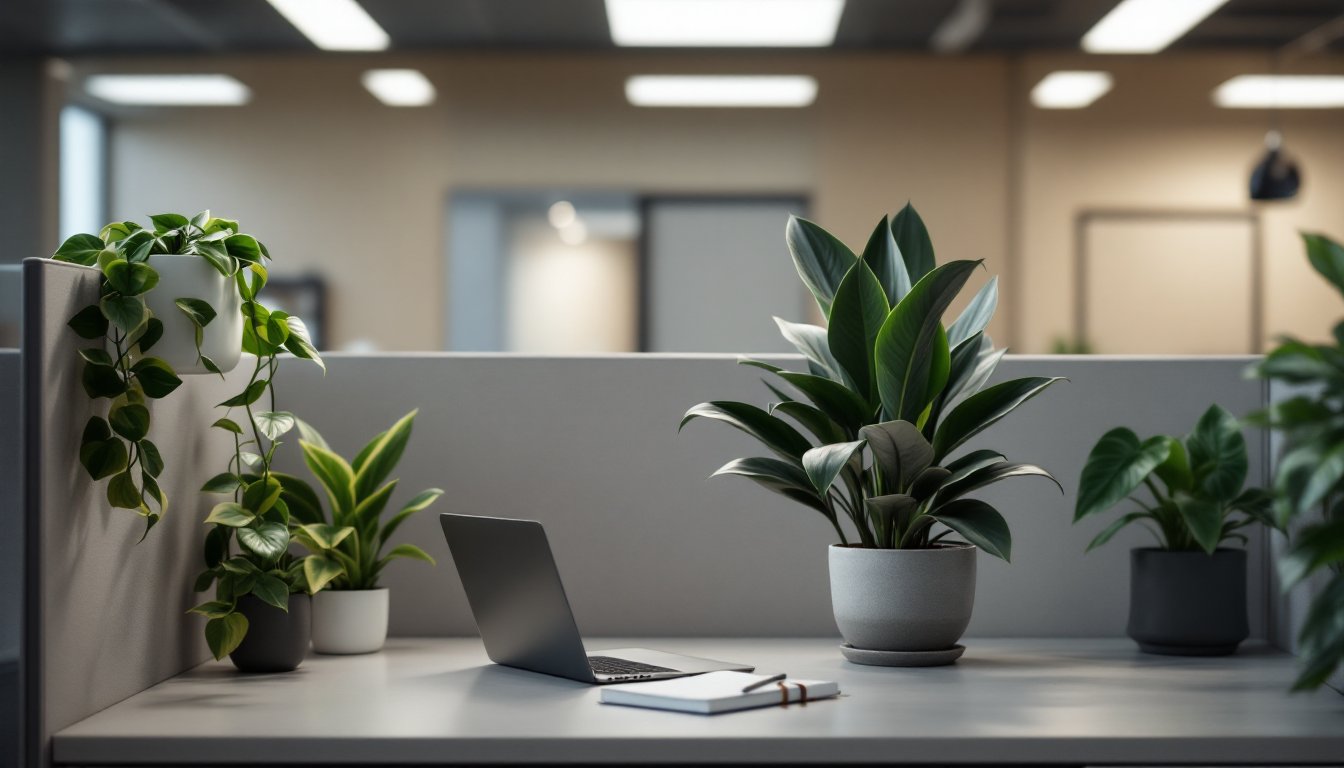
Turning a windowless office into a space that feels alive isn’t as impossible as it seems. While natural sunlight is a luxury not every workspace can offer, certain plants have evolved to thrive in low-light conditions, making them perfect for cubicles, interior offices, and basement workspaces. These aren’t finicky orchids or sun-hungry succulents. They’re resilient, forgiving, and built to survive on artificial light alone. If you’ve been hesitant to add greenery to a dim office, this guide will walk you through the best low-light plants that can handle the challenge, and the care strategies that’ll keep them thriving.
Table of Contents
ToggleKey Takeaways
- The best plants for office with no windows are those adapted to low light, such as snake plants, ZZ plants, pothos, and cast iron plants, which thrive under fluorescent or LED lighting alone.
- Snake plants and ZZ plants are ideal for neglected spaces because they can survive 2–3 weeks between waterings and tolerate inconsistent care schedules.
- Overwatering is the leading cause of death for low-light office plants; check soil moisture before watering and ensure pots have drainage holes to prevent root rot.
- Low-light plants improve office productivity and air quality by reducing VOCs like formaldehyde, and studies show they increase worker productivity by up to 15%.
- Pothos is the best choice for lush, visually appealing greenery in dim offices, as its trailing vines grow several feet long and adapt to almost any indoor environment.
- Proper care for windowless office plants includes using cool white LED bulbs (5000K–6500K), maintaining 8–10 hours of consistent artificial light daily, and wiping leaves monthly to maximize photosynthesis.
Why Low-Light Plants Are Perfect for Windowless Offices
Low-light plants aren’t just tolerant of dim conditions, they’re adapted to them. In their native habitats, many of these species grow on forest floors beneath dense canopies, where sunlight is filtered and indirect. That evolutionary background makes them uniquely suited to fluorescent or LED office lighting, which mimics the dappled, low-intensity light they’d receive in the wild.
From a practical standpoint, these plants require less maintenance than their sun-loving counterparts. Watering frequency drops because photosynthesis slows in low light, meaning the soil stays moist longer. They’re also less prone to issues like leaf scorch or rapid soil drying, common problems in bright, sunny spots.
Beyond survival, there’s value in the air quality improvement they provide. While no houseplant is a substitute for proper ventilation (as outlined in building codes like the International Mechanical Code), studies have shown that plants like pothos and snake plants can help reduce airborne volatile organic compounds (VOCs) commonly found in office environments, things like formaldehyde from furniture or benzene from printers.
Low-light plants also bring a psychological benefit. A 2014 study published by the University of Exeter found that enriching an office with plants increased productivity by 15%. Even in windowless spaces, greenery offers a visual break from screens and artificial surfaces, reducing eye strain and mental fatigue.
Top Low-Light Plants for Your Windowless Office
Not all low-light plants are created equal. Some tolerate neglect better than others, and a few will actually suffer if given too much attention. Here are four proven performers that consistently thrive in offices with zero natural light.
Snake Plant (Sansevieria)
The snake plant, also called mother-in-law’s tongue, is about as bulletproof as houseplants get. Its thick, upright leaves store water like a succulent, meaning it can go two to three weeks between waterings in a low-light office. In fact, overwatering is the most common way to kill one.
Snake plants tolerate a wide range of light conditions, from bright indirect light down to the dim glow of overhead fluorescents. They’re also one of the few plants that release oxygen at night, making them a solid choice for 24-hour workspaces or studios. Varieties like Sansevieria trifasciata ‘Laurentii’ (with yellow-edged leaves) and Sansevieria cylindrica (cylindrical leaves) add architectural interest without taking up much desk real estate.
Care basics: Water only when the top two inches of soil are dry. Use a well-draining potting mix, cactus or succulent blends work well. Snake plants are mildly toxic to pets, so keep them out of reach if your office allows animals.
ZZ Plant (Zamioculcas Zamiifolia)
The ZZ plant is the go-to recommendation for anyone who’s killed a houseplant before. It has thick, waxy leaves and a rhizome root system that stores water underground, allowing it to survive weeks of neglect. In low-light conditions, growth slows to a crawl, but the plant stays healthy and doesn’t drop leaves the way a ficus might.
ZZ plants are native to East Africa, where they’ve adapted to long dry spells and shaded understories. That makes them ideal for windowless offices where watering schedules are inconsistent. They also tolerate low humidity, which is common in climate-controlled buildings.
One word of caution: all parts of the ZZ plant contain calcium oxalate crystals, which can cause skin irritation or stomach upset if ingested. Wear gloves when repotting, and wash hands afterward.
Care basics: Water every two to three weeks, or when the soil is completely dry. Use a standard potting mix with added perlite for drainage. Wipe leaves with a damp cloth every few months to remove dust, this helps the plant photosynthesize more efficiently under artificial light.
Pothos (Epipremnum Aureum)
If you want a plant that looks lush and full even in a dim office, pothos is your answer. Its trailing vines can grow several feet long, making it perfect for hanging planters, shelves, or filing cabinets. Pothos is often recommended by experts for its ability to adapt to almost any indoor environment, including spaces with zero natural light.
Pothos is forgiving when it comes to watering, it’ll droop slightly when it needs a drink, then perk back up within hours of being watered. That visual cue makes it beginner-friendly. It also tolerates a range of temperatures, from 60°F to 80°F, which is typical for most office HVAC systems.
There are several varieties to choose from: ‘Golden Pothos’ has yellow variegation, ‘Marble Queen’ is white and green, and ‘Jade Pothos’ is solid green (the most tolerant of low light). The greener the leaf, the better it’ll perform in dim conditions, since chlorophyll drives photosynthesis.
Care basics: Water when the top inch of soil feels dry, usually once a week in low light. Pothos roots easily in water, so you can propagate cuttings to expand your collection or share with coworkers. Keep it away from pets: it’s toxic if ingested.
Cast Iron Plant (Aspidistra Elatior)
The cast iron plant earned its name by surviving conditions that would kill most other houseplants, including deep shade, temperature swings, and irregular watering. It was a Victorian-era favorite because it could tolerate the coal dust and gas fumes common in 19th-century homes. Today, it’s a reliable choice for modern offices without sunlight.
Cast iron plants grow slowly, adding only a few leaves per year in low light. That’s not a flaw, it’s a feature. Slow growth means less pruning, less repotting, and a consistent appearance year-round. The plant’s broad, dark green leaves have a classic, unfussy look that fits into almost any office aesthetic.
Because it’s so tolerant of neglect, the cast iron plant is ideal for reception areas, conference rooms, or other shared spaces where regular care might be inconsistent.
Care basics: Water every 10 to 14 days, allowing the top half of the soil to dry out between waterings. Use a standard potting mix. The plant tolerates low humidity and temperatures as low as 50°F, making it suitable for offices with aggressive air conditioning.
How to Care for Office Plants Without Natural Light
Keeping plants alive in a windowless office isn’t hard, but it does require a few adjustments compared to typical houseplant care. Here’s what actually matters.
Light: Artificial light can sustain low-light plants, but not all fixtures are equal. Fluorescent tubes and LED panels provide a broad spectrum that supports photosynthesis, especially cool white or daylight bulbs (5000K-6500K). Incandescent bulbs are less effective, they emit more heat than usable light. If your office uses motion-sensor lighting, consider adding a small desk lamp on a timer to maintain 8-10 hours of consistent light per day. For more plant care advice, The Spruce offers detailed guides on indoor gardening and lighting strategies.
Watering: Low light slows photosynthesis, which means plants use less water. Overwatering is the leading cause of death in office plants. Before watering, stick your finger two inches into the soil. If it feels damp, wait. If it’s dry, water thoroughly until water drains from the bottom of the pot, don’t just sprinkle the surface. Empty saucers or cache pots after 15 minutes to prevent root rot.
Soil and Drainage: Use a potting mix designed for indoor plants, garden soil is too dense and retains too much moisture. For plants like snake plants or ZZ plants, add perlite or coarse sand to improve drainage. Always use pots with drainage holes. Decorative containers without holes should be used as cache pots (outer shells), not primary planting vessels.
Humidity: Most offices maintain 30-50% relative humidity, which is fine for the plants listed here. If your office air is especially dry (common in winter), you can group plants together to create a microclimate, or place pots on trays filled with pebbles and water, just make sure the pot sits above the waterline.
Fertilizing: Growth slows dramatically in low light, so fertilizer needs drop accordingly. Feed low-light plants every 8-12 weeks during spring and summer using a balanced, water-soluble fertilizer diluted to half strength. Skip fertilizing in fall and winter unless you’re using grow lights. Overfertilizing causes salt buildup and can burn roots.
Dust Management: Dust blocks light from reaching the leaf surface, reducing photosynthesis. Wipe leaves with a damp microfiber cloth once a month, or give plants a gentle rinse in the sink if they’re small enough to move. For larger plants, use a soft brush to clean between leaves.
Pest Control: Low light and stable temperatures reduce pest pressure, but problems can still arise, especially if plants are overwatered. Watch for fungus gnats (small black flies that indicate soggy soil) and spider mites (fine webbing on leaf undersides). Both are manageable with adjustments to watering and, if needed, insecticidal soap. Always isolate a new plant for two weeks before placing it near others to prevent spreading pests.
Safety Considerations: Many low-light plants contain compounds that are toxic to pets or can cause skin irritation. Always wash hands after handling plants, and keep toxic species like pothos, ZZ plants, and snake plants out of reach if animals have access to the office. If you’re setting up plants in a commercial space, check with your building management, some jurisdictions require clearance around sprinkler heads or fire exits per the International Fire Code.