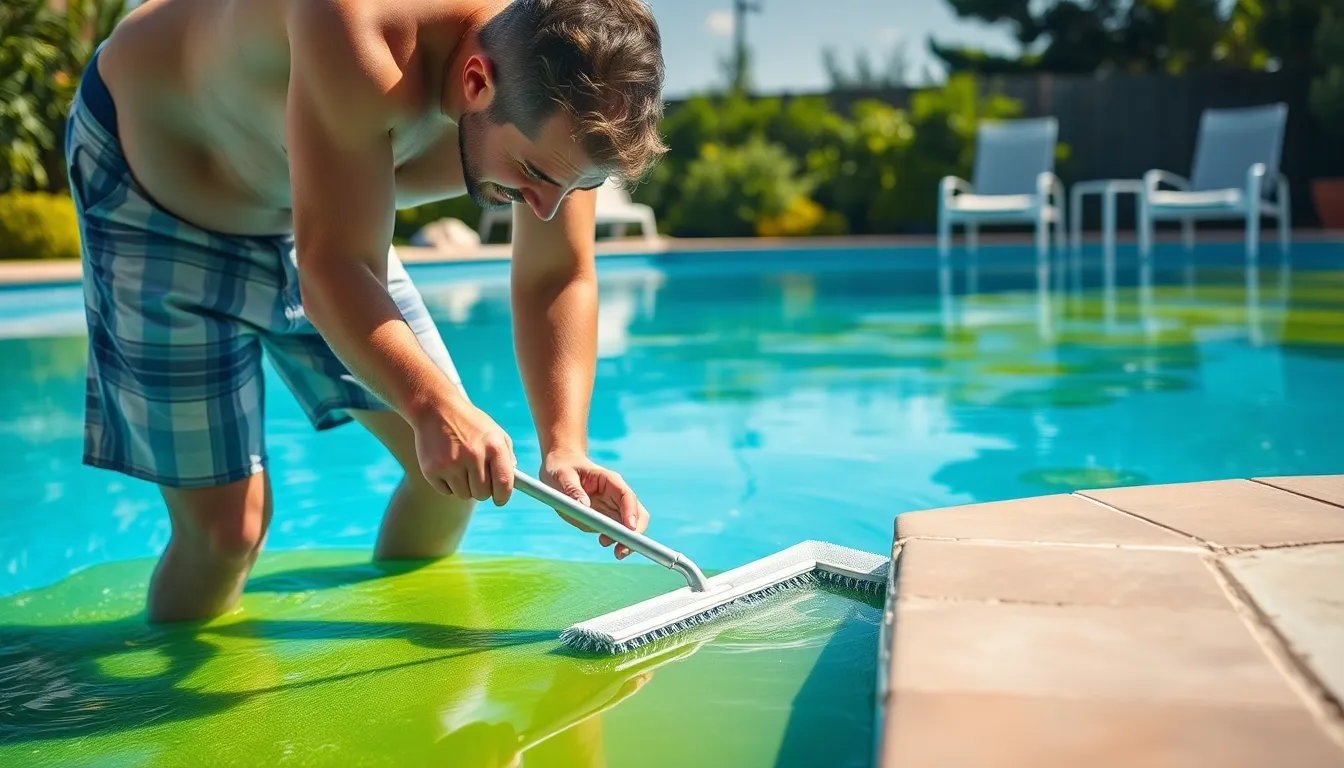
Picture this: you step outside, ready to dive into your sparkling pool, only to be greeted by a green, slimy surprise that looks more like a science experiment gone wrong than a refreshing oasis. Algae can turn your backyard paradise into a swamp faster than you can say “chlorine.” But fear not! Algae removal isn’t just a chore; it’s a chance to reclaim your pool and restore its glory.
Table of Contents
ToggleOverview of Algae Removal Pools
Algae removal pools specifically target the elimination of algae to restore cleanliness and safety. Various algae types—green, black, and yellow—can invade pools, each requiring a unique approach for removal. Treatments often involve chemical solutions like chlorine or algaecides that effectively kill algae.
Regular maintenance plays a crucial role in preventing algae growth. Maintaining proper water balance, including pH and chlorine levels, helps inhibit algae proliferation. Additionally, regular cleaning of pool surfaces and equipment supports overall pool health.
Identifying the early signs of algae can simplify the removal process. Cloudy water, slippery walls, or discolored surfaces often indicate algae presence. Acting swiftly upon observing these signs ensures algae doesn’t have time to spread.
Using a vacuum designed for pools helps in physically removing algae from surfaces. Pool owners can employ manual or automatic vacuums depending on personal preferences and budgets. Filtering systems should run continuously to assist in clearing algae from the water.
Education regarding the lifecycle of algae enhances control methods. Understanding temperatures and conditions conducive to algae growth can empower pool owners to adjust their maintenance practices. Preventative measures contribute significantly to a long-term solution.
Overall, investing in algae removal tools, regular maintenance, and an informed approach fosters a clean and inviting pool environment.
Types of Algae in Pools
Algae species in pools vary, each presenting unique challenges. Identifying these types simplifies the removal process and maintenance.
Green Algae
Green algae thrives in sunlight and warm conditions, often leading to rapid growth. This type appears as a green film on surfaces and can cloud the water. It’s commonly removed using chlorine and regular cleaning, making it manageable for most pool owners. Maintaining proper chemical levels helps prevent its reoccurrence. Filters should run continuously until the pool is clear, ensuring effective algae control.
Yellow Algae
Yellow algae, or mustard algae, is more resistant than its green counterpart. This type often clings to pool walls and floors, making it difficult to spot. A specialized algaecide works well in treating yellow algae, as standard chlorine may not suffice. Physical scrubbing is necessary to remove it completely. Maintaining balanced pH levels and regularly brushing pool surfaces minimizes its growth.
Black Algae
Black algae poses the toughest challenge for pool owners. This type appears as dark spots and develops deep roots in plaster or concrete. Removal requires aggressive scrubbing and strong algaecides designed for black algae. Regular testing of water chemistry helps prevent its establishment. Additionally, ensuring good circulation in the pool fends off this resilient algae species.
Algae Removal Methods
Algae removal involves various methods to efficiently tackle different types of algae. Utilizing the right approach not only restores pool clarity but also maintains a healthy swimming environment.
Chemical Treatments
Chemical treatments offer effective solutions for algae removal. Chlorine serves as the primary agent for combating green algae, effectively killing off any growth. Algaecides specially designed for yellow and black algae enhance treatment effectiveness by targeting resistant strains. Maintaining balanced pH levels is crucial, as improper chemistry can hinder treatment results. Regularly testing water can reveal chemical imbalances that may promote algae growth. In addressing severe infestations, shock treatments may speed up the eradication process by introducing a quick dose of chlorine.
Physical Removal Techniques
Physical removal techniques play a key role in algae eradication. Manual scrubbing of pool surfaces helps dislodge stubborn algae from walls and floors. Using a pool vacuum, whether manual or automatic, efficiently removes debris and algae remnants from the water. Leaf nets also help remove floating algae quickly, preventing further accumulation. Filtering systems, when operated consistently, help keep the water clear while removing microscopic algae. Regular brushing of pool surfaces combined with thorough cleaning facilitates a clear and inviting pool that discourages future algae growth.
Prevention Strategies
Effective prevention strategies help maintain a clear pool, making algae growth less likely. Regular practices can save time, effort, and money in the long run.
Regular Maintenance
Regular maintenance ensures a clean pool and discourages algae growth. Scheduling consistent cleaning eliminates debris that can harbor algae. Routine inspections help identify chemical imbalances early. Keeping skimmers, filters, and pumps in optimal condition prevents stagnation and promotes circulation. Checking for visible signs of algae weekly allows for prompt intervention. Frequent brushing of pool surfaces disrupts algae colonies before they settle. Employing a vacuum system enhances cleaning efforts, targeting hidden areas. Setting a maintenance schedule promotes accountability, encouraging more consistent care.
Proper Water Balance
Maintaining proper water balance significantly reduces algae growth potential. pH levels should remain between 7.2 and 7.8 for effective chlorine efficacy. Regularly testing alkalinity, calcium hardness, and stabilizer levels supports overall water quality. Adjusting these parameters ensures the pool remains inhospitable to algae. Adding chlorine regularly maintains its residual levels, further protecting against outbreaks. Keeping the water clean and clear prevents nutrient accumulation. An optimal circulation system also helps distribute chemicals evenly. Every aspect of water balance contributes to a healthy swimming environment, discouraging unwanted growth.
Algae removal is essential for maintaining a clean and inviting swimming pool. By understanding the different types of algae and their specific removal methods, pool owners can effectively tackle infestations. Regular maintenance and proactive measures play a crucial role in preventing algae growth and ensuring water quality.
Investing in the right tools and treatments not only enhances the pool’s appearance but also contributes to a healthier swimming environment. With consistent care and attention to water chemistry, anyone can enjoy a sparkling clear pool free from the nuisance of algae.