Traditional office seating is being challenged by a piece of exercise equipment turned workspace staple: the ball chair. What started as a physical therapy tool has evolved into a legitimate seating alternative for home offices, promising better posture, stronger core muscles, and relief from the chronic back pain that plagues desk workers. But before swapping out an ergonomic office chair for an inflated sphere, homeowners need to understand how these chairs work, what they actually deliver, and how to choose one that won’t end up deflated in a closet after two weeks.
Table of Contents
ToggleKey Takeaways
- A ball chair for office use replaces traditional seating with an inflated exercise ball mounted on a stabilizing base, forcing constant core engagement to maintain balance and upright posture.
- Proper sizing is critical for a ball chair to work effectively—users between 5’6″ and 5’11” typically need a 65 cm ball, with size determined by height and desk clearance rather than assumption.
- Ball chairs should be limited to 2–4 hours daily in shorter sessions, alternated with ergonomic traditional chairs, as extended use causes muscle fatigue and defeats the postural benefits.
- Invest in burst-resistant models with weight capacity clearly marked and a stabilizing base (fixed ring or wheeled), as bare exercise balls pose safety risks in office environments.
- Proper setup requires correct inflation firmness (compressing 1–2 inches under body weight), desk height adjustment to keep forearms at 90 degrees, and consultation with a healthcare provider if you have existing back injuries or balance disorders.
- While research shows a ball chair may increase calorie burn by 4–6 per hour and improve circulation, productivity gains are mixed and depend on individual focus needs and gradual transition.
What Is a Ball Chair and How Does It Work?
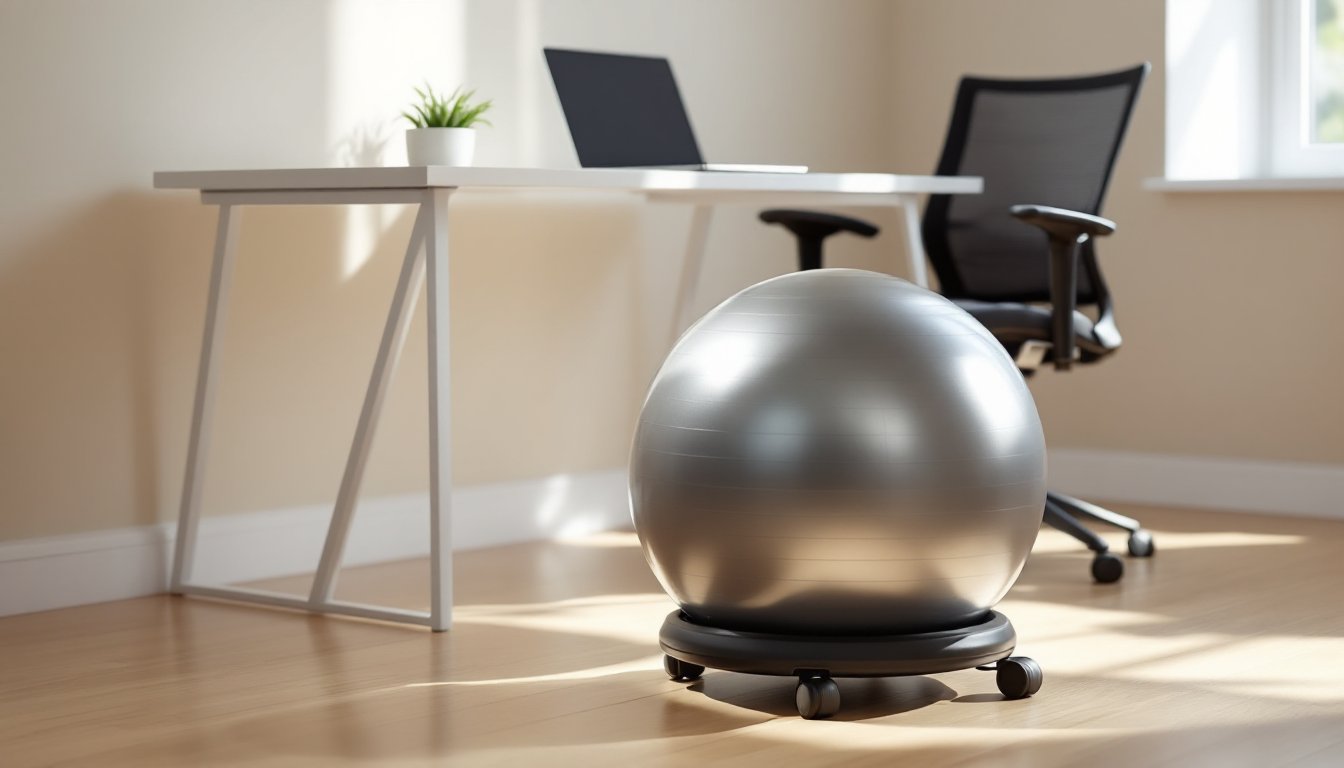
A ball chair replaces the fixed seat and backrest of a traditional chair with an inflated exercise ball, typically 55 cm to 75 cm in diameter, often mounted in a stabilizing base. The instability of the ball forces the sitter to engage core muscles constantly to maintain balance and upright posture. This subtle, continuous muscle engagement is the core principle behind the design.
Most modern ball chairs include a wheeled or fixed base for stability, preventing the ball from rolling away mid-email. Some models feature a backrest or adjustable height rings, though purists argue these additions defeat the purpose of active sitting. The ball itself is usually made from burst-resistant PVC rated to handle 300 to 2,000 pounds of static weight, depending on the model.
The concept originated in Swiss physical therapy clinics in the 1960s, where practitioners used large inflatable balls to help patients develop balance and core strength. Office adoption gained traction in the early 2000s as ergonomic awareness increased and people sought alternatives to static seating. The chair’s effectiveness depends entirely on proper setup and realistic expectations, it’s not a magic fix for posture problems, but rather a tool that requires active participation from the user.
Health and Productivity Benefits of Ball Chairs
Proponents of ball chairs cite improved posture as the primary benefit. Without a backrest to lean against, users must activate their core and back muscles to sit upright, which can strengthen those muscle groups over time. This constant micro-adjustment also keeps the body in motion, potentially reducing the stiffness that comes from static sitting positions.
Some research suggests that active seating may increase calorie burn slightly, estimates range from 4 to 6 additional calories per hour compared to traditional chairs. While that’s not enough to replace actual exercise, the cumulative effect over a workday adds up. The movement also promotes better circulation, which may reduce the leg swelling and numbness that desk workers often experience.
For productivity, the results are mixed. Some users report feeling more alert and focused, attributing it to the physical engagement required to maintain balance. Others find the constant balancing act distracting, especially during tasks requiring deep concentration. A 2018 study found that typists using ball chairs showed no significant change in productivity metrics, but subjectively reported feeling less fatigued at the end of the workday.
But, ball chairs aren’t appropriate for everyone. People with existing back injuries, balance disorders, or hip problems should consult a healthcare provider before making the switch. They’re also not recommended for extended use, most ergonomic experts suggest limiting ball chair sitting to 2-hour intervals, alternating with a traditional chair throughout the day. Modern workspaces considering ergonomic seating options should treat ball chairs as one component of a varied seating strategy rather than a complete replacement.
Choosing the Right Ball Chair for Your Home Office
Not all ball chairs are created equal, and picking the wrong size or style can turn an ergonomic upgrade into a backache generator. The two most critical factors are ball size and weight capacity, followed by stability features that determine whether the chair stays put or becomes a liability.
Size and Weight Capacity Considerations
Ball chair sizing is based on the user’s height and the desk height they’ll be working at. A properly sized ball places thighs parallel to the floor and knees at a 90-degree angle when seated. For someone between 5’0″ and 5’5″, a 55 cm ball typically works. Users 5’6″ to 5’11” should opt for a 65 cm ball, while those 6’0″ and taller generally need a 75 cm ball.
Desk height matters too. Standard desks sit at 28 to 30 inches from the floor, which works well with a 65 cm ball for average-height users. Standing desk converters or adjustable-height desks give more flexibility, but fixed-height desks may require a smaller or larger ball than height alone would suggest. Before buying, measure from the floor to the underside of the desk surface to confirm clearance.
Weight capacity is clearly marked on quality ball chairs, typically ranging from 250 to 500 pounds for static weight. “Burst-resistant” ratings mean the ball will slowly deflate if punctured rather than exploding, a critical safety feature. Cheaper balls without this rating pose a real injury risk. For home offices where productivity and comfort matter, investing in a burst-resistant model is non-negotiable.
Stability Features and Safety Options
The base determines whether a ball chair is a functional seating option or a rolling hazard. Fixed-ring bases hold the ball in place without allowing it to roll, offering maximum stability. These work well for users new to ball chairs or those with balance concerns, though they limit the natural movement that makes the chair effective.
Wheeled bases provide mobility similar to traditional office chairs, with locking casters to prevent unwanted rolling. They allow for desk-to-desk movement in multi-workstation setups but introduce more instability. Some models feature a hybrid design with a low-profile wheeled base and stabilizing arms that catch the ball if it shifts unexpectedly.
Backless designs offer the most authentic active sitting experience but require the strongest core engagement. For users transitioning from traditional chairs, models with optional low-back supports provide a safety net without completely eliminating the core workout. The Bloon Original French Sitting Ball exemplifies a minimalist approach that appeals to design-conscious home offices.
Inflation pumps are often included but not always. A standard ball pump or even a bike pump with the right adapter works fine. The ball should be inflated until it feels firm but still gives slightly when pressed, overinflation increases burst risk and reduces comfort, while underinflation compromises posture benefits.
Setting Up Your Ball Chair for Maximum Comfort
Proper setup makes the difference between a ball chair that improves posture and one that causes new problems. Start by inflating the ball to the correct firmness, it should compress about 2 inches when you sit on it. Too firm and it becomes uncomfortable: too soft and it won’t provide adequate support.
Desk height needs adjustment in many cases. When seated on the ball with feet flat on the floor, forearms should rest on the desk surface at a 90-degree angle. If the desk is too high, consider a keyboard tray or lower work surface. If it’s too low, raising the desk with bed risers (available in 2 to 6-inch heights) or adjustable legs solves the problem.
Monitor placement follows standard ergonomic rules: the top of the screen should sit at or slightly below eye level, about an arm’s length away. Because ball chairs allow more natural movement, users may find they shift position more frequently than with static chairs. Place the monitor on an adjustable arm or stand to accommodate these changes.
Footwear affects stability. Shoes with flat, grippy soles provide better floor contact than slick dress shoes or socks alone. A non-slip mat under the ball chair prevents gradual creeping across smooth flooring and protects hardwood from scuff marks.
For those setting up comprehensive home office spaces, position the ball chair where it can be easily swapped with a traditional chair. Keep both options accessible so alternating between them throughout the day becomes effortless. Store a dual-action pump nearby for quick pressure adjustments, balls naturally lose a bit of air over time and need occasional top-ups.
Common Mistakes to Avoid When Using a Ball Chair
The biggest mistake is using a ball chair all day, every day. Even advocates of active sitting recommend limiting use to 2 to 4 hours daily, split into shorter sessions. Extended use can lead to muscle fatigue and, ironically, poor posture as tired muscles fail to maintain proper alignment. Alternate between the ball chair and a traditional ergonomic chair to get benefits without overdoing it.
Many users choose the wrong ball size, either because they guessed or didn’t account for desk height. An oversized ball forces an awkward, legs-dangling position, while an undersized ball places knees higher than hips, straining the lower back. Always measure and reference size charts before buying.
Skipping the base is another common error. A bare exercise ball might work in a gym, but in an office setting it’s a rolling liability. Even experienced users benefit from at least a basic stabilizing ring. The cost difference is minimal, $15 to $30 for a simple ring base, and the safety improvement is substantial.
Neglecting proper inflation leads to either a rock-hard perch that bruises sit bones or a saggy blob that provides zero postural support. Check inflation monthly with a simple compression test: the ball should compress 1 to 2 inches under body weight. Keep the pump handy for quick adjustments.
Ignoring existing injuries or conditions is potentially dangerous. Anyone with herniated discs, sciatica, hip replacements, or balance disorders should get medical clearance before using a ball chair. What works for a healthy 30-year-old with minor posture issues may aggravate serious conditions.
Finally, many users fail to build up gradually. Going from 8 hours in a cushioned chair with lumbar support to even 2 hours on a ball causes predictable soreness. Start with 20 to 30-minute sessions and increase duration as core strength builds. Design-focused resources like Design Milk and Homify showcase ball chairs in aspirational office setups, but the reality requires a more measured approach than Instagram-worthy photos suggest. Treat the transition like any new exercise routine, patience and consistency yield better results than enthusiasm alone.