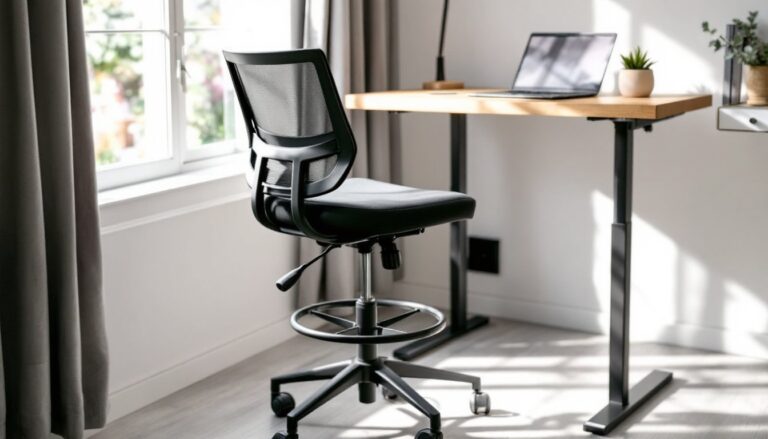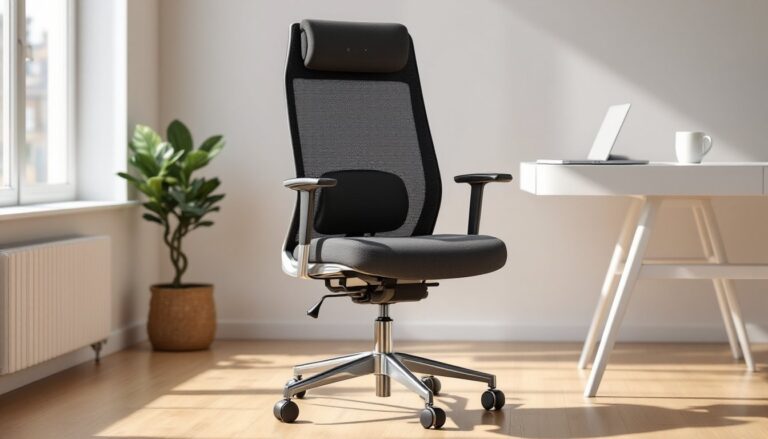
Finding a comfortable office chair when you’re over 6 feet tall isn’t just about preference, it’s about preventing chronic pain and long-term postural damage. Most standard office chairs are designed for users between 5’4″ and 5’10”, leaving taller individuals with dangling feet, compressed thighs, or inadequate back support. The wrong chair forces your body into compromised positions for eight-plus hours daily, leading to lower back strain, neck tension, and reduced circulation in the legs. This guide cuts through the marketing noise to identify what actually matters in a tall-person chair and which models deliver in 2026.
Table of Contents
ToggleKey Takeaways
- A best office chair for tall persons must have a seat height range of at least 18.5–22 inches and a backrest extending to the shoulder blades to prevent chronic pain and postural damage.
- Critical adjustability features include independent seat depth control (17–20 inches), lumbar support that moves vertically 3–4 inches, and 4D armrests that accommodate taller frames and wider shoulders.
- Weight capacity of 300–400 pounds ensures heavy-duty construction suitable for taller users, even if you weigh less, as it indicates reinforced frames and joints.
- Top tall-friendly options range from the budget-conscious Autonomous ErgoChair Pro ($450–$550) to premium choices like the Steelcase Gesture ($1,200–$1,400), each addressing different comfort and customization needs.
- Proper adjustment is non-negotiable: set seat height first so feet rest flat with thighs parallel to the floor, then adjust depth, lumbar support, backrest angle, and armrests in sequence for maximum comfort.
- Test any new office chair for at least 20 minutes to identify pressure points, and always place it on a hard surface or chair mat rather than thick carpet to maintain stability.
Why Tall People Need Specialized Office Chairs
Standard office chairs operate on a one-size-fits-most philosophy that fails anyone outside the average height range. For tall users, generally those 6’2″ and above, three critical problems emerge with conventional seating.
First, inadequate seat height forces your knees above your hips, creating pressure on the sciatic nerve and restricting blood flow to your lower legs. Your feet should rest flat on the floor with thighs parallel to the ground. Standard pneumatic cylinders max out at 19-21 inches from the floor, which leaves tall users perched awkwardly.
Second, insufficient seat depth means the seat pan ends mid-thigh instead of stopping 2-4 inches behind the knee. This creates a leverage point that either forces you to slouch forward or leaves your lower back unsupported. Seat depth matters as much as height.
Third, short backrests stop at mid-back rather than extending to the shoulder blades or higher. Your spine’s natural curve needs support along its full length. When the backrest ends too low, your upper back and shoulders compensate, leading to tension headaches and thoracic strain.
Beyond these fit issues, weight capacity becomes relevant. Taller frames often carry more mass, and chairs rated for 250 pounds may experience premature wear or catastrophic failure. Look for models rated to at least 300-350 pounds even if you weigh less, it’s a proxy for heavy-duty construction.
Ignoring these factors doesn’t just cause discomfort. Chronic sitting in poorly fitted chairs contributes to disc compression, muscle imbalances, and reduced core stability. It’s not dramatic to say the wrong chair can sideline you from weekend projects or active hobbies.
Key Features to Look for in an Office Chair for Tall Individuals
Shopping for a tall-friendly chair means focusing on adjustability ranges and actual measurements, not just marketing claims. Here’s what separates a genuinely accommodating chair from one that merely promises it.
Seat Height and Depth Adjustability
Seat height range should extend from at least 18.5 inches to 22 inches or higher from the floor. Measure from the floor to the back of your knee while standing, that’s your minimum seat height. Add an inch for shoe height. If a chair’s max height is less than that number, keep looking.
Standard cylinders (Class 2) reach about 21 inches. Tall-specific models use extended cylinders (Class 3 or 4) that add 2-4 inches of range. Some manufacturers list this spec: others bury it. If the product page doesn’t specify maximum seat height in inches, contact the manufacturer or check user discussions like those on Houzz forums where real users share measurements.
Seat depth adjustment is equally critical but often overlooked. A good range is 17-20 inches. The seat pan should slide forward or backward independent of the backrest. Chairs without this feature force a compromise: either your back is supported and your knees are compressed, or your knees are comfortable and your back is unsupported. Non-negotiable for anyone over 6’3″.
Seat width matters less for tall users specifically, but cramped armrests or a narrow pan can restrict movement. Aim for at least 20 inches between armrests if you have broad shoulders.
Backrest Height and Lumbar Support
The backrest should extend to at least your shoulder blades, ideally higher. Measure from your seat surface to your mid-shoulder while seated, that’s your minimum backrest height. Many tall-specific chairs offer 22-26 inch backrests, compared to 18-20 inches on standard models.
Lumbar support needs to hit the small of your back, roughly at belt level. Adjustable lumbar mechanisms should move vertically at least 3-4 inches to account for different torso proportions. Fixed lumbar “bumps” rarely align correctly for tall users.
Mesh backrests offer dynamic support that conforms to your spine, while upholstered backs with built-in lumbar pads provide firmer, more deliberate support. Neither is objectively better, but mesh tends to breathe better during long sessions.
Armrest height and adjustability also scale with height. Your elbows should rest at 90 degrees with shoulders relaxed. Armrests that adjust from 7 to 11 inches above the seat work for most tall users. 4D armrests (height, width, depth, angle) allow fine-tuning that prevents shoulder shrugging or wrist strain.
Weight capacity and construction quality matter here too. Steel frames outperform plastic, and reinforced joints prevent wobble. Check the base, a heavy, five-spoke aluminum or steel base with large casters (at least 2.5 inches diameter) ensures stability and smooth rolling.
Top 5 Office Chairs for Tall People in 2026
These chairs have been tested by tall users and consistently deliver on fit, adjustability, and durability. Prices reflect mid-2026 market rates and vary by retailer and region.
1. Steelcase Gesture with Headrest (Tall Version)
Seat height: 16.75–22 inches. Seat depth: 15.5–18.5 inches. Backrest: 26 inches.
Weight capacity: 400 pounds.
The Gesture’s standout feature is its synchronized tilt mechanism that adjusts the seat and back together, maintaining support through a full recline. The tall-specific headrest adds 4 inches and pivots to support your neck without pushing your head forward. Armrests move in all directions, and the seat depth slider has the widest range in this category. Mesh or upholstered options available. It’s not cheap, expect $1,200–$1,400, but it’s built to last 12+ years under daily use.
2. Herman Miller Aeron (Size C)
Seat height: 16.5–20.5 inches (with extended cylinder: up to 23 inches).
Seat depth: 17.75 inches. Backrest: 24 inches.
Weight capacity: 350 pounds.
The Aeron’s Size C fits users 6’2″ to 6’8″, and the optional extended cylinder adds height for those over 6’5″. The 8Z Pellicle mesh suspension eliminates pressure points and stays cool. PostureFit SL lumbar support adjusts vertically and provides both sacral and lumbar pressure. The Aeron lacks built-in headrest options, which some tall users miss. Price ranges from $1,000–$1,600 depending on options. Many users looking to upgrade their workspace setup start here.
3. Secretlab Titan Evo (XL)
Seat height: 18.5–22 inches. Seat depth: 20 inches (fixed). Backrest: 33 inches.
Weight capacity: 395 pounds.
Originally designed for gamers, the Titan Evo XL crossover appeals to tall professionals who want aggressive lumbar support and a high backrest. The 4D lumbar system adjusts in/out and up/down with a dial, and the magnetic memory foam head pillow is removable. The seat pan doesn’t adjust for depth, which can be a dealbreaker for some, but the 20-inch fixed depth works for most users over 6’3″. NEO Hybrid leatherette wipes clean easily. Priced around $600–$700, it’s the budget-conscious pick on this list.
4. Haworth Fern (Tall)
Seat height: 17–22 inches. Seat depth: 16–20 inches. Backrest: 24.5 inches.
Weight capacity: 350 pounds.
The Fern’s wave suspension backrest moves with your spine without manual adjustments, and the tall model includes an adjustable headrest. The seat pan’s 4-inch depth adjustment is among the best available. Its minimalist aesthetic fits modern home offices, and the environmental credentials, made with recycled ocean plastics and fully recyclable at end-of-life, appeal to eco-conscious buyers. Runs $800–$1,100 depending on upholstery and options. Detailed comparisons are available in professional reviews.
5. Autonomous ErgoChair Pro (Tall)
Seat height: 18.5–22.5 inches. Seat depth: 18.5–21 inches. Backrest: 26 inches.
Weight capacity: 300 pounds.
The ErgoChair Pro’s selling point is customization at a mid-range price ($450–$550). Every component adjusts: seat tilt, backrest angle, lumbar depth and height, armrests (4D), and headrest. The TPE mesh backrest breathes well but doesn’t have the refined feel of higher-end models. Build quality is acceptable but not exceptional, expect minor squeaks after a year of heavy use. It’s a solid entry point for tall users on a budget who want full adjustability without crossing $1,000.
How to Properly Adjust Your Office Chair for Maximum Comfort
Even the best office chair won’t help if it’s adjusted incorrectly. Follow this sequence, order matters because each adjustment affects the next.
-
Set seat height first. Sit all the way back. Your feet should rest flat on the floor with thighs parallel to the ground (90-degree knee angle). If your feet dangle, lower the seat. If your knees are higher than your hips, raise it. Wear your typical work shoes during adjustment.
-
Adjust seat depth. Slide the seat pan so there’s 2-4 inches (about three fingers’ width) between the seat edge and the back of your knees. Too much gap and you lose thigh support: too little and circulation is restricted.
-
Position lumbar support. The curve should press into your lower back at belt level. Adjust the height and depth (if available) until you feel gentle, even pressure. You shouldn’t need to arch or slouch to make contact.
-
Set backrest angle. Most chairs work best at 95-105 degrees, slightly reclined. You should be able to lean back without straining and sit upright without fighting the backrest. Lock the tilt if you prefer a fixed angle: leave it active if you like to rock.
-
Adjust armrests. Set height so your elbows rest at 90 degrees with shoulders relaxed, not shrugged, not slouched. Width should allow your arms to hang naturally at your sides. Angle armrests inward slightly if you keyboard heavily: keep them parallel for mixed tasks.
-
Position the headrest (if equipped). The pad should support the curve of your skull, not push your head forward. Adjust height and angle so you can lean back and rest your head without tilting your chin up or down.
Test your setup. Sit for 20 minutes and notice where tension develops. Neck strain? Headrest is too low or too far forward. Lower back ache? Lumbar support isn’t positioned correctly. Thigh pressure? Adjust seat depth or height.
Safety note: Always use the chair on a hard, level surface or a proper chair mat. Thick carpet can destabilize tall chairs with high-set cylinders. If your chair has a tilt tension knob, set it so you can recline with effort but without launching backward.
Conclusion
Tall users need more than a standard chair with longer legs. Seat height and depth, backrest coverage, lumbar adjustability, and robust construction all factor into long-term comfort and health. The models listed here solve the problems most tall people face, but personal preference, mesh vs. upholstered, firm vs. adaptive support, still matters. Test before you buy when possible, and don’t skip the adjustment process once the chair arrives. Done right, a well-fitted chair is an investment in pain-free productivity and focus.