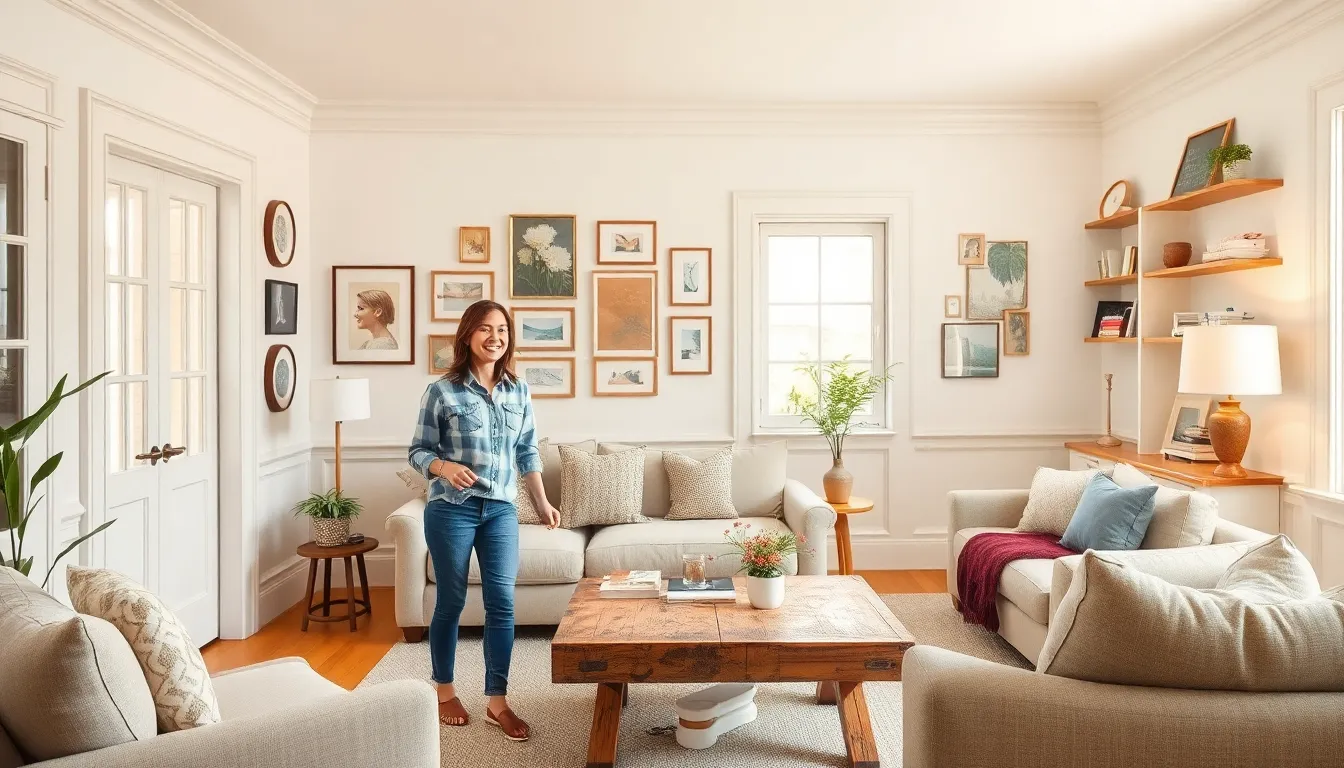
In a world where Pinterest-perfect homes reign supreme, fixer-upper living rooms offer a delightful twist on the ordinary. These spaces are like blank canvases waiting for a splash of creativity and a sprinkle of elbow grease. Who wouldn’t want to transform a drab, outdated room into a cozy haven that reflects their unique style?
Imagine swapping that tired carpet for chic hardwood floors or turning a bland wall into an eye-catching gallery. Fixer-upper living rooms not only allow for personal expression but also bring a sense of accomplishment. So grab your tools and let’s dive into the whimsical world of renovation, where every nail driven and paint stroke counts toward crafting the living room of your dreams. After all, who needs a perfect space when you can have a perfectly imperfect one?
Table of Contents
ToggleUnderstanding Fixer Upper Living Rooms
Fixer upper living rooms present opportunities for creativity and personalization. These spaces invite homeowners to reimagine their environments through various renovation projects.
What Are Fixer Upper Living Rooms?
Fixer upper living rooms refer to outdated or neglected spaces in homes that require improvements or updates. These rooms often have unique architectural features, such as built-in shelves or original moldings, which add character. Homeowners can enhance these spaces through renovation efforts, allowing for a combination of modern design and vintage charm. Engaging in these projects transforms living areas while increasing the home’s overall value.
Key Characteristics of Fixer Upper Living Rooms
Key characteristics of fixer upper living rooms include visible wear and tear, diverse flooring options, and unique layouts. These rooms often display outdated wallpaper, worn carpets, or mismatched decor. Homeowners can discover features, such as oversized windows or high ceilings, that provide potential for transformation. Additionally, they may find existing furniture pieces that can be upcycled or refreshed. Overall, the distinctive aspects of fixer upper living rooms allow for both functional improvements and aesthetic enhancements, making them ideal candidates for renovation projects.
Design Ideas for Fixer Upper Living Rooms
Transforming fixer-upper living rooms involves smart design choices that enhance both style and functionality. Here are several strategies to consider.
Color Schemes That Work
Choosing the right color scheme significantly alters the room’s atmosphere. Light, neutral colors like soft beige or pale gray create an airy feel, while darker shades, such as deep navy or charcoal, add sophistication. Accent walls in bold colors, like emerald green or terracotta, can define spaces within an open layout. Consider using washable paint for easy maintenance, especially in high-traffic areas. Incorporating various textures, such as matte finishes or glossy features, can create visual interest and warmth in the living room.
Furniture Arrangements for Small Spaces
Maximizing space in small living rooms requires thoughtful furniture arrangements. Placing a sofa against a wall opens up the center for better flow. Multi-functional furniture, like a storage ottoman or a sofa bed, aids in maintaining functionality without crowding. Use area rugs to define seating areas, making the room feel larger. Additionally, floating shelves on walls free up floor space while providing display options. Strategic use of mirrors can enhance light and give an illusion of space, further contributing to the room’s overall design.
Essential Renovation Tips
Renovating fixer-upper living rooms involves thoughtful planning and strategic choices. Homeowners can maximize their efforts by focusing on budgeting and material selection.
Budgeting for Your Renovation
Budgeting lays the foundation for a successful renovation. Homeowners should start by determining a realistic budget that includes costs for materials, labor, and unexpected expenses. Prioritize essential renovations that improve functionality and aesthetics. Set aside 10-20% of the total budget for contingencies. Research average costs in the area to gauge spending for specific projects like flooring or painting. Consulting with contractors can provide estimates and ideas for cost-effective solutions. Consider DIY options for small projects, which may offer significant savings while allowing for personalization.
Choosing the Right Materials
Choosing the right materials impacts both the look and durability of living rooms. Homeowners should select materials that align with their style and budget while ensuring quality. For flooring, hardwood offers longevity and warmth, whereas laminate provides a budget-friendly alternative. Select paint with high durability, especially in high-traffic areas. When considering furnishings, opt for multi-functional pieces that maximize space without sacrificing style. Sustainable materials, like reclaimed wood or recycled products, enhance design while being environmentally conscious. Prioritize materials that withstand wear and can handle the everyday activities of a lively home.
DIY Projects for Fixer Upper Living Rooms
Engaging in DIY projects can significantly enhance the appeal and functionality of fixer-upper living rooms. Homeowners can undertake various tasks that elevate these spaces with minimal investment.
Simple Upgrades to Enhance Appeal
- Paint Walls: Applying a fresh coat of paint can transform the entire ambiance. Light colors can create a feeling of openness, while darker shades lend depth.
- Update Lighting: Replacing outdated fixtures with modern options improves aesthetics and provides better illumination. Pendant lights and floor lamps offer stylish solutions.
- Refinish or Paint Furniture: Revamping old furniture with paint or stain can refresh its look and harmonize with the room’s new color scheme.
- Install Shelving: Adding shelves not only enhances style but also creates more storage. Floating shelves make effective use of vertical space.
- Accessorize Thoughtfully: Incorporating throw pillows, rugs, and art pieces personalized to taste can tie the room together without major renovations.
When to Hire a Professional
- Structural Changes: If tasks involve altering walls or electrical systems, hiring a professional is essential. Structural modifications require expertise for safety and compliance.
- Complex Installations: When installing features like recessed lighting or built-in cabinetry, seek guidance. Professionals ensure proper installation and optimal functionality.
- Extensive Renovations: For whole-room renovations or significant aesthetic transformations, collaborating with designers or contractors can maximize results. Their experience contributes to better project outcomes.
- Time Constraints: If schedules are tight, outsourcing work allows for timely project completion. Professionals often work more efficiently than DIY efforts.
- Specialized Skills: When facing projects like plumbing or intricate tile work, consulting experts ensures skilled craftsmanship and adherence to building codes.
Embracing the charm of fixer-upper living rooms opens up a world of creative possibilities. Homeowners can transform these spaces into unique reflections of their style while enhancing functionality and value. With smart design choices and thoughtful renovations, they can create inviting environments that feel both personal and cozy.
Whether through DIY projects or professional help, the journey of revitalizing a living room can be rewarding. By focusing on quality materials and innovative layouts, anyone can turn an outdated area into a beloved centerpiece of their home. The beauty of a fixer-upper lies in its potential to evolve into something truly special.