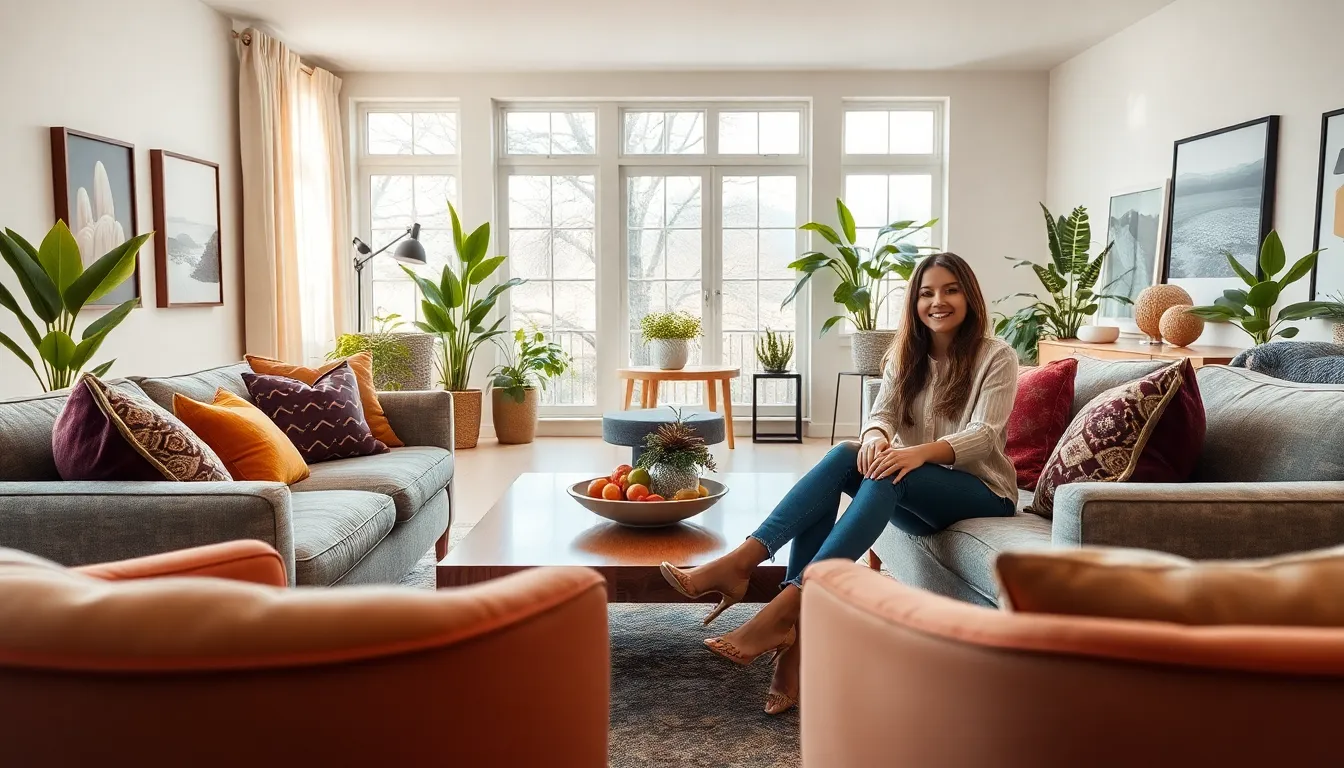
The living room is more than just a space; it’s the heart of the home where laughter echoes and memories are made. Whether it’s hosting a lively game night or curling up with a good book, this room serves as a backdrop for life’s best moments. But let’s face it, it can also be a cluttered battlefield of mismatched furniture and stray dog toys.
Table of Contents
ToggleOverview of Living Rooms
Living rooms serve as the heart of a home, offering spaces for relaxation and social interaction. This area blends comfort and style, creating a welcoming environment for family and friends.
Definition and Purpose
Living rooms function as multi-purpose areas designed for leisure and entertainment. They accommodate various activities, from family movie nights to casual gatherings with friends. Comfort and functionality define these spaces, often featuring seating, tables, and decorative elements. Families utilize living rooms for relaxation, reading, or enjoying conversation, making it an essential aspect of daily life.
Importance in Home Design
Living rooms play a vital role in home design, impacting the overall aesthetic and flow. A well-designed living room enhances a home’s value and appeal. Color schemes, layout, and furniture arrangements contribute significantly to the atmosphere, creating a cohesive look throughout the space. Optimal design fosters social connections, providing an inviting area that encourages interaction and comfort. Homes without organized living rooms may feel chaotic or less inviting, underscoring the importance of thoughtful design in enhancing daily living.
Styles of Living Rooms
Various styles of living rooms cater to different tastes and lifestyles. Each style reflects unique aesthetics and functionality.
Modern Living Rooms
Modern living rooms embrace clean lines and minimal ornamentation. Designers often incorporate neutral color palettes with bold accents. Furniture emphasizes comfort and simplicity, often featuring sleek, functional designs. Large windows are common, allowing plenty of natural light. Statement pieces, such as oversized art or unique light fixtures, shine as focal points, creating a contemporary atmosphere.
Traditional Living Rooms
Traditional living rooms offer timeless elegance through rich wood tones and classic furnishings. Ornate details characterize furniture choices, while warm, inviting colors dominate the palette. Accessories like antique mirrors and floral fabrics enhance the comfort and sophistication of the space. Rugs often feature intricate patterns, grounding the room while adding a cozy feel. Comfort is key, with plush seating arranged for conversation.
Eclectic Living Rooms
Eclectic living rooms celebrate individuality and creativity. Mixing diverse styles, textures, and colors results in a visually stimulating environment. Unique furniture pieces alongside vintage finds tell a story, showcasing personal taste. Accessories from various cultures add depth and interest. Layering textiles, such as throws and pillows, enhances comfort while contributing to the overall vibe.
Minimalist Living Rooms
Minimalist living rooms focus on simplicity and functionality. Clean surfaces and uncluttered spaces define the aesthetic, promoting tranquility. Neutral color schemes create a calm backdrop, while essential furniture pieces maintain a sense of purpose. Emphasis lies on quality over quantity, showcasing handcrafted items. Subtle textures and natural materials can add warmth without overwhelming the design.
Essential Elements of Living Rooms
Living rooms require several key elements to create a harmonious and inviting atmosphere. Each component plays a vital role in enhancing comfort and functionality.
Furniture Choices
Selecting the right furniture defines the living room’s character. Sofas and chairs should prioritize comfort, accommodating gatherings and leisure activities. Coffee tables serve as functional focal points, providing surface space for drinks and decor. Accent chairs can add personality, offering additional seating without overwhelming the space. Storage solutions like shelves and cabinets help maintain organization, minimizing clutter while displaying personal items.
Color Schemes
Color schemes establish the ambiance of a living room. Neutral tones such as beige and gray often create a serene backdrop, allowing for versatility in decor choices. Adding pops of color through cushions, rugs, or artwork injects vibrancy into the room. Warm colors like reds and yellows evoke energy and warmth, while cool colors like blues and greens promote relaxation. Thoughtfully combining these colors fosters a cohesive and inviting environment.
Layout and Design
Layout and design significantly influence the functionality of a living room. Arranging furniture to encourage conversation enhances social interaction among guests. Open designs with clear pathways facilitate movement, making the space accessible for everyone. Incorporating designated zones, such as a reading nook or entertainment area, caters to various activities. Thoughtful design choices promote a balance between style and practicality, ensuring that the living room meets diverse needs.
Tips for Creating a Comfortable Living Room
Creating a comfortable living room enhances relaxation and connection. The right design choices significantly impact the overall atmosphere of this central space.
Space Optimization
Maximizing space ensures both functionality and flow. Furnishing with appropriately sized pieces prevents overcrowding. Using furniture that serves dual purposes, like storage ottomans or nests of tables, provides practicality. Arranging seating to promote conversation leads to a more inviting environment. Open layouts encourage movement, allowing easy access to different areas within the room. Incorporating built-in storage solutions also helps maintain organization for a tidier appearance.
Lighting Techniques
Lighting serves as a critical element in creating ambiance. Layering light sources, including ambient, task, and accent lighting, sets the mood for various activities. Natural light, where possible, brightens and uplifts the space, making it feel more expansive. Choosing lamps with adjustable brightness allows for versatility based on time of day or function. Incorporating decorative fixtures adds a stylish element while enhancing aesthetics. Warm light bulbs create a cozy atmosphere, making the living room feel more inviting.
Accessorizing Your Space
Accessories contribute personality and warmth to the living room. Incorporating throw pillows in different textures and patterns adds visual interest and comfort. Area rugs help define seating areas and enhance overall coziness. Artwork that resonates with personal taste can serve as a focal point, sparking conversation. Plants not only purify the air but also introduce a natural element, enhancing tranquility. Personal items displayed thoughtfully create a welcoming atmosphere that reflects individual style.