The mid-century modern design movement has seen a massive resurgence in home offices, and for good reason. MCM office chairs combine iconic 1950s-60s aesthetics with functional support, offering a sleek alternative to bulky executive chairs or bare-bones task seating. Whether someone’s upgrading a home workspace or hunting for a vintage piece at an estate sale, understanding what makes an authentic MCM chair, and how to choose one that won’t wreck their back after three hours of Zoom calls, is critical. This guide covers the essentials: design features, ergonomic considerations, styling tips, and where to find quality options without emptying a wallet.
Table of Contents
ToggleKey Takeaways
- MCM office chairs combine iconic 1950s-60s aesthetics with modern ergonomic features, offering a stylish alternative to traditional executive seating that works well in contemporary home offices.
- Authentic design elements like walnut or chrome bases, fiberglass or polypropylene shells, and quality leather or wool upholstery distinguish genuine mid-century modern pieces from budget reproductions.
- Prioritize ergonomic features for daily use, including adequate seat depth (16–18 inches), proper lumbar support from shell curvature, pneumatic height adjustment, and swivel capability to prevent discomfort during extended work sessions.
- Style an MCM office chair by pairing it with minimalist furnishings, neutral wall colors for bold upholstery (or accent walls for neutral chairs), and hardwood or luxury vinyl flooring to complement the clean-lined aesthetic.
- Licensed reproductions from Herman Miller ($600–1,400) offer the best balance of authenticity and modern comfort, while vintage authenticated pieces ($800–2,000+) provide collectible value and higher-quality materials for long-term investment.
- For budget-conscious buyers, MCM-inspired designs from mainstream retailers ($250–600) are viable if checking weight capacity and reviews, though ultra-cheap options ($120–250) typically fail within 2–3 years of daily use.
What Is an MCM Office Chair?
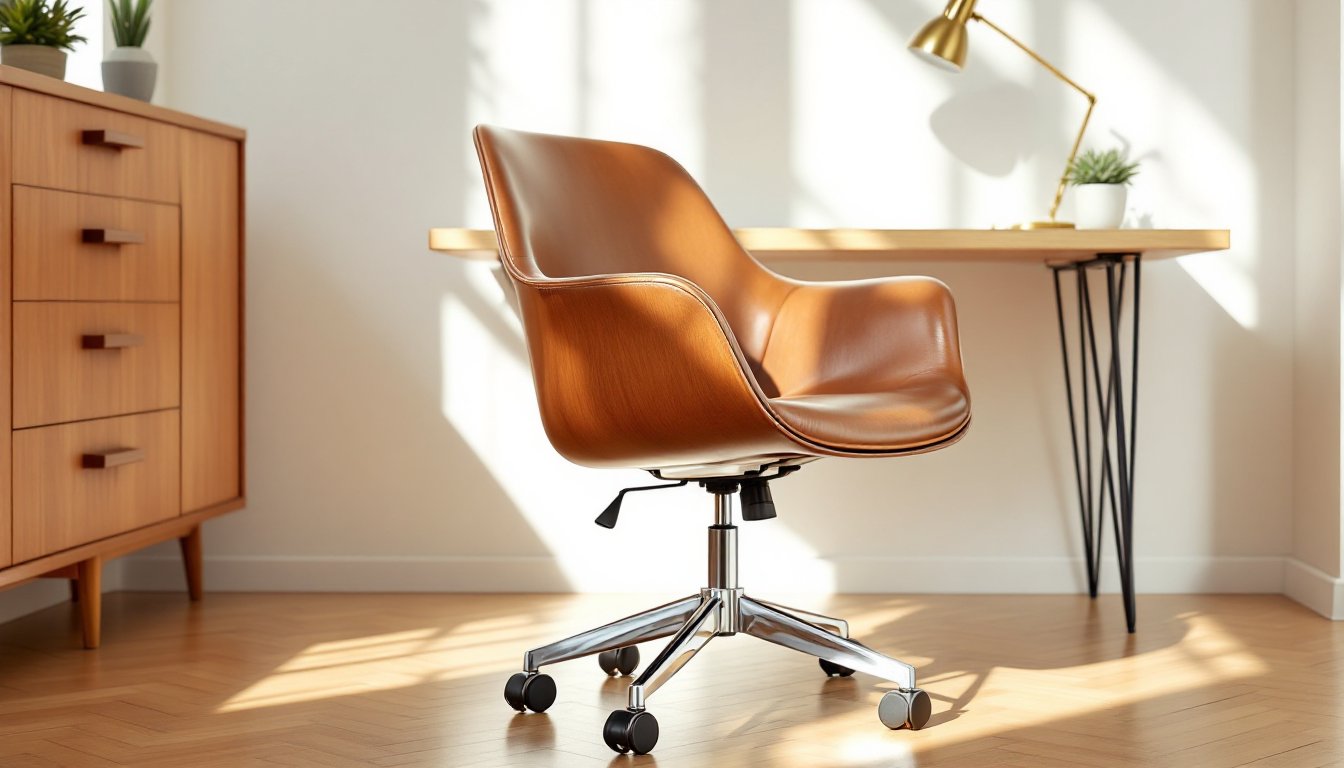
An MCM office chair refers to seating designed (or inspired by designs) from the mid-century modern era, roughly 1945 to 1969. This period emphasized clean lines, organic curves, and minimal ornamentation. Designers like Charles and Ray Eames, Arne Jacobsen, and George Nelson created chairs that merged form with function, many of which are still manufactured today.
Key identifiers include:
- Molded plywood or fiberglass shells, often on metal or wooden bases
- Tapered legs, typically splayed at angles (think walnut or chrome)
- Leather or wool upholstery in neutral tones or bold accent colors
- Minimal padding, relying on shell shape for support rather than thick cushions
Authentic vintage pieces from manufacturers like Herman Miller, Knoll, or Fritz Hansen command premium prices. Reproductions and MCM-inspired designs offer similar aesthetics at lower cost, though build quality and materials vary widely. When someone sees a chair described as “MCM style,” it usually means it borrows the era’s visual language, tapered legs, molded seats, open backs, without being an exact replica of a classic design.
Why Choose Mid-Century Modern Design for Your Home Office?
MCM furniture fits seamlessly into contemporary spaces without the dated feel of traditional office gear. The style’s emphasis on simplicity means these chairs don’t visually dominate a room, ideal for home offices that double as guest rooms or living areas.
Space efficiency is another practical benefit. Most MCM office chairs have compact footprints compared to oversized executive models. A molded shell chair with a five-star base typically measures 24–26 inches wide, leaving more floor space for filing cabinets or shelving.
The design community consistently ranks mid-century pieces among the most timeless furniture styles, which helps with long-term value. A quality MCM chair holds resale appeal better than trendy gaming chairs or disposable big-box task seating. For those planning to refresh their workspace every few years, this matters.
There’s also the comfort factor, though it requires nuance. Early MCM designs prioritized aesthetics and relied on shell contours for lumbar support. Modern reproductions often add padded seat cushions and adjustable height mechanisms without compromising the visual profile. Someone working eight-hour days needs to verify ergonomic features (covered in the next section) rather than assuming vintage style equals vintage support.
Key Features to Look for in an MCM Office Chair
Not all MCM-style chairs suit extended desk work. Here’s what separates a showpiece from a functional workspace chair.
Comfort and Ergonomics
Seat depth and width should accommodate the user’s frame. Most molded shell chairs work well for average builds but can feel cramped for larger individuals. Look for 16–18 inches of usable seat depth (measured from the backrest to the front edge) and at least 17 inches of width.
Lumbar support in MCM designs comes from the shell’s curvature rather than separate cushions. Test by sitting fully back, the chair’s mid-back section should contact the natural inward curve of the spine without forcing an overly upright posture. Reproduction models sometimes add a removable lumbar pillow, which helps but slightly alters the original aesthetic.
Adjustability is where modern MCM-inspired chairs diverge from vintage originals. Essential mechanisms include:
- Pneumatic height adjustment (standard on five-star bases)
- Swivel capability (some four-leg vintage models don’t swivel)
- Tilt tension control (less common but valuable for prolonged sitting)
Vintage purists resist added mechanisms, but anyone working full days should prioritize function. A fixed-height chair with a four-leg base works fine for occasional use or as accent seating, but daily desk work demands height adjustability to align forearms parallel to the desktop.
Armrests are contentious in MCM design. Many iconic models (like the Eames molded plastic chair) omit them entirely. For typing-intensive work, armless designs prevent shoulder elevation and encourage better posture. If armrests are present, ensure they don’t prevent the chair from tucking under the desk, fixed-height arms should clear the underside of a standard 29-inch desk height.
Authentic Design Elements
For those prioritizing aesthetic accuracy, certain details signal quality MCM design versus generic retro knockoffs.
Base construction matters. Authentic mid-century chairs use either:
- Walnut or teak wood legs with mortise-and-tenon joinery
- Chrome-plated steel tubing with welded joints (not hollow aluminum)
- Cast aluminum five-star bases (introduced in the late 1950s)
Cheap reproductions substitute plastic “wood-look” legs or painted metal that chips easily. Real walnut has visible grain variation and weighs noticeably more than composite materials.
Shell materials define the chair’s longevity. Original Eames shell chairs used fiberglass-reinforced polyester (production ended in the 1990s due to environmental concerns). Modern Herman Miller reproductions use recyclable polypropylene, which is lighter but structurally sound. Wood-veneer shells (bent plywood) should show continuous grain across curves, veneered particleboard cracks under stress.
Upholstery quality separates budget from investment pieces. Full-grain aniline leather develops patina over time and repairs well. Top-grain leather (more common in mid-range options) resists staining better but feels less supple. For fabric upholstery, look for wool blends with at least 30,000 double rubs (Wyzenbeek abrasion rating), anything under 15,000 double rubs wears through within two years of daily use.
Hardware should match the era’s aesthetic. Zinc or stainless steel bolts with visible hex heads suit the MCM ethos of honest construction. Hidden fasteners or plastic clips signal cost-cutting.
How to Style an MCM Office Chair in Your Workspace
MCM chairs shine when the surrounding workspace complements their minimalist design language. These pieces work best in uncluttered environments, think of them as visual anchors rather than accessories.
Desk pairing should respect proportions. A molded shell chair suits a writing desk with tapered legs or a wall-mounted floating desk better than a heavy corner workstation. If the existing desk is bulky, consider refinishing or replacing the legs with hairpin legs (widely available in 12–28 inch heights from suppliers like Etsy metalworkers or Amazon). The exposed leg structure echoes the chair’s open frame.
The right office chair placement depends on the room’s focal point. Position the desk perpendicular to a window rather than facing it directly, this reduces screen glare while keeping natural light on the workspace. MCM design often incorporates indoor plants as functional decor: a fiddle-leaf fig or snake plant in a ceramic planter balances the chair’s hard lines.
Color coordination requires restraint. If the chair features bold upholstery, say, an Eames management chair in burnt orange leather, keep walls and surfaces neutral. Benjamin Moore’s White Dove or Sherwin-Williams Repose Gray provide clean backdrops that don’t compete. Conversely, a neutral walnut-and-leather chair allows for accent walls in period-appropriate hues like mustard yellow, avocado green, or teal blue.
Flooring impacts the overall cohesion. MCM spaces traditionally used hardwood (oak, walnut) or terrazzo, but modern alternatives work fine. If the office has carpet, swap it for luxury vinyl plank in a medium wood tone, products like Coretec or LifeProof (around $3–5 per square foot) install as floating floors without professional help. For chair mobility, use a polycarbonate chair mat rather than cheap PVC versions that crack.
Accessory choices should honor the “less is more” principle. A George Nelson ball clock, a brass desk lamp with an articulated arm, or a teak credenza for storage reinforces the aesthetic. Avoid cluttering the desk with trinkets, MCM design celebrates negative space. Many contemporary office setups demonstrate how functional minimalism enhances focus.
Where to Buy MCM Office Chairs: Shopping Tips and Price Ranges
Sourcing an MCM office chair involves trade-offs between authenticity, comfort, and budget. Here’s how different options stack up.
Vintage/Authenticated originals from Herman Miller, Knoll, or Fritz Hansen start around $800–1,200 for well-maintained examples. Expect $2,000+ for rare models or celebrity-designer pieces. Reputable dealers include Design Within Reach (which sells both new licensed reproductions and authenticated vintage), 1stDibs, and regional mid-century modern specialty shops. Always request provenance documentation, original manufacturer labels, patent dates, and construction details help verify authenticity.
Licensed reproductions offer factory-fresh quality with modern ergonomic tweaks. Herman Miller currently manufactures the Eames Aluminum Group and Eames Molded Plastic chairs ($600–1,400 depending on base and upholstery). These come with 12-year warranties and use updated materials that meet current flammability and environmental standards. For someone prioritizing comfort over collectibility, this route makes sense.
MCM-inspired designs from mainstream retailers (West Elm, Article, AllModern) range from $250–600. Quality varies, some use solid wood and metal, others rely on veneered MDF and plastic. Check weight capacity ratings (should support 250+ pounds) and read return policies carefully. A chair that looks great in styled photos might feel flimsy in person.
Budget reproductions from Amazon, Wayfair, or Overstock dip as low as $120–250. These work for light-duty home offices or as temporary solutions, but don’t expect them to survive daily eight-hour use for more than two years. Common issues include wobbly bases, cracking shells, and non-replaceable gas lifts. If going this route, prioritize models with at least 500 verified reviews averaging 4+ stars.
For vintage hunting, estate sales and Craigslist occasionally yield bargains, but condition assessment requires care. Bring a flashlight to inspect joints for cracks, test all moving parts, and check for musty odors (indicating mold in foam). Plan on reupholstery costs ($200–500 for a typical office chair) if the fabric or leather shows wear.
Auction sites like Chairish and eBay require scrutiny, photos can hide damage, and shipping costs for fragile vintage pieces sometimes exceed the chair’s value. Filter for sellers offering local pickup to inspect before committing. Publications like Elle Decor often feature guides to identifying authentic vintage pieces versus reproductions.
When comparing prices, factor in long-term costs. A $1,000 Herman Miller with a 12-year warranty costs roughly $83 per year. A $200 knockoff that fails after three years costs $67 per year, and the cheaper chair likely provided inferior support. For anyone working from home permanently, quality MCM seating is a capital improvement, not a disposable purchase.