Hours spent at a desk can wreak havoc on circulation and posture. Anyone who’s worked a full day knows the telltale signs: tight calves, swollen ankles, and that nagging lower back ache. An office chair with a built-in foot rest addresses these issues head-on by elevating legs, promoting blood flow, and reducing spinal pressure. Unlike standalone footstools that slide away or clutter floor space, an integrated foot rest stays exactly where it’s needed. This guide breaks down what to look for, how different chair types compare, and how to configure your setup properly, because comfort isn’t just a luxury, it’s the foundation of sustained focus and productivity.
Table of Contents
ToggleKey Takeaways
- An office chair with a foot rest can reduce disc pressure by up to 30% and improve circulation by elevating legs, addressing common desk-work issues like tight calves, swollen ankles, and lower back pain.
- Look for adjustable features including independent foot rest height control (4–8 inches of travel), tilt angle support, lumbar depth adjustment, and smooth recline tension to ensure genuine ergonomic benefit.
- Invest in quality materials such as reinforced steel framing, BIFMA-certified gas lift cylinders rated for 150,000+ adjustments, and abrasion-resistant upholstery to ensure the foot rest chair lasts for years.
- Choose the right chair type for your needs: reclining executive chairs ($250–$600) for flexibility, gaming chairs ($180–$450) for long hours, or compact task chairs ($120–$280) for small spaces.
- Proper setup is critical—adjust seat height so thighs are parallel to the floor, set lumbar support at belt level, position feet 1–2 inches above hip level on the foot rest, and ensure your monitor aligns with eye level to maximize comfort and posture benefits.
- Always retract the foot rest and return the chair to upright before standing to prevent tipping or stumbling, and inspect hinges monthly while wiping the platform weekly for durability.
Why Choose an Office Chair with a Built-In Foot Rest?
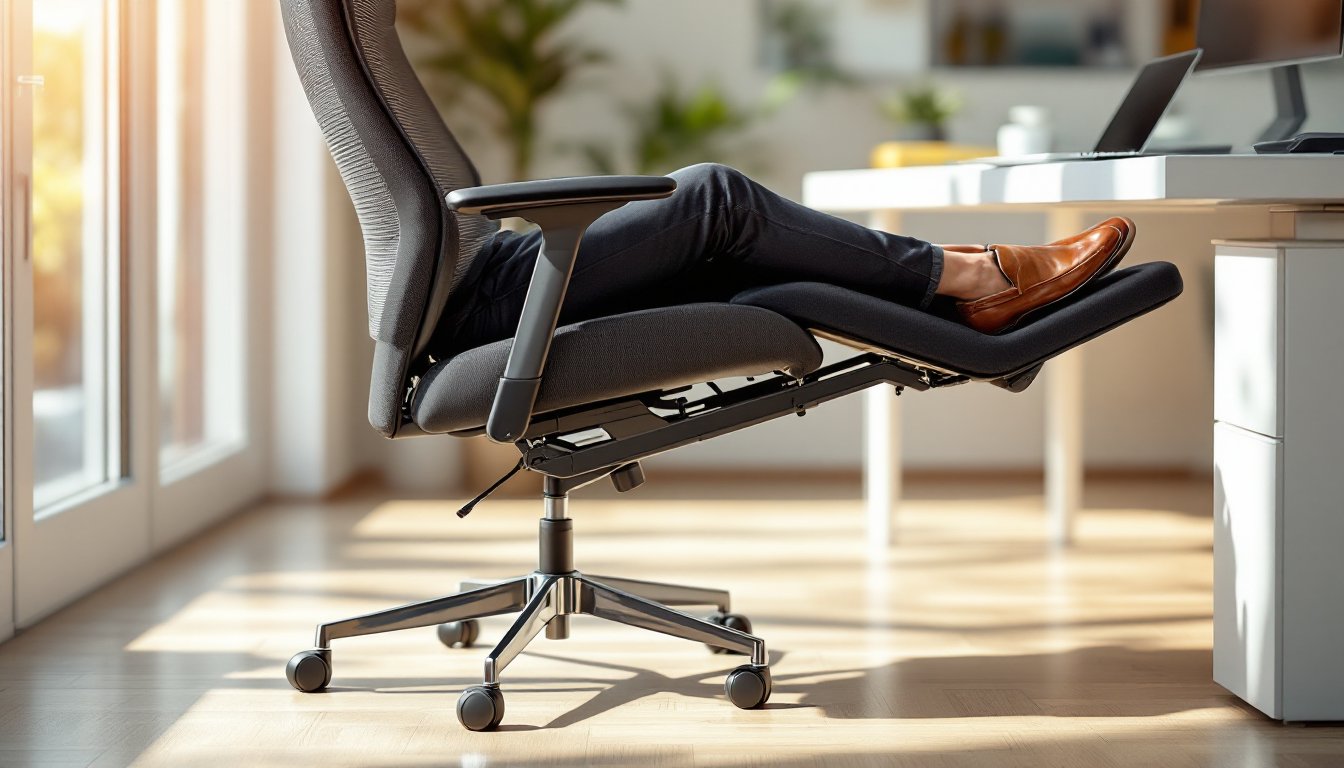
A foot rest isn’t just about kicking back. Proper leg elevation reduces strain on the lumbar spine by shifting weight distribution and encouraging a neutral pelvis position. When feet dangle or press into the floor for extended periods, circulation slows, especially in the popliteal vein behind the knee, leading to discomfort and swelling.
Integrated foot rests solve the spatial problem of separate footstools. They deploy when needed and tuck away when standing, keeping walkways clear and preventing trip hazards. For anyone working in a compact home office, that real estate matters.
From an ergonomic standpoint, elevating legs by even a few inches can reduce disc pressure by up to 30%, according to research cited by occupational health studies. That relief translates directly into longer, more comfortable work sessions.
Chairs with built-in foot rests also support multiple working postures. Transition from upright task mode to a reclined reading position without leaving the chair. That flexibility matters during video calls, deep work, or end-of-day email sweeps. Many users working from home office setups find that adjustable foot rests help them maintain focus during marathon coding or design sessions.
Top Features to Look for in a Foot Rest Office Chair
Not all foot rest chairs are created equal. Key features separate gimmicks from genuine ergonomic tools.
Adjustability and Ergonomic Support
Height adjustment is non-negotiable. The foot rest should extend or retract to match leg length, typically between 4 and 8 inches of travel. Look for chairs with independent foot rest controls, not just recline-linked systems that force a single position.
Tilt angle matters almost as much. A flat platform works for some users, but a slight upward angle (around 10–15 degrees) can improve calf comfort and ankle flexion. Chairs with multi-position locking mechanisms let users fine-tune this.
Lumbar support must work in tandem with the foot rest. As legs elevate, the pelvis tilts backward slightly. Adjustable lumbar cushions (ideally with both height and depth settings) prevent the lower back from collapsing into a C-curve.
Recline tension control is critical. A foot rest chair that tips back too easily becomes unstable: one that’s too stiff defeats the purpose. Look for spring tension adjustments or tilt lock positions at 15, 25, and 35 degrees.
Armrests should adjust in four directions, height, width, depth, and angle. When reclining with feet up, fixed armrests can force shoulders into awkward positions.
Material Quality and Durability
The foot rest platform itself should use reinforced steel or aluminum framing, not hollow plastic that flexes under load. Weight capacity for the foot rest typically ranges from 50 to 75 pounds, check specs if you’re taller or plan to use it while wearing boots.
Upholstery on the foot rest should match the seat’s durability. Breathable mesh prevents sweat buildup during summer months. Padded leatherette or fabric cushions offer more comfort but can wear faster under shoe contact. Some manufacturers use abrasion-resistant textiles rated above 50,000 double rubs (Wyzenbeek method), a good benchmark for longevity.
Gas lift cylinders should meet BIFMA (Business and Institutional Furniture Manufacturers Association) standards for weight and cycle testing. A quality cylinder lasts 150,000+ adjustments. Cheap units fail within a year, leaving you with a foot rest that won’t retract.
Casters matter more than most people think. Look for rollerblade-style wheels with polyurethane treads, they roll smoothly on carpet or hardwood without scratching. Avoid hard plastic nylon wheels on anything but commercial-grade carpet.
Best Types of Office Chairs with Foot Rests for Your Home Office
Several chair styles incorporate foot rests, each suited to different work habits and space constraints.
Reclining executive chairs dominate the foot rest market. These high-back models typically feature plush padding, wide seats (20–22 inches), and foot rests that deploy via a lever beneath the seat. They’re ideal for users who alternate between focused work and phone calls or reading. Expect to pay $250–$600 for quality models. The foot rest usually extends when the chair reclines past 20 degrees and retracts automatically when returning upright.
Gaming chairs with foot rests borrow racing-seat aesthetics but offer genuine ergonomic value. Bucket-style bolsters provide lateral support, and the foot rest often flips out independently of recline angle. These chairs suit users who spend long hours at a single workstation. Many designs featured on modern furniture sites blend bold colors with functional mechanics. Price range: $180–$450.
Mesh ergonomic recliners prioritize breathability over cushioning. The foot rest platform is usually narrower (8–10 inches wide vs. 12–14 on executive chairs) and covered in matching mesh. Best for users in warm climates or those prone to overheating. Expect to spend $300–$700. The mesh back flexes with your spine, and the foot rest typically locks at multiple angles.
Zero-gravity office chairs take recline to the extreme, positioning the body so thighs and torso form a 127-degree angle, the angle astronauts assume during launch to minimize spinal load. The foot rest is integral to this posture, elevating legs above heart level. These chairs are overkill for most users but valuable for anyone with chronic back issues or post-surgery recovery needs. Budget $400–$900.
Compact task chairs with flip-out foot rests suit small home offices. The foot rest is narrower (6–8 inches) and may lack padding, but the chair’s smaller footprint (24-inch diameter base vs. 28+ inches on executive models) works in tight spaces. Inspiration for maximizing small workspaces often appears on DIY furniture hacking sites, where users modify standard chairs with custom foot rest attachments. Price: $120–$280.
How to Set Up Your Foot Rest Chair for Maximum Comfort
Buying the right chair is half the battle. Proper setup prevents the common mistakes that negate ergonomic benefits.
Step 1: Adjust seat height first. Sit with feet flat on the floor. Thighs should be parallel to the ground, with a 90-degree bend at the knees. The seat pan’s front edge shouldn’t press into the back of your knees, leave 2–3 inches clearance (about the width of three fingers).
Step 2: Set lumbar support depth and height. The curve of the backrest should nestle into the small of your back, roughly at belt level. Too high, and it pushes your shoulders forward: too low, and your pelvis tilts incorrectly. Adjust depth so the lumbar pad makes contact without forcing your torso away from the backrest.
Step 3: Deploy the foot rest and adjust angle. Extend the foot rest fully, then place both feet on it. Your knees should rise slightly, about 1–2 inches above hip level. If knees are too high, you’ll slide forward in the seat: too low, and you lose circulatory benefits. Lock the foot rest at an angle that keeps ankles comfortable. A slight upward tilt (10–15 degrees) works for most users.
Step 4: Fine-tune recline tension. Lean back gently. The chair should tip smoothly without dumping you backward. Tighten the tension knob (usually under the seat) if the recline feels loose: loosen it if you have to push hard. Lock the tilt at your preferred angle, around 20–25 degrees for general work, 30–35 degrees for reading or calls.
Step 5: Adjust armrests to match recline. As you lean back, armrests need to track with your torso. Angle them slightly outward and lower them 1–2 inches from your upright position. Elbows should rest lightly without shrugging shoulders or forcing wrists into extension.
Step 6: Check monitor height. With the foot rest deployed and chair reclined, your eye line changes. The top of your monitor should align with or sit slightly below eye level at arm’s length (20–26 inches). You may need a monitor arm or riser to compensate. Many users overlook this step and end up craning their necks downward, undoing the postural benefits.
Safety note: When standing up from a reclined foot rest position, retract the foot rest and return the chair to upright before rising. Trying to stand while reclined can tip the chair or cause you to stumble.
Maintenance: Inspect foot rest hinges monthly. Wipe down the platform weekly to remove dirt and oils that degrade fabric or vinyl. If the foot rest develops a squeaking noise, apply a dry silicone spray (not WD-40, which attracts dust) to pivot points. For broader context on setting up an entire workspace, resources like modern home decor guides often include sections on ergonomic furniture placement and lighting that complement chair adjustments.
Conclusion
An office chair with a built-in foot rest isn’t a luxury, it’s a practical tool for anyone logging serious hours at a desk. The right model combines adjustable ergonomics, durable construction, and a foot rest that deploys smoothly without eating up floor space. Proper setup matters as much as the chair itself: seat height, lumbar depth, foot rest angle, and monitor position all work together. Take the time to dial in each adjustment, and the payoff shows up in fewer aches, better focus, and the ability to power through long projects without constantly shifting to find a comfortable position.