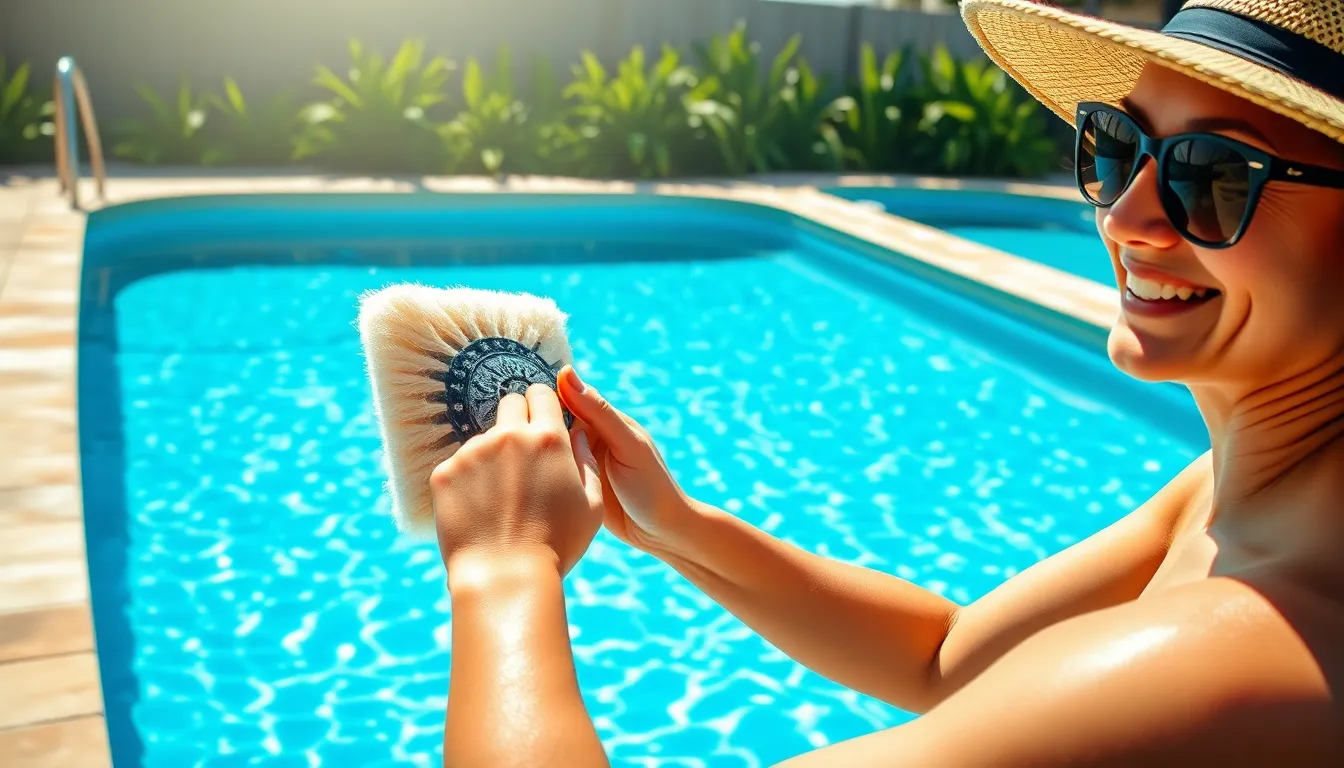
When it comes to pool maintenance, calcium buildup can feel like that uninvited guest who just won’t leave. It sneaks in, turning your sparkling oasis into a cloudy mess and making your pool look more like a science experiment gone wrong. But fear not! Tackling calcium deposits doesn’t have to be a chore; it can be a straightforward mission to reclaim your pool’s glory.
Table of Contents
ToggleUnderstanding Pool Calcium Buildup
Calcium buildup poses a common problem for pool owners. Identifying its causes and effects proves crucial for effective management.
Causes of Calcium Buildup
High calcium hardness levels in pool water often result from hard water sources. Evaporation also contributes to increased concentration of minerals. Additionally, the use of calcium-based chlorine can introduce excess calcium compounds. Heavy rainfall, which dilutes pool water, may lead to imbalances, causing calcium to precipitate. Regular testing enables pool owners to identify specific sources and react accordingly.
Effects on Pool Maintenance
Calcium buildup complicates regular pool maintenance significantly. Clogged filters can stem from accumulated deposits. Stains on pool surfaces arise due to hardened calcium, detracting from aesthetic appeal. Additionally, scaling increases operational costs, as equipment requires more energy to function efficiently. Regular maintenance and prompt calcium removal ensure a clean and inviting pool environment.
Methods for Pool Calcium Removal
Effective calcium removal in pools involves various methods, addressing both chemical and physical techniques.
Chemical Treatments
Chemical treatments offer a straightforward solution for calcium buildup. They often include sequestering agents, which bind to calcium and prevent it from precipitating. Products containing acids, like muriatic acid, also facilitate calcium dissolving, but careful measurement is crucial to avoid damaging pool surfaces. Regular monitoring of pH and alkalinity keeps the chemical levels balanced, ensuring efficient calcium removal. Pool owners can choose formulations specifically designed for scaling to assist in this process, making removal quicker and less complicated.
Physical Removal Techniques
Physical removal techniques provide alternative ways to tackle calcium deposits. Using a specialized pool brush can help scrub the surfaces where calcium accumulates, effectively lifting off buildup. Additionally, a pressure washer works well for stubborn deposits, especially on tile or vinyl surfaces. Vacuuming the pool with a manual or automatic vacuum attachment ensures any dislodged calcium debris is efficiently collected. Regular maintenance prevents future buildup, promoting a healthier pool environment.
Preventing Future Calcium Buildup
Preventing calcium buildup involves consistent pool maintenance practices. Owners should prioritize regular cleaning and water testing to ensure optimal management.
Regular Maintenance Tips
Establishing a cleaning schedule helps keep calcium deposits at bay. Use a pool brush weekly, focusing on areas prone to buildup. Regularly check and clean filters to avoid clogs that contribute to calcium accumulation. Vacuuming the pool surface removes debris and helps maintain clarity. Consistency in these practices promotes a healthier swimming environment without excessive calcium issues.
Water Balancing Strategies
Monitoring water chemistry plays a crucial role in preventing calcium buildup. Regularly test pH levels, aiming for 7.4 to 7.6 for ideal conditions. Alkalinity should fall between 80 and 120 parts per million (ppm) to support balanced water. Managing calcium hardness levels also proves essential; maintain them around 200 to 400 ppm. Make adjustments as needed to prevent oversaturation, which leads to deposits.
Choosing the Right Products for Pool Calcium Removal
Selecting suitable products for calcium removal ensures effective treatment of pool surfaces. Consider using sequestering agents, which bind calcium particles and keep them in solution. These agents help prevent further buildup and can simplify regular maintenance. Popular options include sodium hexametaphosphate and phosphonic acid.
Acids like muriatic acid effectively dissolve existing calcium deposits. It’s important to read labels for proper usage instructions and safety precautions. Proper dilution and application prevent damage to surfaces and maintain water balance.
Calcium hardness reducers also provide an efficient solution by lowering overall calcium levels. These products work by chelating calcium ions in the water, making it easier for filters to remove them. Regular application maintains appropriate calcium levels, preventing future accumulation.
Physical cleaning tools enhance chemical treatments. Specialized pool brushes scrub surfaces to dislodge stubborn calcium deposits. Use pressure washers for thorough cleaning, which removes debris without excessive scrubbing. Vacuum attachments specifically designed for calcium removal can efficiently collect dislodged particles.
Proper monitoring of water chemistry ensures optimal product effectiveness. Regular testing of pH and alkalinity guides the selection of the right removal products. Keeping pH levels between 7.4 and 7.6, and alkalinity between 80 and 120 ppm promotes a balanced environment conducive to calcium control.
Evaluating product effectiveness over time aids in identifying the best solutions. Tracking the reduction of calcium buildup indicates successful treatments. Persistent issues may signal a need for adjustments in frequency or method of application.
Incorporating consistent cleaning practices alongside product use delays calcium accumulation. Regular brushing, vacuuming, and filter maintenance form a comprehensive strategy for ongoing success in controlling pool calcium levels.
Managing calcium buildup in pools is essential for maintaining an inviting and clean environment. By understanding the causes and implementing effective removal techniques, pool owners can restore their pool’s appearance and functionality. Regular maintenance practices play a significant role in preventing future deposits and ensuring optimal water chemistry.
Choosing the right products and tools for calcium removal not only enhances the cleaning process but also protects the pool surfaces. With consistent monitoring and care, it’s possible to enjoy a sparkling pool without the hassle of excessive calcium buildup. Adopting these strategies leads to a healthier swimming experience and prolongs the life of the pool equipment.