When the sun’s shining and the temperature’s rising, nothing beats a refreshing dip in a sparkling pool. But before diving in, it’s crucial to remember that a clean pool doesn’t just happen by magic. It takes a little elbow grease and a splash of know-how to keep that oasis in tip-top shape.
Table of Contents
ToggleUnderstanding Pool Maintenance
Pool maintenance is essential for ensuring a safe and enjoyable swimming environment. Regular upkeep prevents issues that can arise from neglect.
Importance of Regular Maintenance
Regular maintenance enhances water quality, providing a healthy swimming experience. It minimizes the risk of algae buildup and harmful bacteria growth. Routine tasks such as skimming leaves, vacuuming debris, and checking chemical levels keep the water clear and balanced. Maintenance extends the pool’s life, reducing costly repairs and replacement. Following a consistent schedule fosters equipment efficiency, leading to lower energy bills.
Consequences of Neglect
Neglecting pool maintenance results in deteriorating water quality and increased health risks. Untreated water can lead to algae blooms and increased bacteria counts, posing health hazards to swimmers. Equipment issues, like clogged filters and malfunctioning pumps, arise when maintenance is overlooked. Repairing these problems incurs significant costs and time. Structural damage may occur, leading to cracks and leaks, which further complicates upkeep. Ignoring routine checks ultimately impacts the pool’s overall enjoyment and safety.
Essential Tools for Pool Maintenance
Proper pool maintenance relies on essential tools that ensure a clean environment. These tools help maintain water clarity and hygiene.
Cleaning Equipment
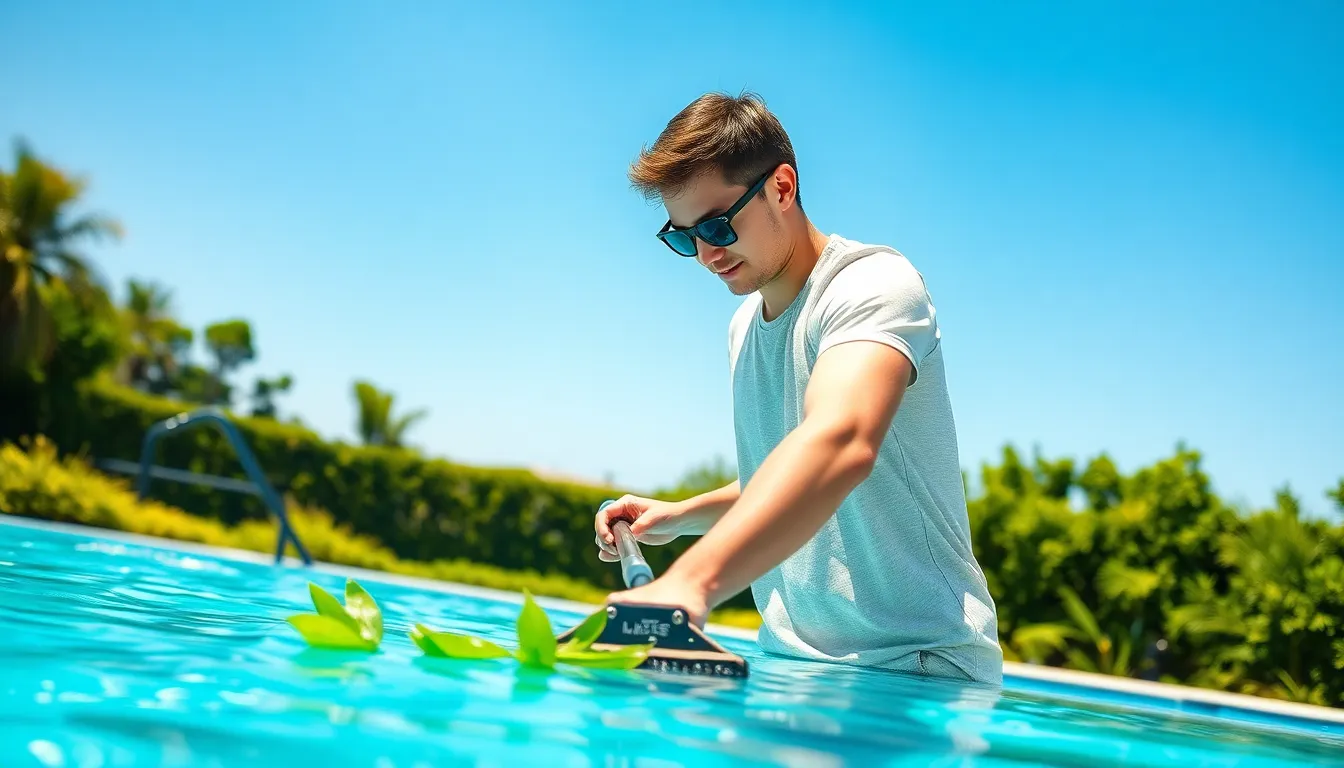
Skimmers effectively remove leaves, insects, and debris from the surface water. Pool vacuums gather dirt and algae from the bottom, keeping it free from buildup. Brushes scrub walls and tile surfaces, preventing algae growth and stain buildup. A fine mesh net aids in capturing smaller debris, ensuring thorough cleaning. Additionally, a maintenance pole offers a sturdy handle for reaching all areas of the pool, making tasks like skimming and brushing easier.
Testing Supplies
Test kits measure pH, chlorine, and alkalinity, ensuring proper chemical balance. DPD test kits provide accurate chlorine readings, critical for water safety. Strips offer a quick and easy way to check chemical levels, providing instant results. A water sample can also be analyzed at a local pool store, ensuring thorough testing. Maintaining balanced chemicals promotes healthy water and enhances swimmer comfort.
Common Pool Maintenance Tasks
Maintaining a pool involves several key tasks that ensure cleanliness and safety. Routine upkeep significantly improves water quality and user experience.
Skimming and Vacuuming
Skimming removes floating debris such as leaves and insects that can compromise water clarity. A skimmer should be used daily for best results. Vacuuming, performed weekly, addresses settled debris on the pool floor. Automatic pool vacuums can simplify this task, working independently to eliminate unwanted materials. Manual vacuuming also proves effective and allows for targeted cleaning in specific areas. Regular skimming and vacuuming help prevent algae buildup and maintain a visually appealing pool.
Balancing Chemicals
Balancing chemicals maintains proper water quality and enhances swimmer safety. Pool owners must regularly monitor pH, chlorine, and alkalinity levels using test kits or strips. Ideal pH levels should fall between 7.2 and 7.8. Chlorine levels commonly range from 1 to 3 parts per million. Alkalinity levels should stay within 80 to 120 parts per million. Adjusting these chemicals when necessary promotes healthy water and minimizes irritants. Regular chemical balancing is essential for a safe and enjoyable swimming environment.
Advanced Pool Maintenance Techniques
Advanced pool maintenance techniques ensure a consistently clean and safe swimming environment. These methods go beyond basic tasks, focusing on proactive measures to enhance pool health.
Algae Prevention and Treatment
Algae can quickly compromise water quality. Implementing regular shock treatments prevents algae growth by significantly increasing chlorine levels. Regularly brushing pool surfaces disrupts algae accumulation, making it easier to eliminate. Maintaining a balanced pH between 7.2 and 7.8 also enhances chlorine effectiveness, further reducing the algae risk. If algae becomes visible, treating the pool with algaecides or manually vacuuming the affected areas helps restore clarity and safety.
Seasonal Maintenance Tips
Seasonal maintenance plays a vital role in efficient pool upkeep. Closing a pool for winter involves thorough cleaning, as well as balancing chemicals to prevent freeze damage. Installing a cover protects the pool from debris and sunlight during colder months. When spring arrives, reopening involves cleaning the cover, balancing chemicals, and inspecting equipment for any issues. Regularly checking for leaks or wear on pool liners and equipment ensures a seamless transition into the swimming season. Adapting maintenance techniques seasonally keeps the pool in optimal condition year-round.
Consistent pool maintenance is key to enjoying a safe and inviting swimming experience. By dedicating time and effort to regular upkeep tasks like skimming and vacuuming, pool owners can significantly enhance water quality and prevent issues like algae growth.
Utilizing the right tools and techniques not only helps maintain a clean environment but also extends the life of the pool. Seasonal maintenance is equally important, ensuring that the pool remains in optimal condition throughout the year.
With a proactive approach to maintenance, swimmers can enjoy crystal-clear waters and peace of mind, knowing they’re swimming in a safe and healthy environment.