In the world of living room decor, side tables often play the unsung hero, quietly standing by while couches and coffee tables steal the spotlight. But let’s face it, without these little champions, where would the remote control go? Or that half-empty coffee cup that’s been on the verge of becoming a science experiment? Side tables aren’t just functional; they’re the stylish sidekicks your living room desperately needs.
From sleek modern designs to rustic charm, side tables come in all shapes and sizes, ready to complement any style. They’re perfect for showcasing your favorite books, holding snacks during movie marathons, or simply giving your guests a place to rest their drinks. So, let’s dive into the world of side tables and discover how these small pieces can make a big impact in your living space.
Table of Contents
ToggleTypes Of Side Tables For Living Rooms
Side tables enhance both functionality and design in living rooms. Various types cater to different needs and styles, making them versatile additions to any space.
Accent Tables
Accent tables add personality to a living room. These tables often feature unique designs, colors, or materials, serving both form and function. Typically used to showcase decorative items, they enhance visual interest. Examples include geometric shapes and artistic designs. Positioning an accent table next to a sofa creates a focal point while providing space for essentials like lamps or books. Selecting an accent table that complements existing decor ensures a cohesive look.
Nesting Tables
Nesting tables offer flexibility and practicality. These tables consist of smaller units that slide under one another, saving space when needed. When entertaining guests, they can be separated to serve multiple purposes, like holding snacks or drinks. Common materials include wood, metal, or glass, providing diverse aesthetics. Choosing nesting tables in a complementary style to existing furniture enhances overall design while maximizing surface area when required.
End Tables
End tables, often placed beside sofas or chairs, deliver essential support for everyday items. These tables typically feature a simple design, making them functional yet stylish. Common uses include holding lamps, drinks, or personal belongings. Many end tables also provide extra storage through drawers or shelves. Selecting end tables that match the overall decor style contributes to a more harmonious living room environment. Styles range from traditional to contemporary, allowing for easy integration into various designs.
Materials Used In Side Tables
Side tables come in various materials, each offering unique aesthetics and functional benefits. Understanding these materials helps in choosing the right side table to enhance any living room.
Wood
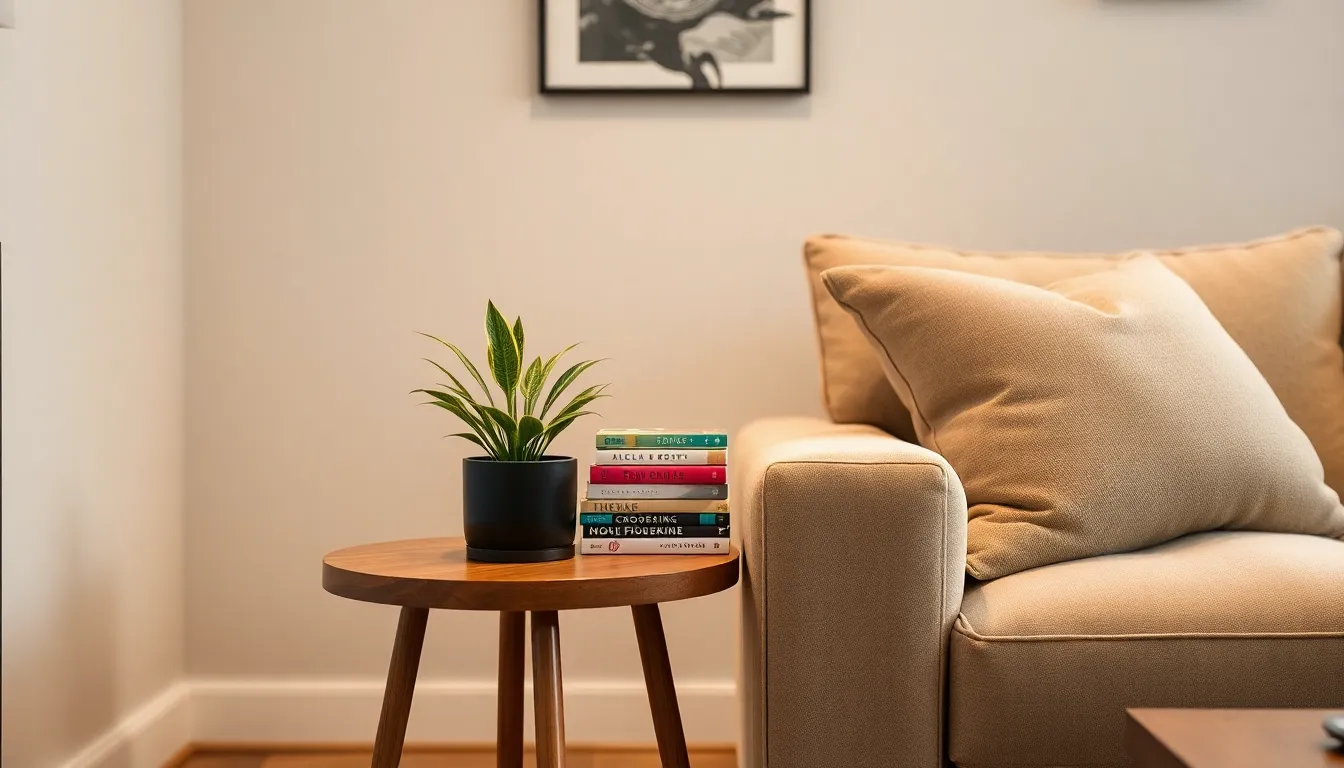
Wood stands as a popular choice for side tables due to its natural beauty and durability. Options include hardwoods like oak and walnut, known for their strength, and softer woods such as pine, which can be more affordable. Wood side tables often come in various finishes, enabling customization to match existing decor. Their warmth adds character to living spaces, making them ideal for both modern and traditional settings.
Metal
Metal side tables provide a sleek, contemporary look, often featuring materials like stainless steel or wrought iron. These tables are typically more resilient against wear and tear, making them suitable for high-traffic areas. Metal designs can range from minimalist to intricate, complementing diverse decor styles. Additionally, metal tables can feature finishes like matte or polished, allowing for further personalization in appearance.
Glass
Glass side tables offer a modern, airy feel, perfect for smaller spaces or rooms needing light enhancement. Tempered glass provides strength and safety, while various base materials, such as metal or wood, support the surface. Glass tables often feature unique shapes, adding visual interest to a room. Their reflective quality can also create an illusion of more space, enhancing the overall ambiance of the living area.
Choosing The Right Side Table
Selecting the ideal side table involves evaluating several key factors, including size, style, and functionality, to ensure it complements the living room.
Size Considerations
Size plays a crucial role in selecting a side table. Tables should match the scale of the surrounding furniture for a harmonious look. Aim for a height that aligns with adjacent seating, typically 24 to 28 inches for sofas and chairs. Table diameter or width should fall between 12 to 24 inches, ensuring enough surface space without overwhelming the area. Consider the available space; a larger room can accommodate bulkier tables, while smaller spaces benefit from compact designs.
Style And Design
Style and design significantly influence the aesthetics of a living room. Identify the existing decor theme to ensure compatibility—modern, rustic, or traditional styles vary in shape, color, and texture. Select materials that blend well; for instance, a wood table complements softer textiles, while metal tables can enhance contemporary decor. Unique designs, like geometric shapes or vintage finishes, add character and personality to the space. Always ensure that the side table enhances the overall style rather than detracting from it.
Functionality
Functionality directly affects the usability of a side table. Consider the intended purpose: will it hold drinks, books, or decorative items? Choose tables with integrated storage options, like drawers or shelves, to maximize utility, especially in smaller spaces. Assess the table’s sturdiness; it should withstand everyday use without compromising stability. Additionally, consider multi-functional tables, like nesting sets that provide versatility and flexibility during gatherings. Focus on selecting tables that seamlessly integrate into daily living while serving distinct purposes.
Styling Tips For Side Tables
Side tables enhance both functionality and style in living rooms. Proper styling can elevate the overall decor and create a more inviting space.
Decor Ideas
Incorporate various elements to style side tables effectively. Use decorative books, art pieces, or unique sculptures to add visual interest. Create a layered look by stacking items like magazines or beautiful trays. Consider integrating plants, such as succulents or small greenery, to introduce a touch of nature and freshness. Use lamps with interesting designs to provide both illumination and character while ensuring they complement the room’s color palette. Mix materials, like a wood table paired with metal accents, to establish a dynamic visual appeal that engages the eye.
Arrangement Techniques
Utilize smart arrangements to enhance the functionality and aesthetics of side tables. Place items with different heights to create visual balance, ensuring shorter items sit next to taller pieces. Position a table near seating to promote convenience for drinks and reading materials, reinforcing its practical purpose. Align the table’s surface with armrests for easy access while maintaining a cohesive look. When arranging items, leave enough space for personal essentials, like coasters or remote controls, without looking cluttered. Embrace asymmetry by grouping items in odd numbers, which often appears more visually pleasing and less formal.
Side tables are more than just functional pieces; they’re essential elements that can transform a living room. By thoughtfully selecting the right design and material, homeowners can create a cohesive and inviting atmosphere. Whether opting for a sleek metal design or a rustic wooden piece, the right side table can enhance both style and utility.
Incorporating decorative elements and following styling tips can elevate the overall decor, making the space feel more personalized. With the right side tables, anyone can achieve a harmonious balance between practicality and aesthetics, ensuring their living room is both beautiful and functional. Embracing these furnishings opens up endless possibilities for enhancing the living environment.