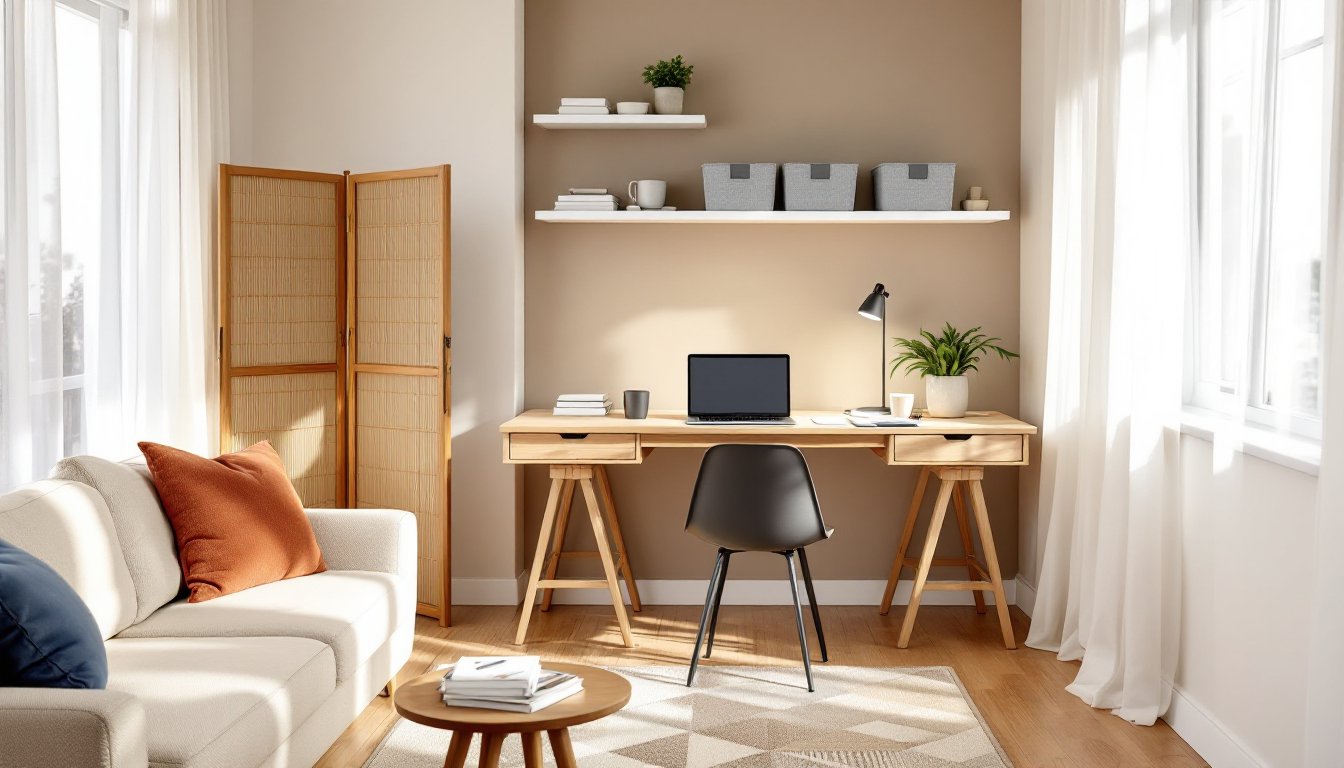
Squeezing a functional workspace into a small living room feels like solving a jigsaw puzzle where half the pieces are missing. But plenty of homeowners are doing exactly that, carving out productive work zones in rooms designed for relaxation. The trick isn’t stuffing more furniture into tight quarters: it’s making deliberate choices about layout, furniture, and visual boundaries. Done right, a dual-purpose space can serve both functions without either one feeling like an afterthought. This guide walks through proven layout strategies, furniture picks, and design hacks that make small living room offices actually work.
Table of Contents
ToggleKey Takeaways
- A small living room office layout thrives on deliberate zoning, efficient furniture selection, and visual boundaries that help your brain switch between work and relaxation modes.
- Measure your space precisely before buying furniture, accounting for baseboards, door swings, and outlet placement—most furniture failures stem from eyeballing dimensions or forgetting these critical details.
- Corner desks and wall-mounted solutions maximize workspace without consuming floor footprint, while anchoring floating desks to wall studs with lag bolts ensures stability under typical 50–75 pound loads.
- Vertical storage, labeled bins, and under-desk file cabinets keep work materials from invading your relaxation zone and maintain clear boundaries between office and living areas.
- Visual separation using rugs, accent paint, dedicated task lighting, and tall plants helps define distinct zones so your workspace feels purposeful without requiring structural changes.
- Multi-functional furniture like storage ottomans and console tables amplifies usable space while keeping cable management clean and the room cohesive through a consistent color palette.
Why a Combined Living Room Office Makes Sense
Not every home has a spare bedroom to convert into dedicated office space. For renters, apartment dwellers, and homeowners with limited square footage, the living room often doubles as the only viable work zone. Instead of viewing this as a compromise, think of it as an opportunity to design a truly flexible space.
A combined layout forces efficiency. There’s no room for redundant furniture or unnecessary clutter when every square foot serves double duty. This constraint naturally leads to smarter storage solutions and multi-functional pieces that make the whole room more usable.
From a practical standpoint, living room offices keep the workspace integrated into the home’s main traffic flow. That means better natural light access (most living rooms have larger windows than spare bedrooms), easier climate control, and no isolation during work hours. For those who live alone or work remotely full-time, this integration beats sitting in a closed-off room all day.
The setup also eliminates the need for structural changes. Unlike converting a closet or building a dedicated office addition, projects that often require permits and professional help, a living room office rearrangement is purely cosmetic and reversible.
Essential Planning: Measuring and Zoning Your Space
Before buying a single piece of furniture, grab a tape measure and note every dimension. Measure wall lengths, ceiling height, window placement, and door swing clearances. Write it all down. Most furniture failures happen because someone eyeballed the space or forgot to account for baseboards and trim (which typically add 3/4 inch to 1 inch to wall depth).
Create a rough floor plan on graph paper or use a free digital tool. Mark existing electrical outlets, critical for desk placement since extension cords strung across walkways are both ugly and hazardous. Note natural light sources and how they shift throughout the day. A desk positioned in direct afternoon sun creates glare on screens: one in a dark corner requires task lighting that eats desk space.
Zoning divides the room mentally before furniture arrives. Identify which wall or corner gets the office function and which areas remain purely for relaxation. In most small living rooms, the office zone works best in one of three spots: a corner opposite the main seating area, along a wall perpendicular to the sofa, or tucked behind the couch if there’s adequate clearance (minimum 36 inches for a functional walkway).
Consider traffic patterns. The path from the entry door to the kitchen or bathroom shouldn’t cut through the middle of the workspace. People working from home often take calls: having roommates or family members constantly walking through the frame isn’t ideal. Thoughtful small office layout planning addresses these issues upfront.
Best Furniture Arrangements for Small Living Room Offices
Corner Desk Configurations
Corner setups claim dead space that rarely gets used otherwise. An L-shaped desk or two narrow desks arranged at 90 degrees create generous work surface without protruding far into the room. Standard L-desks range from 48 to 60 inches per leg, but compact models go as small as 36 inches, which still accommodates a laptop, monitor, and notebook.
Position the desk so the user faces into the room rather than directly at a wall, this keeps the workspace feeling open and allows quick transitions between work and living modes. If the corner has a window, even better: natural light reduces eye strain and the view breaks up screen monotony.
For stability, anchor at least one desk leg to a wall stud if the surface is DIY or lightweight. Many small desks for home setups use hollow-core construction: adding an L-bracket secured to a stud prevents wobble during typing. Use #8 wood screws (1-1/2 inch minimum) into studs for solid hold.
Floating and Wall-Mounted Solutions
Wall-mounted desks eliminate floor footprint entirely. These fold-down or fixed-shelf styles range from simple 24-inch-deep platforms to more elaborate secretary-style units with integrated storage. The key structural consideration: make sure the mounting brackets hit at least two studs spaced 16 inches on center (standard residential framing). A floating desk holding a monitor, keyboard, and occasional paperwork can easily see 50 to 75 pounds of load: drywall anchors alone won’t cut it.
For installation, locate studs with a stud finder, mark positions, and pre-drill pilot holes to prevent splitting. Use lag bolts (1/4 inch diameter minimum) for the bracket attachment. If stud spacing doesn’t align with the desk width, add a mounting cleat, a horizontal 1×4 or 1×6 board screwed into multiple studs, then attach the desk to the cleat.
Floating desks pair well with wall-mounted shelving above for storage, keeping the floor completely clear underneath. This openness makes small rooms feel larger. Some designs incorporate fold-down mechanisms, allowing the desk to disappear entirely when not in use, ideal for studio apartments or truly tight quarters. IKEA-based creative modifications often feature hinged desk designs using standard shelf brackets and piano hinges for surprisingly sturdy results.
Smart Storage Ideas to Keep Both Zones Clutter-Free
Dual-purpose spaces fail when work materials invade the relaxation zone. Dedicated storage keeps boundaries clear and both areas functional. Start with vertical storage, shelves, wall grids, and pegboards claim unused wall height. In a room with 8-foot ceilings, the upper 3 to 4 feet often goes completely unused.
Floating shelves installed 12 to 18 inches apart hold books, binders, and decorative items that double as office supplies. Use matching bins or boxes to hide paper clutter, chargers, and cables. Label bin contents if multiple people share the space. For a cleaner look, closed cabinets or a small bookcase with doors hides everything behind a uniform facade.
Under-desk storage matters as much as what’s above. A two-drawer file cabinet on casters slides under the desk when not needed and rolls out for access. Many compact models measure 15 inches wide by 18 inches deep, fitting neatly in tight spots. Alternatively, use a storage ottoman that serves as extra seating for guests and holds office supplies inside. These typically support 200 to 250 pounds when used as a seat, so check manufacturer specs before buying.
Cable management prevents the tangled mess that makes any space look chaotic. Adhesive cable clips along the underside of the desk route power and peripheral cords. A simple surge protector mounted to the desk leg or back edge keeps plugs accessible without cords snaking across the floor. For a small home office aesthetic, every visible cord detracts from the clean look.
Multi-functional furniture amplifies storage in small footprints. A console table behind the sofa can function as a desk (most are 28 to 32 inches high, slightly lower than standard 29-inch desk height but workable with an adjustable chair). Add baskets on lower shelves for storage. Similarly, a narrow bookshelf flanking the desk holds both work binders and living room decor, blurring the line between zones.
Design Tricks to Visually Separate Work and Relaxation Areas
Even in an open-plan room, visual separation helps the brain switch between work and leisure modes. The goal isn’t building walls, it’s creating enough distinction that each zone feels purposeful.
Rugs define zones. A rug under the living area seating and a smaller rug or chair mat under the desk establishes two distinct territories. Choose patterns or colors that complement each other but aren’t identical. The physical boundary underfoot reinforces the mental shift when moving between spaces.
Paint or wallpaper accent walls behind the desk area create a backdrop that sets the workspace apart. Even a different paint color in the same family, say, a deeper shade of the room’s base color, provides subtle separation without clashing. If painting isn’t an option (rentals, for instance), removable peel-and-stick wallpaper offers a reversible solution. Many apartment-friendly design ideas use this approach to add character without losing a security deposit.
Shelving units act as partial dividers. A narrow bookcase placed perpendicular to the wall, behind or beside the desk, functions as a low-profile screen. It won’t block light or views but provides a physical marker between zones. For added benefit, load the shelves with work items on the desk side and decorative or living room items on the opposite side.
Lighting zones help too. A dedicated desk lamp for task lighting (aim for 40 to 60 watts equivalent LED for computer work) keeps the office zone bright during work hours, while the living area relies on ambient or softer accent lighting. When work ends, switching off the task lamp sends a clear signal, the office is closed. Matching living room decor choices with office elements creates cohesion, but varied lighting distinguishes their purposes.
Portable room dividers or folding screens offer a physical barrier when needed without permanent commitment. A three-panel screen folds flat when not in use and unfolds to hide the desk during off-hours or video calls. Many designs are lightweight enough to move with one hand. For a more polished look, tall plants in floor planters (real or high-quality artificial) soften the workspace edge and add greenery that benefits both zones. Practical decluttering strategies emphasize hiding work clutter at day’s end to mentally close the office, and a folding screen makes that instant.
Consistent color palette across both zones keeps the room cohesive. If the sofa and living room furniture lean toward neutral tones, carry those into the desk area with matching accessories, lamp base, desk organizers, or chair cushion. Small pops of an accent color tie everything together without making the space feel chopped up. The room should read as one well-designed space with two functions, not two separate rooms awkwardly jammed together.