
In a world where office coffee is often stronger than the planet’s resolve, sustainable office solutions are not just a trend—they’re a necessity. Imagine swapping out those clunky plastic binders for sleek, eco-friendly alternatives while knowing you’re saving the Earth one paper clip at a time. It’s like giving Mother Nature a high-five every time you print on recycled paper.
Sustainable practices in the workplace aren’t just good for the planet; they can also boost morale and productivity. Who wouldn’t want to work in an office that feels as fresh as a morning breeze? By embracing green initiatives, businesses can save money and create an environment that makes employees feel like they’re part of something bigger. So grab that reusable coffee cup and get ready to explore how small changes can lead to a sustainable office that’s both efficient and environmentally friendly.
Overview of Sustainable Office Solutions
Sustainable office solutions focus on environmentally friendly practices and resources. Businesses gain numerous advantages from incorporating these solutions, including reduced waste and lower energy consumption. Implementing eco-friendly alternatives, such as recycled paper and biodegradable supplies, decreases the carbon footprint of office operations.
Energy-efficient equipment, like LED lighting and ENERGY STAR appliances, also contribute significantly to sustainability. Choosing digital tools over paper-based processes minimizes physical waste while enhancing efficiency. Offices that prioritize sustainability often experience increased employee morale, as team members value environmentally conscious workplaces.
In addition to products, sustainable office solutions should embrace resource-saving strategies. Many companies adopt practices such as remote work and flexible scheduling to lessen commuting and reduce emissions. Investments in green infrastructure, like plant installations and renewable energy sources, create healthier indoor environments.
Collaboration with suppliers committed to sustainability strengthens efforts. Establishing partnerships with organizations that prioritize ethical sourcing aligns business goals with broader environmental objectives. Communication regarding sustainability initiatives fosters a culture of responsibility and awareness throughout the workforce.
Measuring the effectiveness of sustainable practices leads to continuous improvement. Businesses can utilize key performance indicators to track changes in energy consumption, waste reduction, and employee engagement. Small modifications yield substantial impact, demonstrating that sustainability is achievable for all office settings.
Benefits of Sustainable Office Solutions
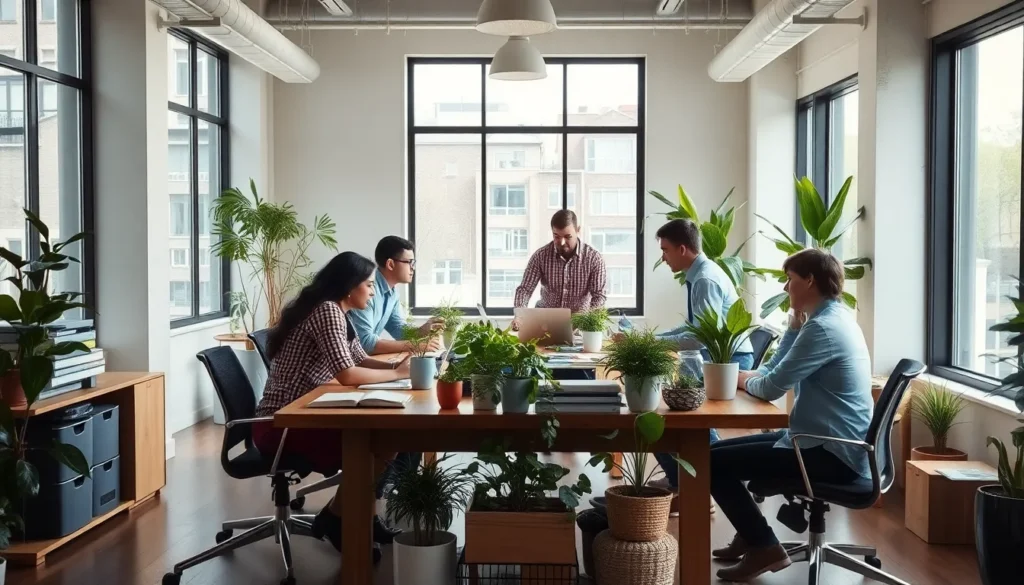
Sustainable office solutions provide various benefits that significantly impact businesses and the environment. Companies prioritizing eco-friendly practices often enjoy enhanced operational efficiency.
Environmental Impact
Sustainable office solutions minimize the environmental footprint of business operations. By utilizing renewable resources, organizations reduce their reliance on non-renewable energy sources. Switching to eco-friendly supplies, such as recycled paper and biodegradable items, cuts down waste production. Additionally, adopting energy-efficient equipment, like LED lighting, drastically lowers energy consumption. Investing in green infrastructure fosters healthier indoor environments, which improves air quality for employees. Overall, businesses contribute positively to the planet while enhancing their CSR reputation and customer loyalty.
Economic Advantages
Organizations implementing sustainable office solutions often experience significant economic benefits. Reduced energy costs result from increased efficiency and the adoption of eco-friendly technologies. Employers also save money through lower waste disposal fees associated with recycling programs. Moreover, investing in sustainable practices, such as remote work options, can lead to decreased overhead costs and improved employee retention. Many consumers prefer purchasing from environmentally conscious brands, which can increase sales. Tracking performance indicators related to sustainability ensures continuous improvements in operations and strengthens financial standing.
Key Components of Sustainable Office Solutions
Sustainable office solutions encompass several key components that promote environmental responsibility and efficiency in workplace operations.
Energy Efficiency
Energy-efficient practices significantly reduce energy consumption in offices. Upgrading to LED lighting can cut energy use by up to 80%. Utilizing smart thermostats optimizes heating and cooling systems, allowing businesses to further lower their energy bills. Office equipment, such as Energy Star-certified appliances, provides efficient alternatives that minimize power usage without sacrificing performance. Incorporating natural lighting enhances employee well-being while decreasing reliance on artificial lights. These measures directly contribute to a smaller carbon footprint and promote sustainability in the workplace.
Waste Reduction
Waste reduction strategies focus on minimizing the volume of materials used and discarded in offices. Implementing a paperless approach can reduce paper waste by as much as 80%. Encouraging employees to adopt digital note-taking and collaboration tools streamlines communication and reduces reliance on printed materials. Establishing a robust recycling program ensures that recyclable materials are properly sorted and disposed of. Additionally, organizations can implement initiatives such as composting organic waste. By promoting these measures, businesses strengthen their commitment to sustainability while optimizing resource usage.
Sustainable Materials
Sustainable materials play a vital role in creating eco-friendly office spaces. Using office supplies made from recycled content reduces demand for virgin materials. Biodegradable alternatives for common items, like pens and notebooks, contribute to waste reduction. Choosing furniture constructed from sustainable resources supports responsible sourcing and minimizes environmental impact. Furthermore, companies can invest in furnishings that meet green certifications, such as LEED. Prioritizing the use of sustainable materials enhances the overall sustainability profile of the office environment and promotes healthier workplaces.
Implementing Sustainable Office Solutions
Implementing sustainable office solutions involves evaluating current practices and outlining a clear path to transition.
Assessing Current Practices
Evaluating existing office practices marks the first step towards sustainability. Companies must analyze resource use, identify waste generation, and assess energy consumption. Gathering data on paper usage and disposal methods highlights areas for improvement. Engaging employees in feedback fosters a collective commitment to sustainability. Tracking the types of supplies purchased reveals opportunities for eco-friendly alternatives. A comprehensive assessment serves as a foundation for developing targeted strategies to enhance sustainability in office operations.
Steps for Transitioning
Transitioning to sustainable office solutions requires a structured approach. Establishing clear sustainability goals provides direction for efforts. Integrating energy-efficient technologies, like LED lighting and smart devices, immediately reduces energy consumption. Educating employees about recycling protocols encourages participation in sustainability initiatives. Partnering with suppliers who share a commitment to eco-friendly practices strengthens the supply chain. Gradually phasing out non-sustainable products creates a more environmentally responsible workplace. Monitoring progress through established metrics ensures accountability and fosters continuous improvement.
Embracing sustainable office solutions is a vital step towards creating a responsible and efficient workplace. By prioritizing eco-friendly practices businesses can significantly reduce their environmental impact while fostering a positive atmosphere for employees. The shift towards renewable resources and energy-efficient technologies not only enhances operational performance but also positions companies favorably in the eyes of environmentally conscious consumers.
As organizations commit to sustainability they pave the way for a healthier future. Continuous evaluation and improvement of practices ensure that companies remain on track to meet their sustainability goals. Ultimately the integration of sustainable solutions transforms office environments into spaces that support both people and the planet.