In a world buzzing with modern trends and minimalist designs, the charm of traditional living rooms stands out like a cozy sweater on a chilly day. These spaces invite warmth and nostalgia, proving that sometimes, old-school is the best school. Imagine sinking into a plush armchair surrounded by rich wood finishes and timeless decor—it’s like a warm hug from your favorite grandparent.
Traditional living rooms aren’t just about style; they’re about creating a sanctuary where memories are made. From family gatherings to quiet evenings with a good book, these rooms weave together comfort and elegance in a way that feels just right. So why not embrace the classic vibe and transform your space into a haven of tradition? After all, who wouldn’t want a living room that feels like a scene from a beloved movie?
Overview Of Traditional Living Rooms
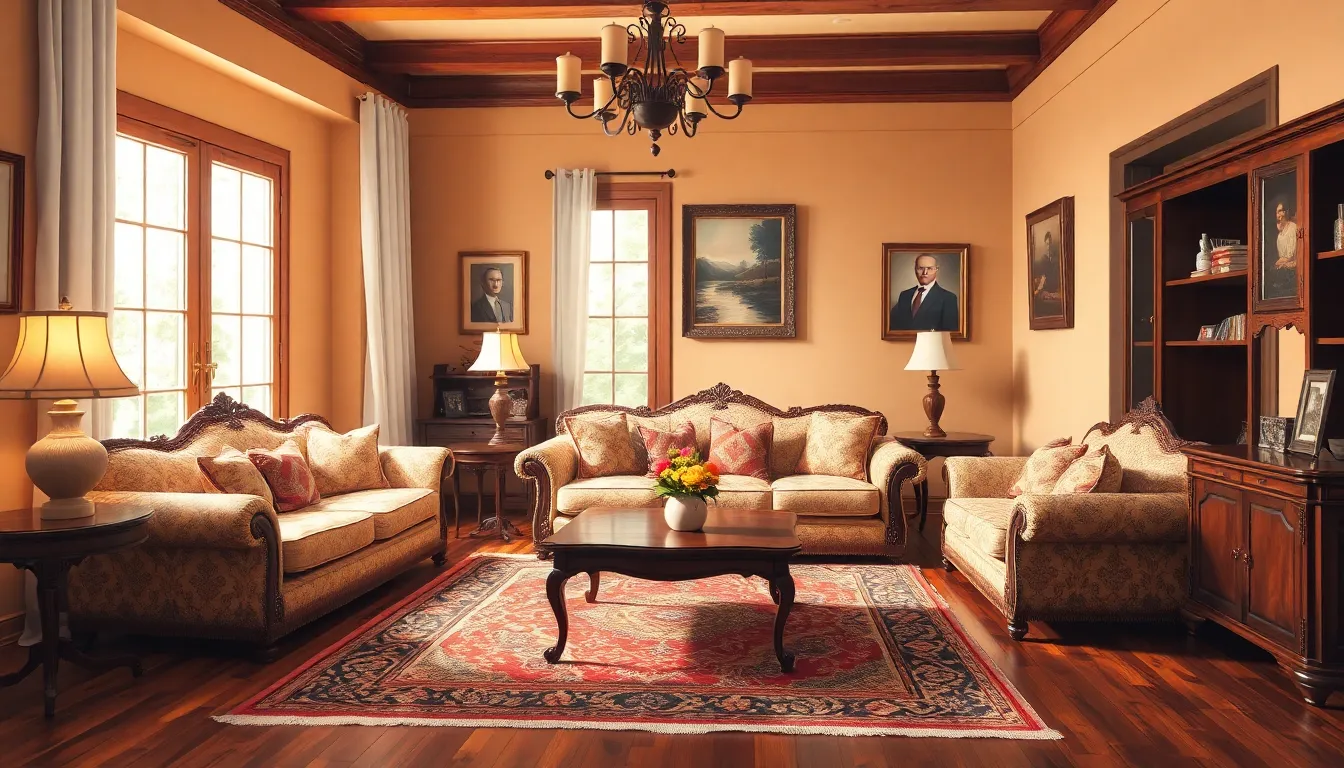
Traditional living rooms embody a timeless elegance that appeals to various tastes. These spaces often feature rich, warm colors, classic furniture, and ornate details. Traditional design elements include plush sofas, wooden coffee tables, and decorative accents like framed artwork or family heirlooms.
Furniture in traditional living rooms reflects a commitment to craftsmanship. Pieces often boast intricate carvings, luxurious fabrics, and a mix of materials like wood, metal, and glass. Common materials include mahogany, oak, and cherry, giving these rooms a sense of permanence and warmth.
Textiles play a significant role in traditional living rooms. Thick drapes and patterned upholstery add depth and comfort. Rugs, often Persian or Oriental, establish a sense of coziness while providing visual interest. These textiles work together to create a harmonious and inviting atmosphere.
Lighting enhances the traditional living room’s ambiance. Chandeliers, sconces, and table lamps often feature decorative elements like crystal or brass detailing. Soft, warm lighting invites relaxation and conversation, allowing these spaces to function as social hubs for families and friends.
Accessories round out the traditional living room’s aesthetic. Decorative elements such as vases, books, and family photos contribute to a personalized feel. Windows may display floral arrangements or classic curtains, adding an extra layer of charm.
Overall, traditional living rooms serve as inviting spaces where comfort and nostalgia intertwine. They represent a style that goes beyond mere function, focusing on creating an environment rich in warmth and character. Embracing traditional elements helps maintain a connection to the past while offering a restful and stylish retreat.
Key Features Of Traditional Living Rooms
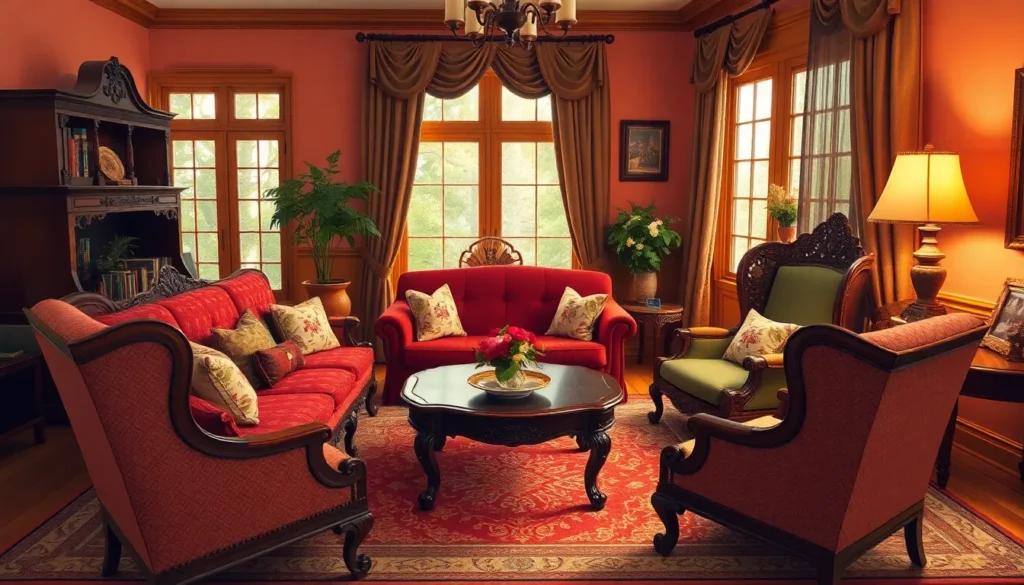
Traditional living rooms exhibit timeless charm and character through their distinctive elements. Key features define their unique aesthetics, resulting in a warm and inviting atmosphere.
Furniture Selection
Classic furniture pieces dominate traditional living rooms. Sofas feature ornate detailing and rich upholstery, often made from luxurious fabrics like velvet and damask. Solid wood chairs with intricate carvings lend elegance, while wooden coffee tables provide functional beauty. Wingback chairs and love seats, often arranged in conversational groupings, create a welcoming environment. Occasional tables, typically adorned with decorative items, enhance the room’s character. Storage solutions, such as sideboards or cabinets, maintain the traditional style while offering practical space management.
Color Palettes
Color palettes in traditional living rooms focus on warm, rich tones. Shades of deep red, golden yellow, and earthy green contribute to an inviting feel. Soft neutrals like beige and cream balance bold colors, creating a harmonious atmosphere. Accent walls may feature patterned wallpaper or rich paint colors, emphasizing style. Textiles, including curtains and cushions, often incorporate complementary colors and classic patterns such as florals or stripes. A unified color scheme fosters warmth and coziness, inviting occupants to relax and engage in conversation.
Decorating Tips For Traditional Living Rooms
Capturing the essence of traditional living rooms involves thoughtful decoration choices. Focus on accessories and lighting to enhance the overall ambiance.
Accessories
Accessories define the character of traditional living rooms. Incorporate items like vintage paintings, ornate mirrors, and decorative vases. Use family photos in elegant frames to add a personal touch. Layer textures with throw pillows and cozy blankets, choosing fabrics like velvet or brocade. Include bookshelves filled with classic literature to evoke nostalgia. A well-placed antique clock or a set of candlesticks on the mantelpiece can serve as conversation starters. Curate your collection of accessories carefully to maintain harmony and elevate the elegance of the space.
Lighting
Lighting greatly influences the atmosphere in traditional living rooms. Opt for a stunning chandelier as a focal point, adding both style and illumination. Choose wall sconces that complement the overall aesthetic, providing softer, ambient light for intimate settings. Incorporate table lamps with fabric shades to create cozy reading nooks. Natural light plays a crucial role; use heavy drapes that can be drawn back during the day to flood the room with sunlight. Ensure a balanced combination of overhead and task lighting for versatility and warmth, emphasizing the inviting charm of the decor.
Popular Styles Within Traditional Living Rooms
Traditional living rooms feature several popular styles, each reflecting distinctive characteristics.
- Colonial Style: Colonial design emphasizes symmetry and balance, incorporating classic elements like wingback chairs, tallboys, and wooden furniture. Colors tend to be muted, with accents of deep green or navy.
- Victorian Style: Victorian living rooms showcase elaborate decorations, rich fabrics, and intricate woodwork. Plush sofas, ornate fireplaces, and lace curtains enhance the aesthetic. Dark woods and jewel tones dominate, creating a luxurious feel.
- Georgian Style: Georgian style prioritizes elegance and functionality, often featuring sturdy, high-backed chairs, and formal layouts. Architectural details like crown molding and wainscoting add sophistication, while colors like cream and soft pastels offer a bright atmosphere.
- French Country Style: French country design blends rustic charm with elegance. It includes distressed furniture, soft fabrics, and warm, inviting colors. Elements like floral patterns and antique accessories create a cozy yet refined look.
- Arts and Crafts Style: Emphasizing craftsmanship, the Arts and Crafts movement features simple lines, natural materials, and muted colors. Furniture often includes heavy wooden pieces with hand-carved details, paired with woven textiles to enhance warmth.
- Tudor Style: Tudor living rooms are characterized by their heavy beams, dark woodwork, and stone accents. A fireplace often serves as the focal point, complemented by rich colors and comfortable but elegant furnishings.
Understanding these styles helps create a traditional living room that conveys both warmth and nostalgia. Each style offers unique elements that can be blended to enhance comfort while maintaining the classic essence of traditional design.
Traditional living rooms stand as timeless sanctuaries that evoke warmth and nostalgia. Their classic elegance and rich textures create inviting spaces perfect for gathering and making memories. By blending distinctive styles and personal touches, these rooms reflect individual tastes while honoring the past.
Incorporating elements like ornate furniture and layered textiles enhances the charm and comfort of traditional design. The careful selection of accessories and lighting plays a crucial role in achieving a cozy atmosphere. Ultimately, embracing a traditional living room allows for a stylish retreat that transcends fleeting trends, offering a comforting embrace that feels like home.