Choosing the right paint color for a home office isn’t just about aesthetics, it’s about creating an environment that supports the work happening in it. The wrong shade can trigger eye strain, kill motivation, or make video calls look washed out. The right one? It sets the tone for focused mornings, creative afternoons, and a space that doesn’t feel like a cave by 3 PM. Whether converting a spare bedroom or carving out a corner, the paint on those walls is the foundation of a workspace that actually works.
Table of Contents
ToggleKey Takeaways
- Paint color for a home office directly impacts productivity and focus; cool colors like blues and greens reduce mental fatigue, while warm tones like soft yellows boost energy for creative work.
- Room orientation and lighting matter more than color alone—test paint swatches on multiple walls in different times of day, as the same shade behaves differently under north-facing indirect light versus south-facing direct sun.
- Eggshell or satin finishes are ideal for home offices because they’re wipeable, reduce video call glare, and maintain a professional appearance without showing imperfections like flat paint.
- Light-to-mid-tone paint colors make small home offices feel larger, while darker accent walls behind your desk add visual interest without overwhelming a workspace.
- Proper prep and application—including primer, two coats, painter’s tape pulled while still tacky, and 24 hours of curing before moving furniture—determines whether your paint color choice looks polished or flawed.
Why Home Office Paint Color Matters More Than You Think
Paint color affects light reflection, perceived room size, and, this part’s not mystical, actual mood and productivity. Cool colors (blues, greens, grays) tend to lower heart rate and promote calm, making them solid picks for analytical work. Warm colors (yellows, oranges, soft terracottas) can boost energy and creativity but may feel overstimulating in small doses or if the room gets strong afternoon sun.
Color temperature also impacts how artificial and natural light behave. A north-facing room with little sun will make cool grays look flat and dingy: a south-facing space can handle cooler tones without feeling cold. Paint a test swatch on at least two walls, one that gets morning light, one that doesn’t, and live with it for a few days before committing to five gallons.
Then there’s the practical side. Flat and matte finishes hide imperfections but show scuffs and are harder to clean. Eggshell or satin finishes are the sweet spot for home offices: they’re wipeable, don’t glare on video calls, and still look sophisticated. If the office doubles as a guest room, consider how the color reads when the desk isn’t in use.
Best Paint Colors for Productivity and Focus
Calming Blues and Greens
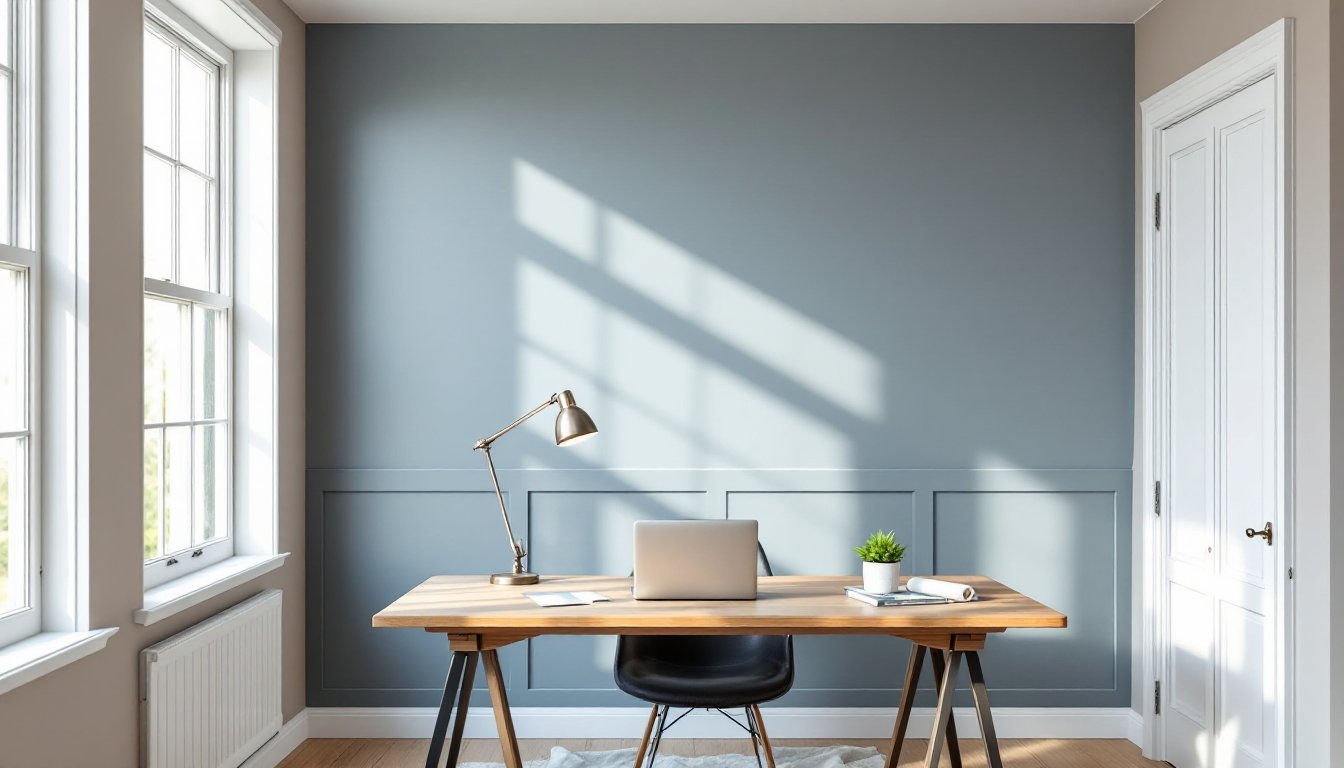
Blues and greens dominate productivity research for good reason. Medium blues, think naval, slate, or soft denim tones, reduce mental fatigue and work well in offices where concentration is key: writing, coding, financial work. They pair cleanly with white trim and wood desks without feeling cold, especially if the undertone leans slightly gray rather than pure cyan.
Sage greens and muted teals bring the same calm but with a bit more warmth. These shades gained traction in interior design trends over the past few years and they hold up in home offices that need to feel less corporate. They’re forgiving with mixed lighting and complement both modern and traditional furnishings. Avoid bright lime or Kelly green unless the goal is to stay hyper-alert, these can feel jarring over an eight-hour workday.
One caution: very dark blues (navy, Prussian) can make a small office feel cramped. If the room is under 100 square feet or has a single window, stick to mid-tones or use the darker shade as an accent wall behind the desk. Pair with ample task lighting, an adjustable LED desk lamp in the 4000K range keeps the space from feeling cave-like.
Energizing Yellows and Warm Neutrals
Soft, buttery yellows can lift mood and work well in creative fields, design, marketing, teaching. The key is keeping the saturation low. A pale, creamy yellow with gray or beige undertones feels inviting without the cafeteria vibe of bright lemon. Test in natural light: some yellows go green or chalky depending on the time of day.
Warm neutrals, greige, taupe, oatmeal, soft khaki, are the workhorses of home office paint. They don’t compete with artwork or built-in shelving, they photograph well on video calls, and they let furniture and accessories do the talking. These shades also bridge the gap when a home office guest room needs to serve double duty. A warm greige feels professional during work hours and relaxing when guests arrive.
Warm whites with a hint of cream or blush are trending in 2026, especially in modern home study spaces that lean minimalist. They reflect light beautifully but require clean walls, every ding and scuff shows. Use a satin finish and keep a quart of touch-up paint handy.
How to Choose the Right Paint Color for Your Home Office
Start with the room’s orientation. North-facing offices get cooler, indirect light all day, warmer paint tones (soft yellows, warm grays, peachy beiges) compensate and keep the space from feeling sterile. South-facing rooms flood with light: cooler colors (soft blues, greiges with blue undertones) prevent glare and visual fatigue.
Consider existing finishes. If the office has dark wood floors or cherry furniture, a cool gray can look stunning. Lighter floors (maple, whitewashed oak) pair well with nearly anything but especially warm neutrals and muted greens. If there’s built-in cabinetry or trim that won’t be repainted, test paint swatches against it, not all whites play nicely together.
Room size and ceiling height matter. Lighter colors make tight spaces feel larger: darker shades add coziness but can close in a room. If dealing with a small home office under 80 square feet, stick to light-to-mid tones and use a slightly lighter shade on the ceiling to lift the eye. For larger rooms with high ceilings, deeper colors on one or two walls add intimacy without sacrificing light.
Think about the work itself. Analytical tasks (accounting, data analysis, legal work) benefit from cooler, calming tones. Creative work (graphic design, writing, content creation) can handle, and often thrives with, warmer, slightly bolder choices. If the office is for mixed use, neutrals with warm undertones offer flexibility.
Finally, test with the lighting in place. Paint behaves differently under LED bulbs (which can skew cool) versus incandescent or halogen (which add warmth). Slap a 2’×2′ sample on the wall and observe it in morning, midday, and evening light before buying the full batch. Many paint failures happen because the color looked great in the store under fluorescent overheads but turned muddy at home.
Popular Paint Color Combinations for Modern Home Offices
Two-tone walls are making a comeback in home offices, especially when paired with board-and-batten or picture molding. A classic setup: soft white or light greige on the upper two-thirds, deeper charcoal or navy on the lower third or wainscoting. This grounds the room, hides scuffs near the floor, and adds architectural interest without a gut renovation. Keep the division line at about 32–36 inches for standard 8-foot ceilings.
Accent walls work when used strategically. Paint the wall behind the desk or the one visible on video calls in a bolder shade, deep teal, warm terracotta, charcoal, and keep the other three walls neutral. This creates a focal point without overwhelming the senses. Avoid accent walls on the wall with the window: backlighting washes out the color and creates glare.
For those leaning into the living room paint color crossover trend, soft sage paired with warm white trim and brass or matte black hardware looks sharp and current. Another strong combo: warm greige walls with a single deep plum or burgundy accent wall, unexpected but sophisticated, especially in offices with built-in bookshelves.
Ceiling color is often overlooked. Flat white is safe, but painting the ceiling the same shade as the walls (or one step lighter) can make a small office feel taller and more cohesive. This works especially well with mid-tone neutrals. If the ceiling has texture or imperfections, stick with flat white: anything else highlights flaws.
Don’t forget trim. Bright white trim against medium or dark walls creates crisp contrast and makes the room feel finished. If going for a softer, more transitional look, paint trim the same color as the walls or use an off-white that’s a few shades lighter. This technique is popular in home office additions where the goal is a seamless, calming flow rather than bold definition.
Practical Tips for Painting Your Home Office
Prep is everything. Clean walls with a TSP substitute or degreaser, especially if the office was previously a kitchen or high-traffic area. Fill nail holes and dings with lightweight spackling compound, let it dry fully, then sand smooth with 120-grit sandpaper. Vacuum or wipe down walls with a tack cloth before priming, dust under fresh paint shows up as texture.
Prime if switching from dark to light colors, covering bold wallpaper, or painting raw drywall. A quality stain-blocking primer (like Zinsser BIN or Kilz) prevents bleed-through and improves coverage. For most repaints over existing neutral colors, a paint-and-primer-in-one works fine, but don’t skip a second coat. One-coat coverage claims assume ideal conditions that rarely exist.
Use painter’s tape on trim, outlets, and edges, but pull it while the paint is still slightly tacky (about 30–60 minutes after application) to avoid peeling. Tape left on overnight can pull off dried paint or leave adhesive residue. For crisp lines, press the tape edge down firmly with a putty knife before painting.
Application matters. A 9-inch roller with a 3/8-inch nap cover works for most smooth-to-lightly-textured walls. Pour paint into a tray, load the roller evenly, and apply in overlapping “W” or “M” patterns to avoid streaks. Cut in edges (corners, trim, ceiling line) with a 2.5-inch angled brush first, then roll before the cut-in dries, this blends the brush and roller textures. Keep a wet edge to prevent lap marks.
Ventilation and PPE are non-negotiable. Open windows, run a box fan, and wear a respirator if using oil-based or low-VOC primers in a tight space. Even “zero-VOC” latex paints can off-gas mildly: good airflow speeds drying and reduces odor. Wear safety glasses if rolling overhead or near the ceiling, drips happen.
Plan for two coats minimum. The first coat seals and evens out the surface: the second delivers true color. Wait at least 2–4 hours between coats (check the can), longer in humid or cool conditions. For best results, wait 24 hours before moving furniture back against walls, paint can take up to 30 days to fully cure and harden.
Coverage estimates: one gallon of quality latex covers roughly 350–400 square feet per coat on smooth drywall. A typical 10’×12′ home office with 8-foot ceilings has about 320 square feet of wall area (minus windows and doors), so two gallons handles two coats. Buy an extra quart for touch-ups. If the home office is part of broader planning, checking home office must haves can help coordinate paint with furniture and layout.
Finally, keep a journal or photo of the paint color and sheen for future reference. Designers and DIY bloggers at Young House Love often recommend taping the paint chip and batch number inside a closet or on the back of a light switch cover plate, it’s a lifesaver when touching up or repainting down the line.