Square footage is expensive, and not everyone has a spare room sitting empty. That’s why merging a bedroom with a workspace has become one of the most practical solutions for remote workers, freelancers, and anyone who needs a functional home office without sacrificing sleeping space. The challenge isn’t whether it’s possible, it’s about doing it right. A poorly planned bedroom-office hybrid feels cramped, cluttered, and makes it nearly impossible to switch off at night. But with intentional layout choices, the right furniture, and smart visual separation, the same room can support both focused work and quality sleep without compromise.
Table of Contents
ToggleKey Takeaways
- Home office bedroom ideas succeed when the desk is positioned perpendicular to or away from the bed to maintain mental separation between work and rest areas.
- A 48-inch desk is the ideal width for most bedroom office setups, offering enough surface space without dominating the room or sacrificing sleep comfort.
- Visual separation through accent wall colors, removable wallpaper, or folding screens helps your brain distinguish between the work zone and sleeping area, improving both productivity and sleep quality.
- Vertical storage solutions like floating shelves and pegboards keep office supplies accessible and out of sight at night, preventing clutter that interferes with relaxation.
- Strategic lighting with task lamps in the 3000K–4000K range for work and warmer 2700K bulbs for sleep signals reinforce the functional split and support healthy sleep-wake cycles.
Why Combining Your Bedroom and Home Office Makes Sense
For many homeowners, dedicating an entire room to office work isn’t realistic. Bedrooms are often underutilized during daylight hours, making them prime real estate for a desk setup. The logic is simple: you sleep at night, you work during the day, and the room serves double duty.
Beyond space efficiency, a bedroom office offers privacy that’s hard to find in shared living areas. No interruptions from housemates, kids, or the TV in the next room. If you’re on video calls regularly, a bedroom door provides instant sound isolation and a more controlled background than a kitchen counter or dining table.
That said, this setup demands discipline. Work-life boundaries blur fast when your laptop is five feet from your pillow. Without intentional design choices, both physical and mental, you risk poor sleep hygiene and constant distraction. The room needs to function as two distinct environments, even if they share the same four walls.
Another practical consideration: this arrangement works best for solo sleepers or couples who keep similar work schedules. If one person is answering emails at 7 a.m. while the other is still asleep, the layout has to account for that with strategic desk placement and possibly a folding screen or curtain.
Layout Strategies for a Bedroom-Office Hybrid
Before you shove a desk against a wall, take measurements and think through traffic flow. Most bedrooms have one or two usable zones that won’t interfere with opening doors, accessing closets, or walking around the bed. Sketch a rough floor plan or use painter’s tape to outline furniture footprints on the floor.
Ideally, the desk should not face the bed. That sightline makes it hard to mentally separate work from rest. Instead, position the desk perpendicular to the bed or in an alcove, window nook, or corner that feels distinct from the sleeping area. If the room has a closet nook or unused corner near the door, that’s often the best spot, it keeps the workspace closer to the entry and the bed farther back, reinforcing the psychological separation.
Natural light is a huge asset, but glare on a monitor can be a dealbreaker. If your desk faces a window, consider sheer curtains or adjustable blinds. If the window is behind your desk, you’ll get good ambient light without screen reflection, which is a win for video calls and focus work.
Zone Your Space with Smart Furniture Placement
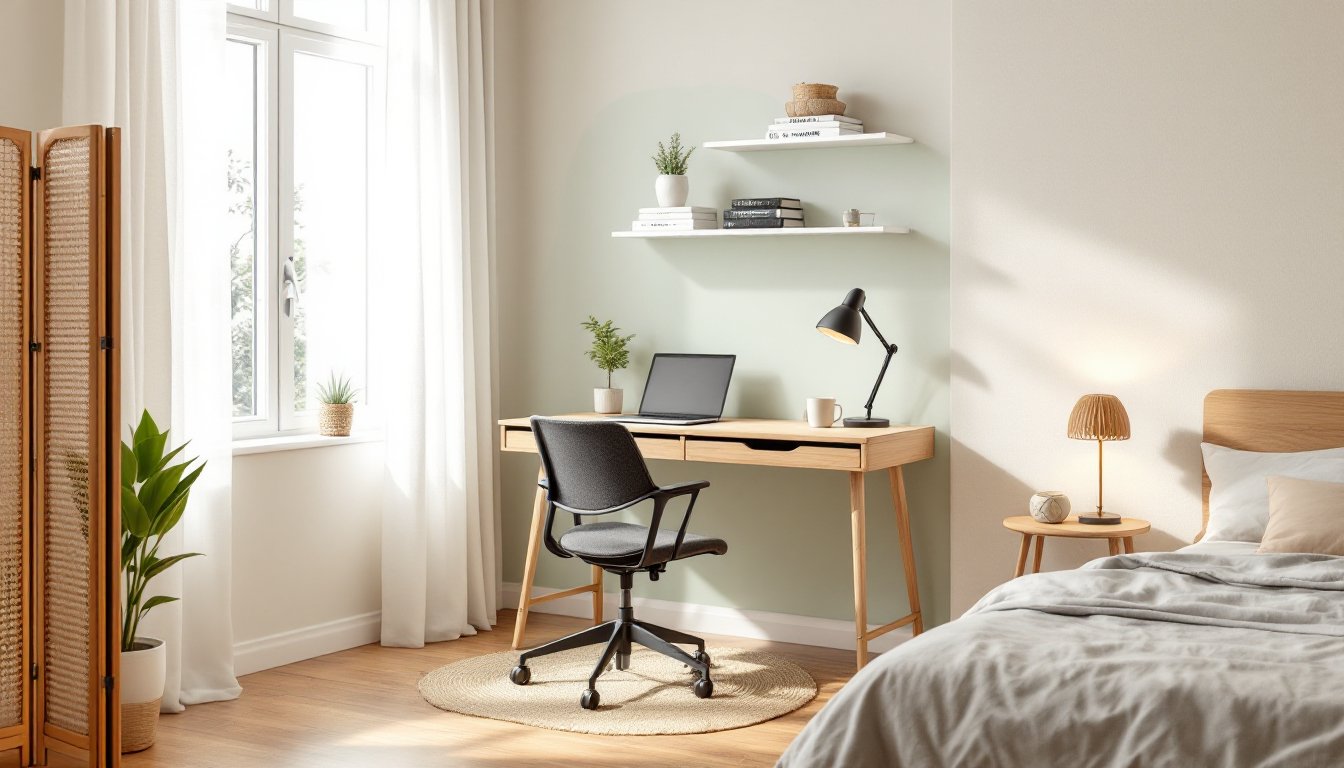
Creating zones doesn’t require walls. Use furniture orientation, area rugs, or even a bookshelf as a low-profile divider. A 5×7 or 6×9 area rug under the desk and chair instantly defines the “office” zone, while leaving the rest of the floor bare or covered with a different rug signals the bedroom side.
Another tactic: anchor the bed against one wall and place a narrow console table or low bookshelf behind it as a visual buffer. This works especially well in larger bedrooms where the desk can sit on the opposite side of the shelf, giving the illusion of two rooms.
In tighter spaces, floating furniture away from walls can actually improve flow. A desk positioned at a right angle to the wall, with the chair facing away from the bed, carves out a mini-office footprint without blocking pathways. Just make sure there’s at least 24 to 30 inches of clearance behind the chair so you can roll back comfortably.
Furniture and Desk Solutions That Save Space
Desk selection is critical. A 48-inch wide desk is the sweet spot for most setups, wide enough for a monitor, keyboard, and a notebook, but not so large it dominates the room. If space is truly tight, a wall-mounted fold-down desk or a floating shelf desk (typically 24 to 36 inches wide) can work, though it won’t accommodate much beyond a laptop.
For those who need more surface area, a corner desk makes efficient use of dead space and can fit into awkward room layouts. L-shaped desks are popular, but measure carefully, cheap particleboard models can be bulky and hard to reposition. Solid wood or steel-framed desks hold up better and often have cleaner lines.
Consider a desk with built-in storage. Drawers, cubbies, or a hutch reduce the need for separate filing cabinets, which eat up floor space. If you go with a minimalist desk, pair it with a rolling cart or a vertical file organizer that tucks under the desk.
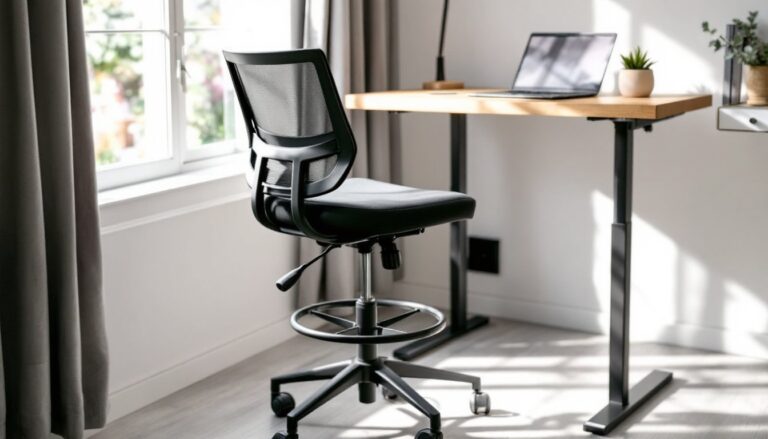
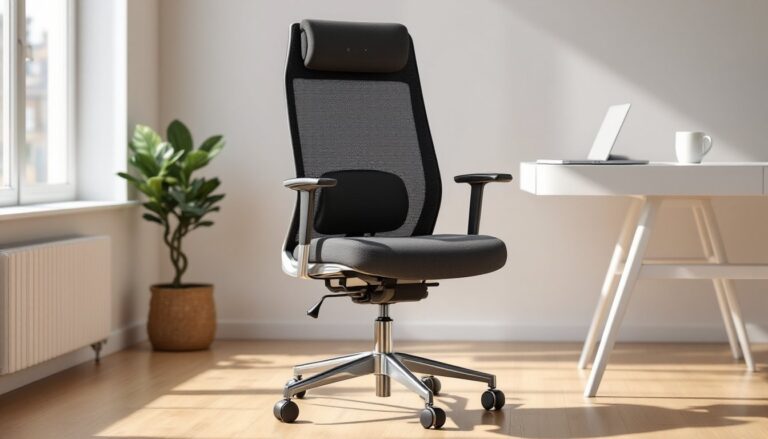
When it comes to seating, skip the bulky executive chair. A compact task chair with lumbar support and adjustable height is plenty, and it won’t visually overwhelm a bedroom. Some people prefer a small desk setup that uses a stool or armless chair to keep sightlines open.
Multi-functional furniture earns its keep here. A nightstand with enough surface area can double as a side table for a reading lamp and a spot to dock your phone at night. A storage ottoman at the foot of the bed can hold extra blankets, office supplies, or even act as an impromptu seat for video calls.
Creating Visual Separation Between Work and Sleep Areas
Visual separation is about tricking your brain into seeing two rooms instead of one. Color, texture, and lighting all play a role.
Paint can define zones without adding bulk. Accent one wall behind the desk in a different color, something energizing like a muted sage, charcoal, or terracotta, while keeping the rest of the room in a calming neutral. This works especially well if the desk sits in a corner or alcove. Just tape off clean lines and use a high-quality primer if you’re painting over a darker color to avoid multiple coats.
Another option is removable wallpaper or peel-and-stick panels behind the desk. Installation is straightforward, and it’s a renter-friendly upgrade. Choose a subtle pattern or texture that contrasts with the bedroom’s aesthetic.
Room dividers and screens add physical separation without permanent construction. A folding screen (3-panel or 4-panel) can hide the desk from view when you’re off the clock, which helps with mental boundaries. Look for something lightweight but stable, cheap hollow-core screens tip easily. Woven rattan, fabric, or slatted wood screens let light through while still blocking sightlines.
Curtains are another flexible divider. Ceiling-mounted curtain track or a tension rod can create a pull-across partition. Use a heavier fabric like linen or canvas for better sound dampening and light control. When open, the curtain bunches to the side and disappears: when closed, it hides the workspace entirely.
Lighting should serve both functions. A desk lamp with adjustable brightness (LED bulbs in the 3000K to 4000K range) provides focused task light without spilling into the sleeping area. For ambient bedroom lighting, stick with warmer bulbs (2700K) in bedside lamps or overhead fixtures. If you work late, blackout shades or lined curtains keep street light out and help signal bedtime.
Interior designers on Apartment Therapy often recommend using different textures to delineate zones, a jute rug under the desk, a plush shag near the bed, for example. These small cues reinforce the functional split.
Storage and Organization Tips for Dual-Purpose Rooms
Clutter kills both productivity and relaxation, so storage has to work overtime in a bedroom-office combo. The goal is to keep work materials accessible during the day but out of sight at night.
Start with vertical storage. Floating shelves above the desk hold books, binders, and decorative items without taking up floor space. Install them with proper wall anchors, toggle bolts for drywall, or screws into studs if you’re mounting heavier loads. A shelf depth of 10 to 12 inches is standard for books and office supplies.
Pegboards are underrated for small offices. Mount one above or beside the desk to hang headphones, charging cables, scissors, and notepads. Spray paint the pegboard to match your accent wall, and use matching hooks and baskets for a cohesive look.
Under-desk storage is prime real estate. A rolling file cart can slide under the desk when not in use, and a wire basket or bin keeps loose papers corralled. If your desk doesn’t have drawers, add a desktop organizer with compartments for pens, sticky notes, and chargers.
Closet space often goes underutilized. Dedicate one section, even just a shelf or a hanging file box, to office supplies and tech accessories. Clear bins or labeled boxes keep things sorted. If your bedroom closet is walk-in or oversized, some people carve out a small home office guest room nook inside it, using the closet as a literal hidden office.
Cable management is non-negotiable. Tangled cords look messy and create tripping hazards. Use adhesive cable clips, a cable sleeve, or a cable tray mounted under the desk to route power strips and monitor cables out of sight. This takes ten minutes and makes a huge difference.
For those who need to stash the work setup entirely, furniture like a secretary desk or an armoire can close up at the end of the day, concealing monitors, keyboards, and paperwork behind doors. It’s old-school, but effective if you want a strict visual boundary.
Finally, keep a small basket or bin near the desk for daily essentials, notebook, wallet, keys, so they don’t migrate to the nightstand. This simple habit keeps the bedroom side clear and reinforces the mental separation between work and rest.
Conclusion
Merging a bedroom and office isn’t a compromise, it’s a deliberate design challenge that rewards smart planning. Focus on layout, furniture scale, and visual boundaries, and the same room can support both deep work and restful sleep. Measure twice, anchor your zones with rugs or paint, and don’t skip the cable management. With the right setup, you won’t feel like you’re sleeping at your desk or working in bed, you’ll have two functional spaces that happen to share the same address.