Combining a living room and office into one functional space has become essential for many homeowners. Whether downsizing, embracing remote work, or simply making the most of available square footage, merging these two zones requires thoughtful planning. Done well, a dual-purpose room serves both productivity and relaxation without one side sabotaging the other. But get the layout wrong, and you’ll end up with a cluttered multipurpose mess that doesn’t serve either function properly. This guide walks through the practical design strategies, furniture choices, and zone-defining techniques that make a living room office combo work.
Table of Contents
ToggleKey Takeaways
- A living room office combo layout allows homeowners to maximize limited square footage while accommodating both remote work and relaxation without costly renovations or dedicated room conversions.
- Strategic furniture placement and visual dividers—such as rugs, bookcases, screens, or curtains—create distinct zones that help maintain focus during work while keeping the space functional for living.
- Prioritize ergonomic seating, appropriately sized desks (48–60 inches for standard use), and vertical storage solutions to prevent clutter and ensure both the office and living areas remain organized and purposeful.
- Dedicated lighting, such as task lamps (500–800 lumens) for the work zone and ambient lighting for the lounge area, establishes distinct atmospheres and reinforces the separation between productivity and relaxation.
- Implement a daily five-minute reset routine and use closed storage, rolling carts, and labeled bins to keep office supplies and living room items separate, maintaining mental and physical boundaries between work and personal time.
- Measure your space carefully, assess both work requirements and living room usage patterns upfront, and select multi-function furniture with exposed legs to maximize visual space and flexibility as needs change.
Why a Living Room Office Combo Makes Sense
Housing trends in 2026 show more people living in smaller homes, condos, and apartments where dedicated office space doesn’t exist. Instead of converting a bedroom, which cuts down sleeping or storage options, the living room offers open floor space that can accommodate both a work desk and seating. According to data from Houzz, nearly 40% of homeowners now integrate work zones into shared living areas rather than creating separate rooms.
Financially, the setup makes sense too. Skipping a whole-room renovation or addition saves thousands compared to building out new square footage. There’s also flexibility: if work-from-home needs shift, a living room office is easier to dismantle or repurpose than a built-out spare bedroom.
From a practical standpoint, the living room typically has good natural light, existing electrical outlets, and central HVAC coverage, all essentials for comfortable work. Adapting this space doesn’t require running new circuits or adding insulation like a garage or basement conversion might.
Essential Planning: Assessing Your Space and Needs
Before moving furniture or ordering a desk, measure the room and map out existing features. Note window placement, electrical outlets, cable or ethernet ports, and any architectural elements like built-ins or radiators. Knowing the exact square footage and available wall space determines how much room can realistically be dedicated to a work zone versus lounge seating.
Next, assess work requirements. Someone on Zoom calls all day needs a controlled background and minimal household noise bleeding in. A graphic designer or writer might need dual monitors and good task lighting, while someone who works occasionally from home can get by with a slim laptop desk. List must-haves: desktop space needed (a standard desk is 48–60 inches wide), chair clearance (24–30 inches behind the desk for movement), and storage for files or equipment.
For the living room side, consider how many people typically use the space and what activities happen there. A household that watches TV nightly needs seating facing a screen, while those who entertain need flexible furniture layouts. Balancing these competing demands upfront prevents costly do-overs later. Thinking through small office layout principles helps clarify these priorities.
Zone Definition Strategies for Dual-Purpose Rooms
Creating distinct zones within one room is critical to making both the office and living areas feel intentional rather than haphazard. Two main strategies, furniture placement and visual dividers, work in tandem to establish boundaries without full walls.
Using Furniture Placement to Create Separation
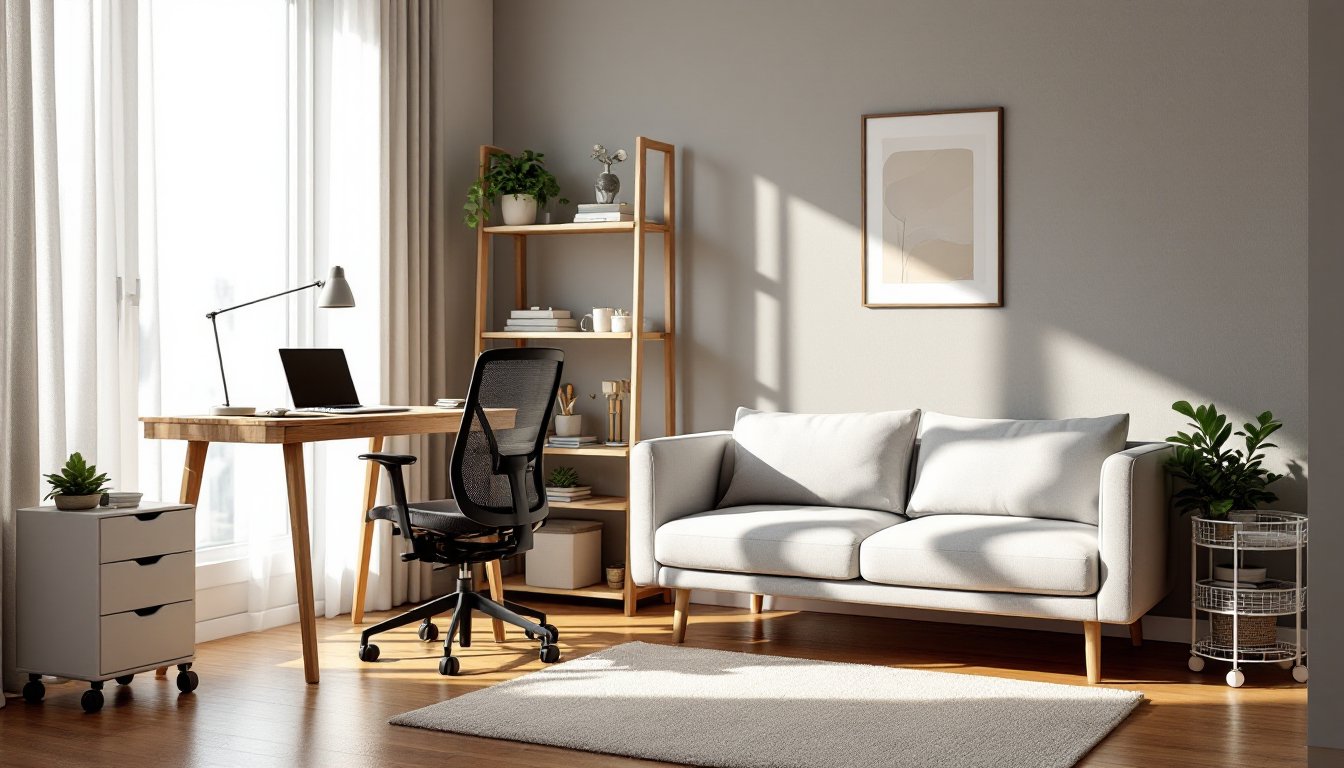
The simplest way to define zones is strategic furniture arrangement. Position the desk against a wall or in a corner farthest from the main seating area. This physical distance reduces visual clutter when the office isn’t in use. Orienting the desk so the user faces a wall or window, not the TV, helps maintain focus during work hours.
Use a sofa or bookshelf as a spatial divider. Floating a couch perpendicular to the wall, with its back facing the office zone, creates a natural boundary. Open-back bookcases work similarly: they offer storage while maintaining sightlines and airflow. Avoid blocking natural light sources: if the desk needs window light, place lounge seating away from that wall.
Rugs also anchor zones effectively. A 5×7-foot or 8×10-foot area rug under the coffee table and seating defines the living area, while leaving the desk on bare floor (or a smaller desk mat) subtly signals the work zone. This color or texture shift helps the brain switch contexts between relaxation and productivity.
Visual Dividers and Room Partitions
When furniture alone doesn’t create enough separation, add physical or visual barriers. Folding screens or room divider panels offer flexibility: deploy them during work hours, fold them away at night. Look for options in wood, fabric, or metal that complement existing décor rather than looking like afterthoughts.
Open shelving units, such as a 72-inch-tall bookcase, serve double duty: they divide space while offering storage for both office supplies and living room items like books or décor. Choose units that are finished on both sides so they look intentional from either zone. Many home office guest room ideas incorporate similar multi-function dividers.
Curtains or hanging panels provide a soft, budget-friendly partition. Mount a ceiling track or tension rod and hang floor-length fabric. During work hours, draw the curtain to hide the living area from video calls or reduce distractions: pull it back when the office is off-duty. This approach works especially well in rentals where permanent modifications aren’t allowed.
Lighting also defines zones. Use a dedicated desk lamp with 500–800 lumens for task lighting at the workspace, and keep ambient or accent lighting, like floor lamps or overhead fixtures, for the living area. Different light sources create distinct atmospheres even within shared square footage.
Furniture Selection for a Functional Office-Living Room
Choosing the right furniture is where most dual-purpose rooms succeed or fail. Every piece should earn its place by serving at least one function well, ideally more than one.
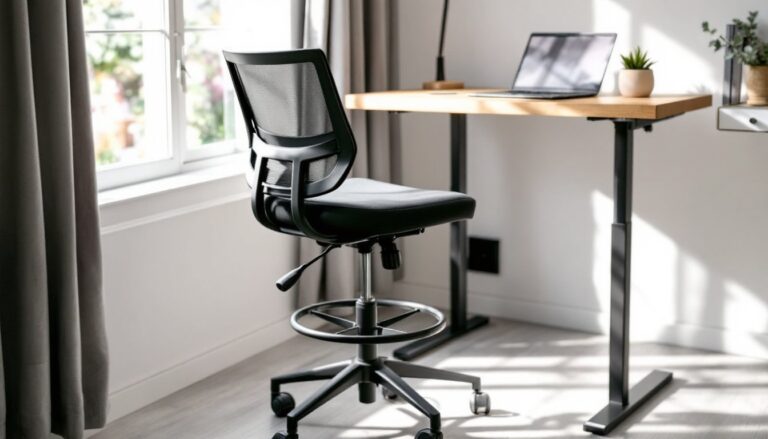
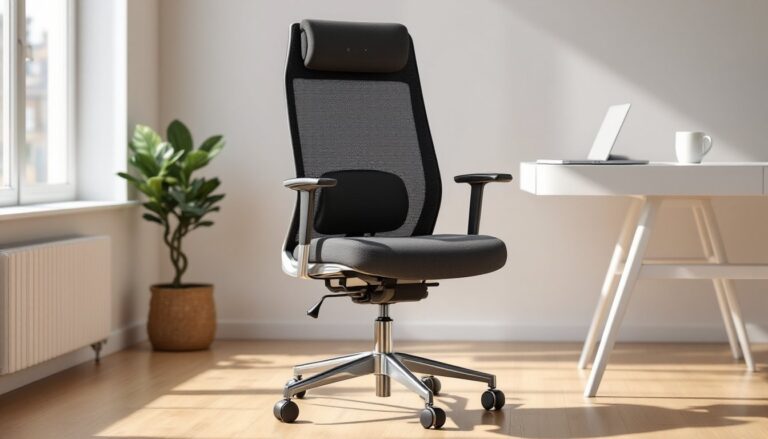
For the office zone, prioritize an ergonomic desk chair. Spending hours in a dining chair wrecks posture and productivity. Look for adjustable seat height, lumbar support, and a seat depth of 16–18 inches. If space is tight, a compact task chair works better than a bulky executive model.
Desk choice depends on available space. A wall-mounted fold-down desk (often 30–36 inches wide) works in extremely tight quarters, though it won’t accommodate much equipment. A standard writing desk or computer desk (48–60 inches wide, 24–30 inches deep) fits most needs. For serious multitaskers, an L-shaped desk maximizes surface area in a corner without dominating the room.
On the living room side, choose seating that scales to the remaining space. In smaller rooms, a loveseat or apartment-size sofa (60–72 inches wide) leaves room for the office zone. Couches for small living rooms can offer surprising comfort without overwhelming square footage. Modular or sectional pieces allow reconfiguration as needs change.
Consider dual-function furniture. A storage ottoman provides seating or a footrest while hiding office supplies or remote controls. A console table behind the sofa can double as a standing desk or laptop station. Apartment Therapy showcases dozens of examples where furniture flexibility turns cramped spaces into highly functional zones.
Avoid oversized pieces. That plush recliner or massive corner sectional eats up floor space better allocated to circulation or the work zone. Stick to furniture with exposed legs, it creates visual breathing room and makes the space feel larger than heavy, skirted pieces.
Storage Solutions That Keep Both Spaces Organized
Clutter kills the dual-purpose room. Without dedicated storage, office supplies migrate to the coffee table and living room magazines pile up on the desk. Integrated storage keeps both zones tidy and functional.
Closed cabinets or credenzas hide office gear when it’s off-duty. A low credenza (48–60 inches wide, 30 inches tall) below a wall-mounted monitor or TV serves both zones: store work files in one section, living room essentials in another. Choose units with doors or drawers to conceal visual noise.
Vertical storage takes advantage of unused wall space. Floating shelves, wall-mounted cabinets, or tall bookcases add capacity without consuming floor area. Install shelves above the desk for frequently used supplies, and use upper shelves in the living zone for décor or books. Ensure any wall-mounted storage is anchored into wall studs using appropriate fasteners, drywall anchors alone won’t support heavy loads.
Rolling carts offer portable storage. A three-tier metal or wood cart holds office supplies, charging cables, and notebooks during work hours, then rolls into a closet or behind the sofa at day’s end. This keeps the living space looking uncluttered when entertaining.
Storage benches or window seats provide hidden capacity with a bonus seating surface. Choose designs with lift-top lids or pull-out drawers. They’re ideal for items used less frequently, extra office supplies, seasonal décor, or throw blankets.
Label or dedicate specific storage areas to each function. Mixing work and living room items in the same drawer creates confusion and delays when you need something quickly. Clear bins or drawer dividers keep small items, cables, pens, remote controls, from becoming a jumbled mess. Implementing home office must haves ensures the workspace stays organized without spilling into the lounge area.
Finally, establish a daily reset routine. Spend five minutes at the end of each workday clearing the desk, filing papers, and putting supplies away. This boundary between work and personal time keeps the space functional and mentally separates office hours from downtime. A well-organized combo layout often inspires ideas for other home office additions throughout the home.
Safety note: When mounting shelves, cabinets, or monitors, always locate studs with a stud finder and use appropriate hardware. Toggle bolts or heavy-duty anchors rated for the load are essential if studs aren’t available. Improperly mounted storage can pull free from drywall, causing damage or injury.